


State leadership inspects the historic Madhavaram dairy complex, launching a central laboratory annex to modernize quality testing and address urban supply constraints.
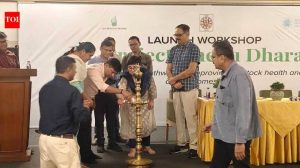
Tamil Nadu Chief Minister Joseph Vijay conducted an extensive inspection of the 63-year-old Madhavaram dairy complex operated by the Tamil Nadu Co-operative Milk Producers’ Federation (Aavin), inaugurating a newly constructed laboratory annex for its Central Laboratory built at an investment of Rs 2.23 crore. The high-level institutional visit follows mounting consumer complaints across Chennai regarding acute retail shortages of subsidized Aavin milk packets, which have routinely sold out early in the morning and forced working-class households toward higher-priced private labels. Beyond commissioning the diagnostic testing facility, executive leadership reviewed urban procurement, cold-chain processing, and suburban logistics networks while inspecting construction on an upcoming manufacturing unit situated within the complex. The administrative review marks a coordinated government push to modernize state cooperative dairy infrastructure, reinforce product quality standards, and restore predictable liquid milk availability throughout the metropolitan retail corridor.
From an operational standpoint, the Madhavaram industrial complex functions as one of Chennai’s primary liquid dairy balance hubs, handling between 400,000 and 450,000 liters of raw milk daily. Facility lines process and market between 300,000 and 360,000 liters per day into pasteurized sachet formats, coordinated across more than 45 dedicated urban distribution routes. The site also integrates industrial chilling units alongside bulk powder storage warehouses capable of holding 80 metric tonnes of skim milk powder to buffer seasonal procurement deficits. However, escalating retail demand has repeatedly outpaced plant packaging throughput and dispatch efficiency, leaving neighborhood distribution booths depleted during peak morning hours. Integrating the new laboratory wing expands daily analytical bandwidth, allowing technicians to run high-throughput chemical composition and microbial safety screenings without creating intake backlogs at the receiving bays.
The urban retail deficit highlights shifting market dynamics across southern India, where state-backed cooperatives compete directly with well-capitalized private processors. Because Aavin provides government-subsidized retail milk prices to protect consumer purchasing power, household demand has steadily surged amidst broader inflationary pressures on food commodities. When state distribution booths experience delivery delays or localized inventory stockouts, consumers are compelled to purchase private commercial brands that command significant price premiums per liter. This retail friction has triggered intense legislative debate, prompting opposition lawmakers and farmer unions to scrutinize municipal distribution management and packaging efficiency. Expanding secondary processing capacity within Chennai’s urban periphery is critical to closing the supply-demand gap and defending cooperative market share against private dairy penetration.
From a fiscal and treasury perspective, balancing farmgate procurement incentives against fixed retail price caps requires significant state financial underwriting. To alleviate mounting production pressures on livestock keepers, the state administration implemented two consecutive procurement price increases within a single month, elevating benchmark cow milk procurement rates from Rs 38 to Rs 44 per liter. Rather than passing this substantial cost increase directly onto metropolitan consumers, the state government committed to fully compensate Aavin for the resulting expenditure, absorbing an estimated fiscal subsidy of roughly Rs 720 crore annually. Financial analysts observe that state treasury absorption is indispensable for preserving cooperative working capital, preventing processing unions from accumulating unpaid supplier debts, and shielding enterprise balance sheets from acute operating deficits.
At the primary production level, safeguarding the economic viability of more than 316,000 dairy farmers supplying rural cooperative societies remains vital for stabilizing collection volumes into Chennai’s dairy processing corridor. Escalating commercial feed costs, severe roughage shortages, and persistent inflation in oil cakes and wheat bran have severely eroded dairy farm margins across rural Tamil Nadu. Reimbursing producers at the revised Rs 44 benchmark provides essential farmgate liquidity to maintain herd nutrition and suppress the diversion of raw milk to informal village middlemen. Furthermore, transparent payment disbursements and modern quality-testing infrastructure reassure primary societies that high-solids milk is accurately valued. Sustaining capital reinvestment into urban processing assets while preserving raw milk intake economics will be decisive in securing long-term self-sufficiency across Tamil Nadu’s organized dairy sector.
Source: The Economic Times
You can now read the most important #news on #eDairyNews #Whatsapp channels!!!
🇮🇳 eDairy News ÍNDIA: https://whatsapp.com/channel/0029VaPidCcGpLHImBQk6x1F