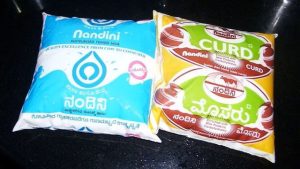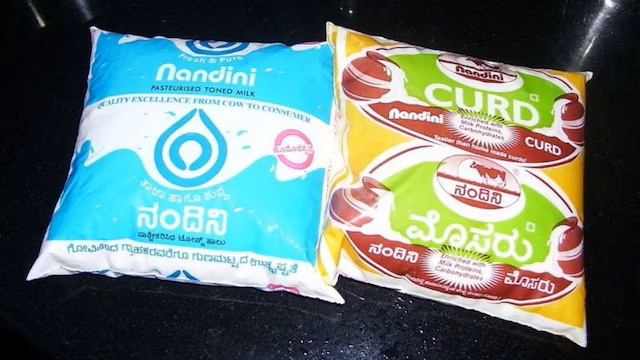

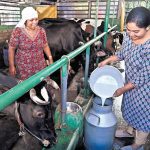


The Karnataka government deliberates an eight to ten rupee hike per liter for Nandini milk to support dairy farmers against input inflation.
The Karnataka state cabinet has deliberated a proposed price increase of Rs 8 to Rs 10 per liter for packaged Nandini milk, deferring the final executive determination to Chief Minister D.K. Shivakumar. The pricing revision follows sustained representations submitted by district milk union leadership and regional producer federations seeking urgent margin relief against escalating herd maintenance expenditures. While cabinet members expressed broad consensus in favor of the upward adjustment to safeguard rural livelihoods, formal implementation is temporarily paced by the Model Code of Conduct currently in effect for upcoming Legislative Council elections. State Cooperation Minister Laxman Savadi indicated that the administration will formally petition the Election Commission for regulatory clearance, enabling executive authorities to execute the price revision immediately upon statutory approval. If authorized, the measure will represent one of the most substantial nominal retail milk price revisions undertaken by the Karnataka Milk Federation (KMF) in recent history.
From an operational standpoint, the proposed tariff adjustment directly targets the financial mechanics of the Karnataka Milk Federation’s extensive procurement apparatus, which handles over nine million liters of raw milk daily. Operating through 16 district cooperative milk unions and thousands of village dairy cooperative societies, the federation oversees a vast industrial processing footprint encompassing computerized chilling centers, automated packaging plants, and bulk drying towers. District unions are currently balancing rising processing overheads driven by power tariffs, cold-chain transport freight, and packaging film expenses against high consumer off-take across Bengaluru and secondary urban hubs. Facility management must maintain consistent throughput to service retail pouch delivery contracts while simultaneously diverting surplus fluid milk into skim milk powder and butterfat balancing lines during high-production windows. Implementing the price revision will provide processing plants with the operational flexibility required to maintain high processing and hygiene standards across rural-to-urban supply chains.
The anticipated retail price hike unfolds within a volatile regional dairy landscape characterized by widespread procurement cost competition across southern and western India. Rival cooperative powerhouses and private brands, including Amul, Mother Dairy, and private processors across neighboring Andhra Pradesh and Maharashtra, have progressively adjusted retail prices to offset persistent operational inflation. Despite earlier incremental revisions, Nandini milk has historically maintained one of the most affordable retail price points across major Indian metropolitan corridors, creating substantial retail demand but narrowing gross processor margins. Consumer advocates have raised concerns over the cumulative household impact of an Rs 8 per liter jump, particularly for lower-income urban families already managing broad food price inflation. However, state officials argue that maintaining artificially depressed retail rates threatens the structural viability of local milk procurement, risking supply diversions toward neighboring state buyers offering higher farmgate realization.
Under the financial mechanism evaluated by the cabinet, the proposed price revision incorporates a structured 80:20 revenue-sharing formula designed to protect enterprise balance sheets across the cooperative hierarchy. Under this distribution model, Rs 6 per liter will be transferred directly to primary dairy producers through automated direct-benefit transfers, while the remaining Rs 2 per liter will be retained by district milk unions to absorb mounting logistics and manufacturing deficits. Many localized milk unions have faced working capital compression, borrowing against credit facilities to maintain prompt weekly settlements with village societies amid elevated transport costs. Ensuring an earmarked allocation of Rs 2 per liter directly fortifies union reserves, reducing reliance on emergency state government subsidies and improving debt service coverage ratios. At the same time, delivering a net Rs 6 increase to producers injects vital liquidity into rural balance sheets, lowering default risks on livestock acquisition loans held by rural credit cooperatives.
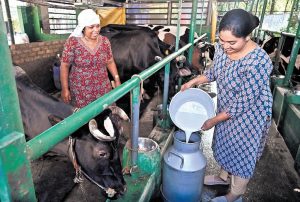
At the farmgate level, the impending price increase provides decisive relief to hundreds of thousands of smallholder dairy farmers grappling with severe fodder inflation and recurring dry spells. Over recent production cycles, commercial cattle feed concentrates, dry roughage, and cotton seed cake prices have surged by double digits, severely compressing producer margins and eroding dairy profitability. Delivering an additional Rs 6 per liter directly into farmer bank accounts restores parity between milk harvest receipts and escalating herd nutrition costs, incentivizing producers to maintain high-yielding crossbred cattle. Cooperative analysts observe that sustaining attractive farmgate payouts is imperative to prevent distress herd liquidations and ensure long-term milk self-sufficiency across Karnataka. Once election clearances are finalized, the revised price structure will establish a firmer economic foundation for the state’s organized dairy ecosystem heading into 2027.
Source: CNBC-TV18
You can now read the most important #news on #eDairyNews #Whatsapp channels!!!
🇮🇳 eDairy News ÍNDIA: https://whatsapp.com/channel/0029VaPidCcGpLHImBQk6x1F