


Rural development initiative Project Dhenu Dhara targets a ten percent milk output expansion and higher incomes across twenty thousand smallholders.
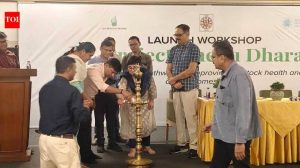
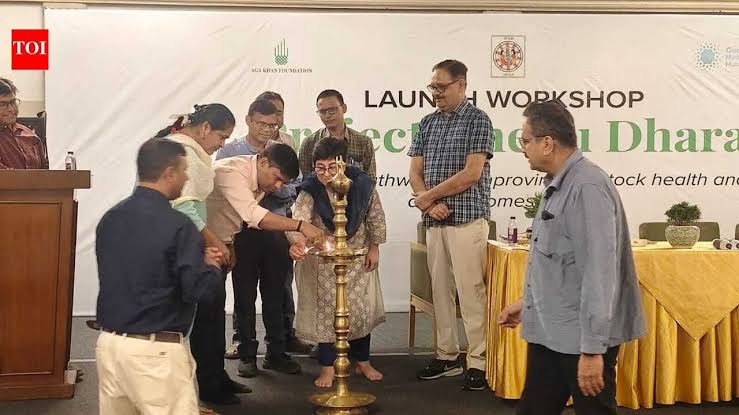
The Bihar Rural Livelihoods Promotion Society, commercially known as Jeevika, has formally launched Project Dhenu Dhara in partnership with the Aga Khan Foundation to enhance milk productivity and household revenues across smallholder farming communities in eastern India. Supported by technical oversight from the National Dairy Development Board (NDDB), the two-year agricultural intervention targets 20,000 small and marginal dairy producers across the pilot districts of Nalanda and Muzaffarpur. The institutional initiative establishes definitive productivity benchmarks, aiming to expand raw milk output by up to 10 percent while driving a net income increase of as much as 20 percent for participating rural households. State agricultural leadership emphasized that consolidating community mobilization with institutional dairy science provides a replicable framework to transform low-yield subsistence cattle rearing into viable, commercialized micro-enterprises.
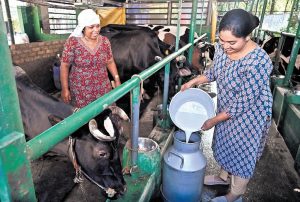
At the field level, the operational backbone of the program relies on the deployment of 200 certified women livestock service providers, designated as pashu sakhis, to deliver specialized animal husbandry guidance directly to farm gates. Field workers are trained to implement the National Dairy Development Board’s proprietary Ration Balancing Programme (RBP), which formulates customized daily feed diets based on locally available crop residues, green fodder, and mineral supplements. By balancing crude protein, energy, and micronutrient ratios, the feeding protocol optimizes metabolic feed conversion efficiency while reducing systemic gastrointestinal waste. Concurrently, the curriculum prioritizes managing bovine reproductive cycles to shorten unprofitable intercalving and dry periods between lactations. To safeguard herd health affordably, the initiative integrates Ethno-Veterinary Medicine (EVM) protocols, utilizing verified herbal remedies to address common ailments such as mastitis and indigestion, thereby curbing costly veterinary expenses and suppressing unregulated antibiotic use.
The targeted intervention unfolds against a backdrop of deep structural disparities across the Indian dairy landscape, where eastern milk sheds traditionally lag behind intensive northwestern production belts like Punjab and Gujarat in per-animal yield. Smallholder dairy farming in Bihar remains heavily fragmented, with millions of marginal producers managing one or two indigenous or non-descript crossbred cattle reliant on unbalanced roughage diets and informal veterinary support. Furthermore, volatile feed ingredient prices and localized fodder shortages have continually squeezed operating margins across rural production sheds. Bridging the productivity gap through precision feeding and scientific management allows regional procurement pools to expand overall collection density. Strengthening smallholder output not only feeds commercial cooperative networks such as the Bihar State Cooperative Milk Producers’ Federation (COMFED/Sudha), but also fortifies local food systems against seasonal milk deficits.
From an agricultural economics and rural finance perspective, Project Dhenu Dhara introduces direct balance sheet efficiencies to vulnerable smallholder livelihoods. In small-scale dairying, feed and fodder account for up to 70 percent of total variable operating expenditure; optimizing these rations without increasing total feed tonnage immediately reduces cost per liter of milk harvested. Concurrently, displacing synthetic pharmaceuticals with validated ethno-veterinary formulations mitigates emergency out-of-pocket health outlays, protecting volatile household cash flows. Increasing daily lactation yields while trimming dry periods optimizes biological asset utilization, improving the return on investment for smallholders who often finance milch stock through self-help group microfinance loans. By insulating producer margins from compound feed inflation, the intervention lowers loan default rates across primary agricultural credit groups and establishes predictable cash inflows for rural families.
Looking ahead, scaling community-driven technical models like Project Dhenu Dhara will be pivotal in modernizing eastern India’s decentralized dairy shed and building climate-resilient livestock systems. Empowering female frontline extension workers institutionalizes generational animal husbandry knowledge within village self-help clusters, ensuring continuous peer-to-peer technical diffusion. Enhanced farmgate milk composition, characterized by higher butterfat and solids-not-fat metrics resulting from balanced nutrition, will also enable producers to secure top-tier procurement pricing at automated collection centers. Long-term sector analysts observe that integrating scientific herd nutrition with institutional processing channels creates a durable economic cushion against climate volatility and rural underemployment. As the two-year pilot progresses across Nalanda and Muzaffarpur, validating these productivity gains will provide policymakers with an empirical roadmap to scale scientific dairy extension across the broader Gangetic plain.
Source: Times of India
You can now read the most important #news on #eDairyNews #Whatsapp channels!!!
🇮🇳 eDairy News ÍNDIA: https://whatsapp.com/channel/0029VaPidCcGpLHImBQk6x1F