


Intensive raids on synthetic milk syndicates reveal widespread chemical adulteration, raising questions over the state’s recent milk production surge.
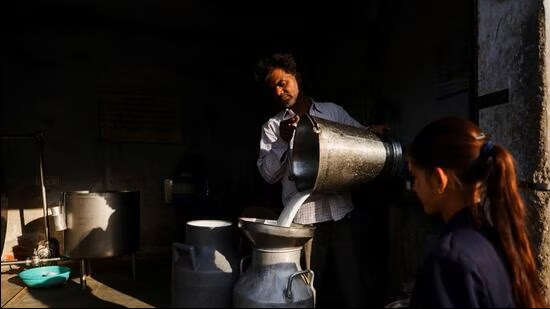
Reporting by Saurabha Kulshreshtha for Hindustan Times details a sharp decline in Maharashtra’s average daily milk procurement, which dropped by over 750,000 litres within a single month following an intensive statewide crackdown on adulterated milk by the Food and Drug Administration (FDA). State Dairy Development Department data shows daily collection fell from 17.923 million litres in May 2026 to 17.172 million litres in June. Compared to January 2026—when procurement stood at 18.923 million litres—the daily volume has contracted by 1.8 million litres.
The enforcement drive targeted adulteration networks operating primarily within the unorganized collection sector. Over the past two months, FDA officers inspected roughly 360 establishments, seized 160,329 litres of adulterated milk valued at ₹65.17 lakh, suspended 35 operating licenses, and filed seven First Information Reports (FIRs). Raids revealed that syndicates were synthesizing fake milk using hazardous ingredients, including skimmed milk powder (SMP), vegetable oil, detergent, shampoo, contaminated water, and chemical fertilizers like urea.
The sudden drop in official procurement figures has raised serious questions among animal husbandry officials regarding whether earlier production gains were artificially inflated by synthetic milk. Over the past three years, Maharashtra’s reported daily milk collection grew from 13.1 million litres to 17.1 million litres. Furthermore, state Economic Survey data indicated that annual milk production surged 68% over the past decade—rising from 10.1 million metric tonnes in 2015–16 to 16.6 million metric tonnes in 2024–25—leading authorities to suspect that adulteration accounted for a substantial portion of the volume increase.
Animal husbandry officials clarified the division of state regulatory oversight, noting that their department lacks legal jurisdiction to penalize food adulteration. Their scope is strictly limited to implementing dairy development schemes, supporting cattle owners, and supervising milk collection up to procurement centers. Statutory authority to inspect, test, and prosecute milk adulteration rests entirely with the FDA, whose enforcement capabilities remain challenged by severe staff shortages across regional field offices.
Ultimately, the significant drop in reported milk intake underscores how deeply synthetic milk networks had penetrated the unorganized dairy supply chain in Maharashtra. As the FDA continues its enforcement operations, state authorities face the dual challenge of eliminating illegal synthetic processing while supporting genuine dairy farmers to rebuild clean, verifiable raw milk supply streams for urban consumer centers.
Source: Hindustan Times
You can now read the most important #news on #eDairyNews #Whatsapp channels!!!
eDairy News ÍNDIA: https://whatsapp.com/channel/0029VaPidCcGpLHImBQk6x1F