


Samyukt Kisan Morcha (Non-Political) coordinates multi-site demonstrations, demanding exclusion of dairy and agriculture from bilateral trade negotiations.
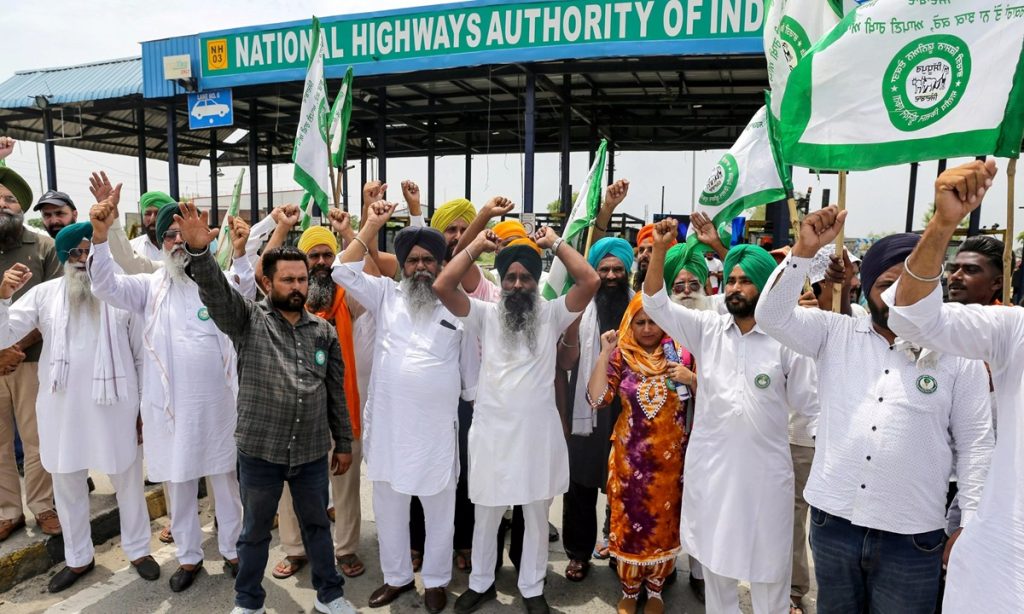
The Samyukt Kisan Morcha (Non-Political) has launched coordinated demonstrations at more than 40 toll plazas across Punjab, bringing localized transport routes under protest-management conditions. Mobilized under a national directive from union leaders Jagjit Singh Dallewal and the Bharatiya Kisan Union (Ekta Sidhupur), farming families occupied toll collection zones from 11:00 AM to 4:00 PM, allowing all passing passenger and commercial vehicles to proceed without charge. The action targeted the state government’s controversial amended land pooling policy and ongoing bilateral trade discussions between India and the United States.
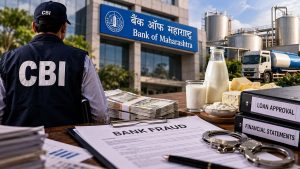
At the core of the state-level grievances is Punjab’s newly amended land pooling policy, which protesting groups characterize as an aggressive legislative mechanism to acquire highly fertile, multi-crop agricultural land. Farmers gathered at prominent toll gates—including Kalajhar, Ladhowal, Chahar, Kurali, and Dappar—arguing that the policy is designed to systematically hand over prized family-owned acreage to corporate developers. The unions are demanding the immediate withdrawal of these land pooling frameworks, alongside an investigation into alleged operational and loan irregularities within the regional Land Mortgage Bank.
Concurrently, the demonstrations focused heavily on international trade policy, expressing deep anxiety over the proposed India-US free trade agreement. Protesting leaders warned that opening up the Indian domestic market to heavily subsidized American agricultural imports would be catastrophic for local smallholder producers. Farmers argue that domestic prices would collapse under the weight of tariff-free foreign commodities, permanently damaging regional rural economies that are already struggling with rising input costs and tight margins.
For the dairy and poultry sectors specifically, the threat of a bilateral trade pact is viewed as an existential challenge. Given that millions of small-scale Indian farmers rely on daily milk and egg payouts as a critical financial safety net, union representatives are demanding that the dairy, poultry, and primary agricultural sectors be permanently excluded from any active trade negotiations. The Morcha maintains that any international treaty failing to protect these highly sensitive, domestic livelihood-based categories should be scrapped entirely by central planners in New Delhi.
The toll plaza protests represent an intensification of rural agitation in Punjab, with organizers warning of broader, prolonged blockades if both state and central administrations do not address their demands. By linking local land acquisition policies with international trade arrangements, the agricultural unions are seeking to build a unified policy front to protect the structural integrity of India’s family-farming model. As regional tensions remain high, local authorities are monitoring the situation to balance public transit access against ongoing rural economic protests.
Source: Deccan Chronicle
You can now read the most important #news on #eDairyNews #Whatsapp channels!!!
eDairy News ÍNDIA: https://whatsapp.com/channel/0029VaPidCcGpLHImBQk6x1F