


From basic village dilution to sophisticated chemical formulation, organized food crime networks push the world’s largest dairy market into a high-tech biosecurity crisis.
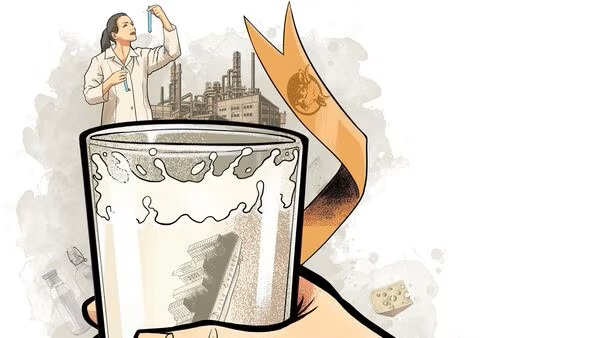
The primary production baseline of India’s massive domestic dairy sector, which recorded a stable national output of 248 million tonnes (mt) in FY26, is under severe pressure as localized food fraud transforms into highly organized, industrial-scale economic crime. Recent law enforcement actions, led by the Food Safety and Standards Authority of India (FSSAI), have uncovered extensive criminal networks engineering counterfeit milk from a hazardous matrix of detergent, urea, caustic soda, refined palm oil, and skimmed milk powder. A prominent raid in Gujarat’s Sabarkantha district revealed an illicit facility that had been operating undetected for five years, diluting just 300 liters of genuine raw supply into over 1,700 liters of synthetic liquid daily, illustrating the lucrative profit margins driving these underground distribution cartels.
Agribusiness economists and food safety analysts note that this shift marks the definitive end of the traditional “crude adulteration” era, where simple water dilution and basic starch or formalin additives could easily be flagged by legacy village testing routines. Throughout the mid-2010s, the shadow industry transitioned into utilizing refined vegetable oils and whey powders to mimic natural milk fats and artfully restore solids-not-fat (SNF) parameters to bypass standard lactometer checks. The current “synthetic milk era” represents a highly sophisticated tier of food engineering, where operators systematically swap out easily detectable elements for advanced chemical substitutes like sorbitol, sucrose, and maltodextrin to perfectly match the density, mouthfeel, and sweetness of real milk while evading routine laboratory screening kits.
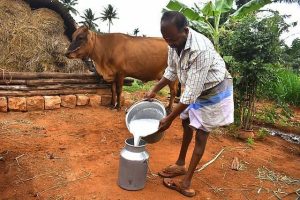
The structural fragmentation of the Indian dairy grid further exacerbates these oversight vulnerabilities, as nearly 60% of the country’s marketable surplus milk continues to bypass organized cooperative networks in favor of unorganized informal segments. Meenesh Shah, Chairman of the National Dairy Development Board (NDDB), points out that while formal processing cooperatives deploy strict quality-gate safeguards at their receiving bays, the primary vulnerability resides at localized village collection points that lack advanced analytical equipment. Diagnostic innovators like food safety startup PaperPro are aggressively lobbying major processing firms to enforce rigorous zero-trust rapid-testing protocols at the earliest collection stage rather than relying on delayed inspections at centralized processing plants.
Beyond immediate product integrity, the industrialization of fake dairy carries severe systemic risks, permanently shifting the biosecurity challenge from product contamination to deep operational process failures. Medical experts from the Atal Bihari Vajpayee Institute of Medical Sciences warn that chronic exposure to chemical volume-extenders like detergents and caustic soda inflicts severe, long-term degradation on consumers’ renal, hepatic, and metabolic systems. Concurrently, broader value chain vectors—such as widespread mycotoxin transmission from improperly stored cattle feed lines, highlighted by animal nutrition leaders at Cargill India—are introducing multi-layered chemical hazards that compromise the baseline safety of a staple food supply consumed daily by millions.
Regulatory enforcement bodies are struggling to contain this sophisticated food crime network due to widening structural manpower deficits, a bottleneck highlighted by the FSSAI’s ongoing failure to publicly release the findings of its massive 10,000-sample national dairy audit launched in 2023. This domestic quality crisis is already triggering severe international commercial fallout, as evidenced by recent Enforcement Directorate probes into a major dairy exporter accused of forging laboratory certificates to ship adulterated products to Middle Eastern and Southeast Asian markets. Consequently, while India’s aggregate dairy exports achieved a historic high of $492.85 million in FY25, they suffered a sharp 17.4% contraction to settle at $407.18 million in FY26, demonstrating how organized food fraud threatens the global trade reputation of the world’s largest milkshed.
Source: Livemint
You can now read the most important #news on #eDairyNews #Whatsapp channels!!!
eDairy News ÍNDIA: https://whatsapp.com/channel/0029VaPidCcGpLHImBQk6x1F