


Division bench orders federal food safety authorities and regional governments to clarify regulatory standards on imitation cheese curds ahead of the autumn festive surge.
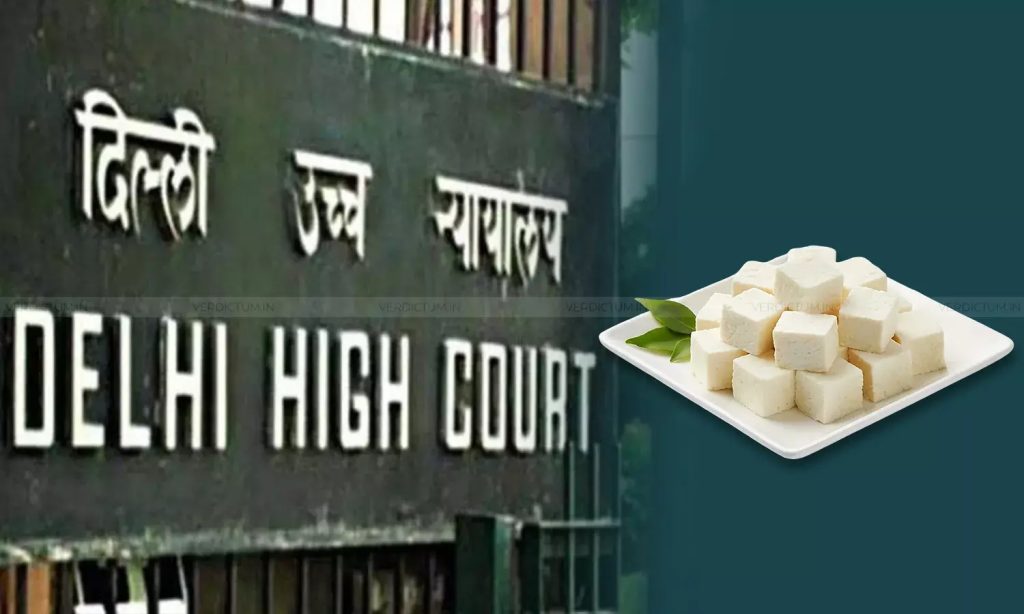
The Delhi High Court has directed the Food Safety and Standards Authority of India (FSSAI), the central government, and the Government of NCT of Delhi to submit comprehensive status reports regarding a public interest litigation challenging the unregulated commercialization of non-dairy analogue paneer. Presided over by a division bench comprising Acting Chief Justice Nitin Wasudeo Sambre and Justice Sanjay Sharma, the judicial intervention grants statutory respondents a six-week window to formulate formal counter-affidavits detailing current surveillance and compositional compliance standards. Originating from a petition filed by public advocate Ridhima Singh, the judicial proceedings focus on widespread commercial practices where synthetic and vegetable-fat-based formulations are distributed without transparent consumer labeling. While the bench refrained from issuing immediate blanket prohibitions across regional supply chains, the court stressed that rigorous batch testing protocols must be deployed swiftly to protect consumer health across the National Capital Region.
From an industrial food processing and biochemical perspective, authentic bovine paneer is defined strictly as an unaged, non-melting acid-set curd obtained exclusively through the thermal-acid precipitation of cow, buffalo, or standardized milk solids. In sharp contrast, commercial imitation products rely on vegetable-fat analogues engineered by combining hydrogenated vegetable oils, refined palm stearin, processed starches, emulsifying salts, and industrial milk solids or soy protein isolates to replicate the physical texture, whiteness, and chewiness of dairy curd. Because genuine paneer manufacturing requires substantial procurement volumes of raw milk fat and solids-not-fat (SNF), traditional dairy processors face significant production costs that track fluctuating farmgate milk prices. Conversely, vegetable-oil substitutes can be manufactured at a substantial discount compared to dairy formulations, generating high profit margins that encourage wholesale distributors and culinary operators to misrepresent analogue blocks as genuine dairy paneer.
The ongoing judicial scrutiny highlights severe regulatory enforcement deficits across the unorganized food service sector and the hotel, restaurant, and catering (HoReCa) channel. Under current food labeling frameworks, packaged retail food items must carry clear ingredient declarations, nutritional panels, and distinctive vegetarian or non-dairy identifying marks on exterior wrapping. However, bulk institutional blocks of analogue paneer are routinely stripped of secondary packaging inside commercial kitchens, sweetshops, and catering hubs, leaving dining patrons unable to verify ingredient authenticity. This structural transparency gap expands during major autumn festival seasons, where regional consumer demand for milk sweets and savory dishes outpaces localized fluid milk procurement. Operating without mandatory point-of-sale disclosures allows food service venues to capture commercial windfalls while concealing the substitution of lower-cost vegetable oils for essential dairy proteins.
From an enterprise finance and market stability standpoint, the widespread proliferation of unlabelled imitation paneer distorts fair market competition and penalizes compliant dairy processors. Organized private dairies and farmer-owned cooperative unions allocate substantial capital expenditure toward cold-chain infrastructure, hygienic processing equipment, automated packaging lines, and rigorous laboratory screening. When low-grade analogue slabs undercut genuine milk paneer in wholesale food markets, they create downward price pressure that depresses wholesale prices for legitimate dairy solids. Furthermore, commercial food fraud erodes consumer trust across the entire value-added dairy segment, discouraging capital investment in high-throughput paneer manufacturing facilities and undermining the balance sheets of processors that maintain strict compliance with national compositional parameters.
At the farmgate level, stamping out unauthorized dairy substitution is essential to defend rural milk procurement prices and maintain viable dairy farming livelihoods across regional milksheds. District cooperative federations rely on value-added dairy items like paneer, ghee, and curd to deliver stable milk payouts to millions of smallholder producers during seasonal production flushes. When commercial food operators replace fluid milk demand with imported palm derivatives and industrial starches, local milk intake volumes soften, directly threatening producer price security. As judicial scrutiny advances toward formal policy updates in 2027, establishing uniform field-testing kits, point-of-sale display mandates, and punitive adulteration penalties will be vital to preserving consumer transparency, upholding dairy product integrity, and protecting the economic foundation of the domestic dairy farming community.
Source: Verdictum
You can now read the most important #news on #eDairyNews #Whatsapp channels!!!
🇮🇳 eDairy News ÍNDIA: https://whatsapp.com/channel/0029VaPidCcGpLHImBQk6x1F