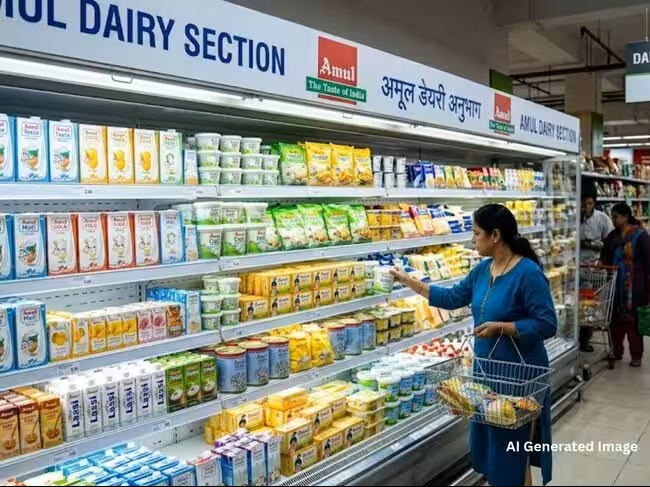



GCMMF increases maximum retail prices by up to ₹50 on 1-kg ghee and ₹15 on 500-g butter as festive consumption peaks and widespread crackdowns on spurious dairy channel demand into certified cooperative brands.
The Gujarat Co-operative Milk Marketing Federation (GCMMF), which markets India’s flagship dairy brand Amul, has revised retail prices upward across its flagship ghee and table butter product lines. As reported by The Economic Times, the price adjustments arrive ahead of the peak Diwali festive season, led by a ₹50 increase on 1-kilogram ghee cartons and a ₹15 hike on standard 500-gram butter blocks. The tariff revisions coincide with localized retail supply pinches—particularly across cow ghee variants—across key metropolitan and Tier-2 urban distribution channels.
Under the updated maximum retail price (MRP) schedules, a 1-kg carton of Amul ghee has increased from ₹630 to ₹680 (+7.9%), while a 500-gram pure ghee pouch has risen from ₹325 to ₹345 (+₹20). Across the table butter segment, the high-volume 500-g carton moved from ₹310 to ₹325 (+4.8%), and the 100-g household pack increased from ₹63 to ₹66 (+₹3). On Amul’s direct-to-consumer digital commerce portal, listed rates indicate cow ghee at ₹740 per litre, Sagar ghee at ₹710, pure ghee at ₹700, and buffalo ghee at ₹720, though multiple stock-keeping units (SKUs) currently display stockouts.
The current price correction partially reverses the price reductions implemented in September 2025, when the Goods and Services Tax (GST) on dairy products was reduced from 12% to 5%. During that tax reform, Amul passed along savings across 700 SKUs, lowering 1-litre ghee from ₹650 to ₹610 and 500-g butter from ₹305 to ₹285. The latest baseline increases reflect the operational reality of managing elevated farmgate milk procurement rates and higher cold-chain logistics costs heading into late 2026.
Beyond input economics, market dynamics have been heavily influenced by structural shifts in consumer demand. A cooperative leader closely associated with Amul noted that multi-state crackdowns on spurious and adulterated dairy products in Gujarat and neighbouring Rajasthan—resulting in the seizure of approximately 2 lakh kilograms (200 tonnes) of counterfeit ghee over the last six months—have driven households away from unorganized local vendors and toward certified cooperative brands. With India’s festive quarter traditionally accounting for roughly 45% of total annual ghee consumption for confectionery and culinary preparations, the sudden consolidation of demand onto formal supply chains has created acute stock shortages in distribution hubs such as Ahmedabad, Vadodara, Pune, Kolkata, and parts of Jammu & Kashmir.
From a dairy economics and supply chain perspective, the festive price revision illustrates the seasonal strain placed on India’s milkfat balance sheets. While the winter “flush” season typically begins replenishing milk supplies and fat tests in northern and western India during the fourth quarter, intense pre-Diwali sweetmeat manufacturing draws down available commercial butterfat reserves. For GCMMF and its member district unions, balancing consumer price sensitivity against farmer procurement incentives remains central to maintaining supply equilibrium through the festival period and into 2027.
Indian Dairy Retail Pricing
Amul Pre-Diwali Price Revisions: Ghee & Butter MRP
Comparison of baseline prices, revised retail rates, and absolute increases across core SKUs.
Amul Ghee (1-kg Carton)
+₹50
+₹50
Earlier: ₹630
₹680
₹680
Primary household culinary pack (+7.9%)
Pure Ghee (500-g Pouch)
+₹20
+₹20
Earlier: ₹325
₹345
₹345
Medium pouch format (+6.2%)
Amul Butter (500-g Pack)
+₹15
+₹15
Earlier: ₹310
₹325
₹325
Standard commercial & kitchen block (+4.8%)
Amul Butter (100-g Pack)
+₹3
+₹3
Earlier: ₹63
₹66
₹66
Individual retail table pack (+4.8%)
Primary Supply & Demand Drivers
Crackdown on Adulterated Ghee Channels Demand
Seizure of ~200,000 kg of spurious ghee across Gujarat and Rajasthan prompted massive consumer migration to trusted brands.
Festive Peak Concentration
Nearly 45% of India’s annual ghee consumption occurs during the autumn festival season, tightening regional stock buffers.
Fiscal Context: Offsets part of the September 2025 GST rate cut (12% down to 5%)
Diwali 2026 Revision
Diwali 2026 Revision
Source: The Economic Times / GCMMF / Amul Dispatches
eDairyNews India Market Intelligence
eDairyNews India Market Intelligence
Source: The Economic Times
You can now read the most important #news on #eDairyNews #Whatsapp channels!!!
🇮🇳 eDairy News ÍNDIA: https://whatsapp.com/channel/0029VaPidCcGpLHImBQk6x1F