



Central investigative agency launches a formal probe into a Mumbai-based milk and food processing company over alleged non-performing assets and loan defaults.
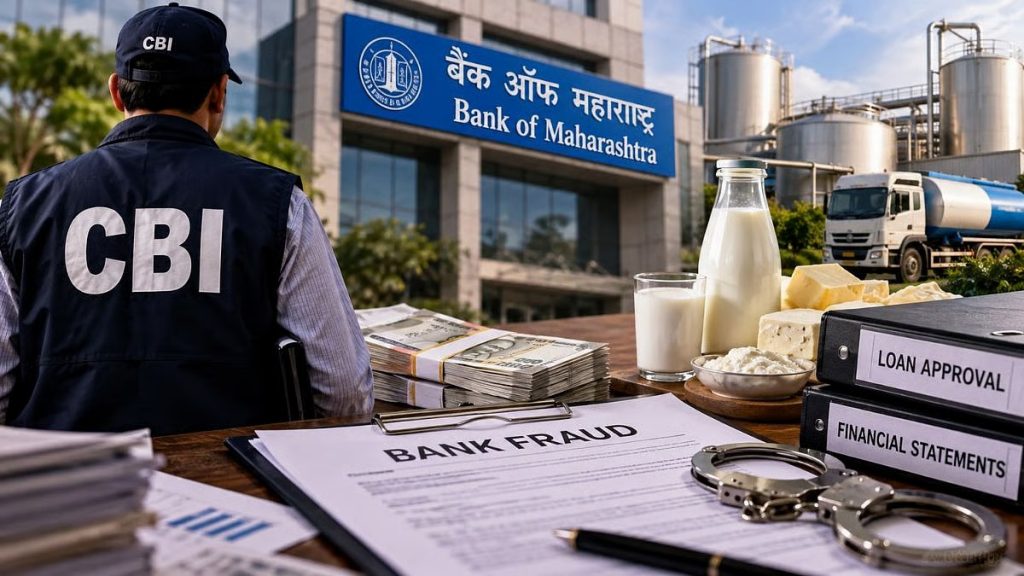
The Central Bureau of Investigation (CBI) has initiated a formal inquiry into a private dairy products firm following allegations of financial fraud and substantial loan defaults impacting a banking consortium led by the Bank of Maharashtra. According to preliminary findings released by law enforcement authorities, the corporate borrower allegedly diverted credit facilities, defaulted on repayment terms, and created unpaid liabilities scaling upwards of Rs 40 crore. Investigators are scrutinizing the company’s financial balance sheets, inventory valuations, and credit utilization records to determine whether working capital loans disbursed for dairy processing infrastructure and raw milk procurement were systematically diverted for unauthorized purposes.
From a corporate governance and banking perspective, the investigation highlights ongoing challenges regarding non-performing assets (NPAs) and credit risk management across agricultural and food processing sectors. Commercial banks extend high-value credit lines to dairy enterprises to fund cold-chain equipment, processing plants, and working capital buffers. When borrowing firms fail to service debt obligations or engage in circular transactions, lenders face protracted recovery proceedings through the National Company Law Tribunal (NCLT) and specialized investigative bodies. The CBI’s probe focuses on identifying systemic lapses in internal auditing and verifying whether corporate directors provided fabricated collateral or manipulated financial statements to secure credit approvals.
The regulatory scrutiny comes amid heightened oversight of corporate lending practices across India’s financial sector, particularly concerning mid-sized manufacturing and agro-industrial ventures. Federal investigators are examining the role of company executives, independent auditors, and internal signatories in authorizing questionable transactions that contributed to the bank’s financial exposure. Forensic financial audits are expected to trace fund flows across multiple subsidiary accounts to establish whether fraudulent intent governed the accumulation of unpaid debt.
From an industrial operations standpoint, high-profile corporate insolvency and fraud investigations can create short-term operational hurdles for suppliers and regional partners connected to the accused firm. When a processing enterprise faces insolvency proceedings or asset freezes, milk producers, packaging suppliers, and distribution partners often experience payment delays and supply chain friction. However, industry analysts note that such enforcement actions ultimately reinforce market discipline by weeding out unviable operators and protecting institutional lenders from prolonged exposure to compromised balance sheets.
At the farmgate and macroeconomic level, maintaining rigorous financial transparency and credit discipline is essential to sustaining a healthy flow of capital into India’s dairy processing infrastructure. As commercial dairies plan their capital expenditure budgets heading into 2027, lenders are expected to enforce stricter due diligence, enhanced collateral verification, and real-time inventory tracking. Safeguarding public and private banking capital from fraudulent diversion ensures that legitimate dairy enterprises retain reliable access to the financing required for plant modernization, milk collection expansion, and sustainable industry growth.
Source: Free Press Journal
You can now read the most important #news on #eDairyNews #Whatsapp channels!!!
🇮🇳 eDairy News ÍNDIA: https://whatsapp.com/channel/0029VaPidCcGpLHImBQk6x1F