

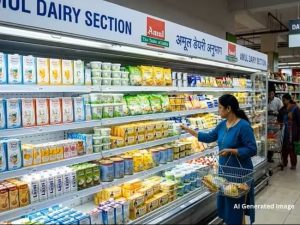
State food safety authorities invoke emergency statutory powers for one year, mandating strict procurement due diligence across food service and imposing severe penalties for misbranded dairy analogues containing vegetable and foreign fats.
The Government of Assam has enacted a comprehensive statewide prohibition on the manufacture, storage, transportation, distribution, and sale of adulterated and non-compliant paneer, responding to widespread lab-confirmed violations of statutory dairy safety standards. As reported by NE News, the blanket order was issued on October 31 by the Commissioner of Food Safety under Section 30(2)(a) of the Food Safety and Standards Act (FSSAI), 2006, effective across the state for a period of one year.
The regulatory crackdown follows an extensive 10-month testing sweep conducted between January 1 and October 31, 2026. Official state laboratory analyses of 60 paneer samples collected across wholesale and retail hubs revealed alarming non-compliance: 41 out of 60 samples (68.3%) failed prescribed quality standards. Of the non-conforming batches, 36 samples were formally categorized as substandard, while five samples were declared outright unsafe for human consumption due to hazardous adulteration and severe contamination.
Announcing the findings in Guwahati, Assam Health and Family Welfare Minister Ashok Singhal confirmed that food safety inspectors detected widespread fraudulent substitutions. Commercial batches sold as genuine paneer were found to have milk fat stripped and replaced with cheap refined palm oil, soy fat, and foreign animal fats, alongside excessive moisture loading and starch fillers used as bulking agents. Singhal emphasized that offenders will face strict penalties under the Food Safety and Standards Act, 2006, including financial penalties of up to ₹5 lakh for substandard items, up to ₹10 lakh plus potential imprisonment for distributing unsafe food, and up to ₹3 lakh for deceptive misbranding.
The statutory directive establishes clear operational boundaries between standardized dairy and industrial substitutes. Food business operators (FBOs)—encompassing hotels, restaurants, outdoor caterers, cloud kitchens, and institutional canteens—are prohibited from processing, serving, or storing non-standardized dairy analogues that mimic genuine paneer without explicit, compliant labeling. Commercial food service kitchens must verify the composition, batch origin, and FSSAI regulatory status of all dairy procurement before purchase, while immediately withdrawing suspected non-compliant inventory and notifying enforcement officers. Legitimate plant-based or blended analogues remain legal only if clearly packaged, labeled, and sold under approved analogue standards without deceptive dairy terminology.
From an agribusiness supply chain and market integrity perspective, Assam’s regulatory intervention highlights the vulnerabilities of regional dairy markets facing structural supply deficits. As northeast India depends heavily on unbranded, inter-state dairy inflows to satisfy festive and food service paneer demand, informal traders often exploit the price delta between genuine milk solids and hydrogenated vegetable fats. By enforcing traceability at the hotel, restaurant, and catering (HoReCa) intake level, the state aims to protect genuine dairy farmers from unfair price competition, preserve consumer health, and restore transparency across the regional cold chain.
Assam Food Safety Enforcement
Statewide Paneer Testing Results (Jan–Oct 2026)
Laboratory testing outcomes across 60 market samples collected in Assam.
Total Failed Samples: 41 of 60
68.3% Failure Rate
68.3% Failure Rate
■ Substandard (36)
■ Unsafe (5)
■ Compliant (19)
■ Unsafe (5)
■ Compliant (19)
Laboratory Detected Adulterants & Irregularities
Fat Substitution
Deficient milk fat replaced with palm oil, soy fats, and unapproved foreign lipid analogues.
Bulk Fillers & Moisture
Excessive free water content combined with added starch to artificially increase product yield.
Substandard Food
Up to ₹5 Lakh
Financial penalty
Unsafe Products
Up to ₹10 Lakh
Plus prison sentence
Misbranding
Up to ₹3 Lakh
Passing analogues as paneer
Source: NE News / Assam Food Safety Commissionerate
eDairyNews India Regulatory Intelligence
eDairyNews India Regulatory Intelligence
Source: NE News
You can now read the most important #news on #eDairyNews #Whatsapp channels!!!
🇮🇳 eDairy News ÍNDIA: https://whatsapp.com/channel/0029VaPidCcGpLHImBQk6x1F