

Commerce and Industry Minister Piyush Goyal confirms sensitive agri-food exclusions remain permanent, citing dietary sensitivities and smallholder protection as India targets $1 trillion in annual exports.
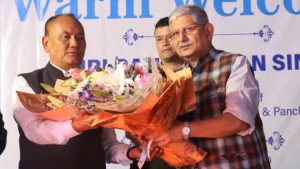
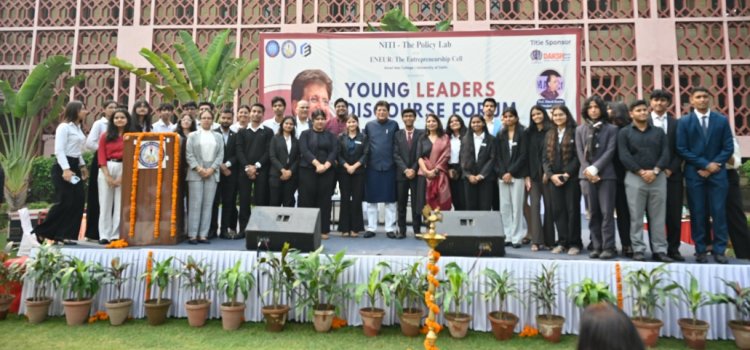
India’s Union Minister of Commerce and Industry, Piyush Goyal, has reaffirmed New Delhi’s position regarding the exclusion of sensitive agricultural commodities from current and future bilateral trade negotiations. Speaking at Kirori Mal College in New Delhi, Goyal stated that India has never granted import concessions on Genetically Modified (GM) foods or dairy products in any concluded Free Trade Agreement (FTA), emphasizing that these exclusions will remain permanent.
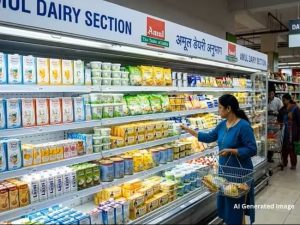
The minister’s reiteration comes as India engages in bilateral trade dialogues with several major agricultural and dairy-exporting economies, including the United States, the European Union, and the United Kingdom. Goyal underscored that domestic dairy and marine sectors are structurally tied to the livelihoods of tens of millions of smallholder farming families and artisanal fishermen. Opening domestic borders to tariff-free or subsidized foreign milk powders, butter, and cheese would compromise the operational viability of India’s cooperative dairy framework.
Beyond socio-economic considerations, the minister emphasized that religious and cultural dietary sensitivities serve as a key non-tariff barrier for foreign dairy. In several western dairying nations, calf-derived animal rennet remains standard in industrial cheese production, and ruminant feed formulations frequently incorporate animal-derived blood or bone meal supplements. For India’s predominantly vegetarian population, such practices are considered unacceptable. Goyal stressed that strict sanitary and phytosanitary certification protocols—mandated by the Food Safety and Standards Authority of India (FSSAI) to ensure all imported milk and bovine ingredients originate exclusively from animals fed a 100% vegetarian diet—will continue to be enforced without exception.
Goyal explained that India’s international trade strategy maintains a distinction between defensive agricultural safeguards and aggressive export promotion. While insulating sensitive domestic chapters, India is actively negotiating preferential, lower-tariff market access for its competitive manufacturing and export sectors—such as textiles, apparel, pharmaceuticals, processed horticulture, and gems and jewelry—to gain parity against regional competitors including Indonesia, Malaysia, Vietnam, China, and the Philippines.
The defensive agricultural stance coincides with expansion across India’s broader trade portfolio. National outbound shipments reached $480 billion during the first half of the current fiscal year (April–September), reflecting 14% year-on-year growth following total annual exports of $863 billion in the previous financial year. As New Delhi pursues its annual export target of $1 trillion, the administration continues to position India as a key global trading partner while keeping its domestic dairy market off the negotiating table.
India Trade Policy & Farm Defense
India’s FTA Framework: Defensive Pillars vs. Export Goals
Ministerial parameters governing sensitive commodity protection and macroeconomic export targets.
Non-Negotiable Defensive Exclusions (Protected in all FTAs)
Dairy & Milk Products
Zero Concessions
Zero Concessions
Zero duty concessions in any FTA; strict FSSAI vegetarian feed and non-animal rennet certification enforced.
GM Products & Marine
Banned Imports
Banned Imports
Absolute ban on genetically modified food inflows; domestic artisanal marine livelihoods safeguarded.
Offensive Export Targets (Preferential Market Access)
Textiles
vs. Vietnam/China
Pharma
Generic access
Agri Produce
Horticulture/Food
Gems & Jewelry
High value-add
FY 2026-27 Export Roadmap ($1 Trillion Milestone)
$480B (H1: +14% YoY)
$480B (H1: +14% YoY)
Previous Year: $863B Record
Target H2: $520B
Target H2: $520B
Source: Rural Voice / Ministry of Commerce & Industry
eDairyNews International Policy Intelligence
eDairyNews International Policy Intelligence
Source: Rural Voice
You can now read the most important #news on #eDairyNews #Whatsapp channels!!!
🇮🇳 eDairy News ÍNDIA: https://whatsapp.com/channel/0029VaPidCcGpLHImBQk6x1F