
Satej Patil leads panel to a 13-seat majority in Gokul dairy elections, retaining control of Maharashtra’s largest milk cooperative.
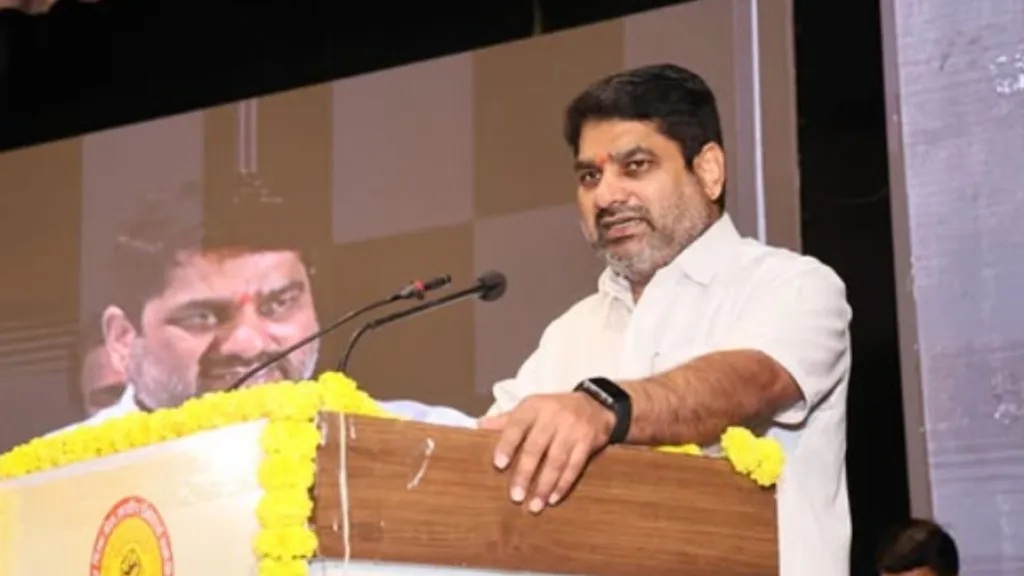
In a high-stakes electoral battle with major ramifications for western India’s cooperative sector, Congress leader and Member of the Legislative Council Satej “Bunty” Patil secured a decisive majority in the governing board elections of the Kolhapur District Cooperative Milk Producers Union. Widely recognized by its flagship consumer brand name Gokul, the organization stands as the largest and most commercially influential dairy cooperative union in Maharashtra. Contesting against the combined political apparatus of the state’s ruling Mahayuti coalition—which deployed two state cabinet ministers, ten members of the legislative assembly, and two members of parliament—Patil’s panel clinched 13 out of the 25 contested board seats. The victory cements Patil’s operational leadership over the historic cooperative, defying aggressive ruling-party campaigns aimed at flipping board control and restoring the veteran legislator’s political standing across the state.
Beyond regional political dynamics, Gokul represents a massive agro-industrial enterprise and economic lifeline for hundreds of thousands of rural households across Kolhapur and surrounding districts. Established in March 1963, the cooperative closed the 2024–25 financial year with an annual commercial turnover of ₹3,966.28 crore. The union procures fresh bovine and buffalo milk daily from an extensive grassroots collection infrastructure comprising 8,009 village-level primary cooperative societies spanning roughly 1,810 rural communities. Providing stable livelihoods to nearly 4.41 lakh registered milk producers, Gokul’s procurement scale makes board management pivotal not only to district agro-politics but also to the broader stabilization of raw milk realizations and dairy farmer incomes across western Maharashtra.
From an industrial processing and supply chain logistics standpoint, governing Gokul requires navigating complex multi-district distribution channels and large-scale manufacturing infrastructure. The cooperative plays an indispensable role in supplying packaged liquid milk, curd, butter, and traditional dairy fats to high-demand metropolitan markets, most notably the Mumbai Metropolitan Region and Pune. Maintaining competitive daily intake volumes requires sustained capital outlays in village-level bulk milk coolers, temperature-controlled insulated road tankers, and automated processing lines. Under Patil’s continued leadership, the cooperative board faces the challenge of protecting fluid milk market share against aggressive private-sector dairies and multi-state cooperative brands, necessitating ongoing investments in extended shelf-life packaging, aseptic cold chains, and cold-storage distribution nodes.
From an enterprise finance and cooperative treasury perspective, managing an entity with a balance sheet approaching ₹4,000 crore requires rigorous liquidity management and strict cost-accounting disciplines. Board leadership must balance member expectations for maximum farmgate procurement payouts with corporate capital reserve requirements. Compounding these fiscal responsibilities, severe feed and dry fodder inflation across Maharashtra has placed heavy cost-of-production pressures on dairy farmers, making the cooperative’s subsidized cattle feed manufacturing plants and veterinary support schemes vital to sustaining herd health. Defending operating margins without passing exorbitant retail price hikes onto urban working-class consumers requires the cooperative treasury to optimize plant processing yields, minimize distribution transit shrinkages, and diversify product revenue into higher-margin value-added dairy segments like mawa, paneer, and fermented milk products.
At the grassroots farmgate level, retaining operational independence in cooperative governance protects primary milk producers from speculative market distortions. Dairy farmers across Kolhapur depend heavily on Gokul’s timely bi-monthly milk bill clearances, transparent fat-testing automated systems, and annual cooperative patronage dividends to finance herd replenishment and debt-service obligations. Maintaining board stability ensures continuity in farmer-welfare policies and livestock development initiatives heading into 2027. By shielding the cooperative from political factionalism and prioritizing the economic interests of smallholder milk producers, Gokul’s ongoing commercial trajectory remains a cornerstone of rural wealth generation, safeguarding livestock equity and driving sustainable dairy development across western Maharashtra.
Source: The Indian Express
You can now read the most important #news on #eDairyNews #Whatsapp channels!!!
🇮🇳 eDairy News ÍNDIA: https://whatsapp.com/channel/0029VaPidCcGpLHImBQk6x1F