

Addressing an agricultural education forum in Hyderabad, Governor Shiv Pratap Shukla emphasized the role of dairy farming, processing, and natural inputs in sustaining rural household incomes.
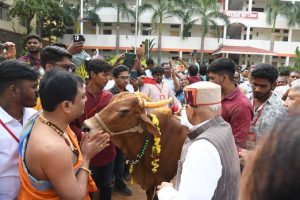
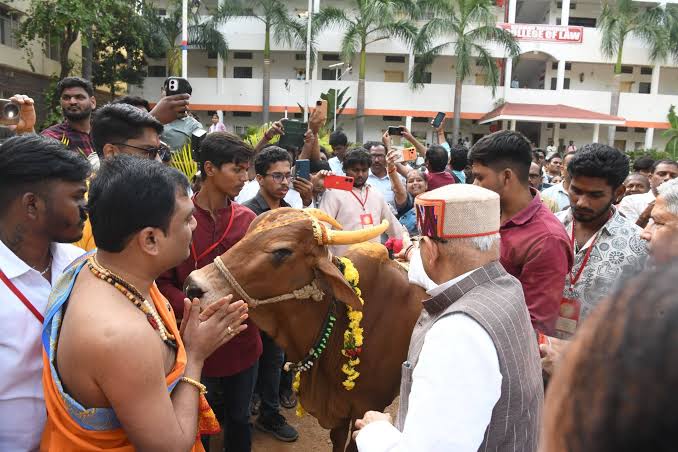
Telangana Governor Shiv Pratap Shukla emphasized that cattle protection and livestock stewardship must be treated as a collective economic, environmental, and social responsibility rather than solely a cultural tradition. Speaking as chief guest at the State-Level Gau Vignana Pareeksha-2026 awards and felicitation ceremony in Narayanaguda, Hyderabad, Shukla underscored the foundational role of cattle in sustaining India’s rural economy and securing daily cash flows for millions of agricultural households. Jointly organized by the Sanatana Go Sampathi Foundation and the Goseva Department of Telangana at Sardar Patel Auditorium, the event gathered policymakers and sector stakeholders, including Union Minister of State for Home Affairs Bandi Sanjay Kumar and All India Gau Seva Convenor Ajit Prasad Mahapatra.
Dairy production and value-added processing remain central pillars of village-level nutrition and household income stability across southern India. Shukla highlighted that raw milk alongside traditional manufactured staples such as curd, butter, and ghee provide essential dietary proteins and fats while anchoring daily rural liquidity. Beyond core dairy commodities, the Governor noted that livestock by-products—specifically cattle dung and urine—deliver measurable economic utility in organic soil enrichment and natural farming systems. Integrating bovine husbandry with low-input crop cultivation helps smallholder farmers reduce reliance on synthetic chemical fertilizers and preserve local agro-ecological resources.
Educational outreach and technical skill development in modern dairy science were identified as critical catalysts for expanding rural agribusiness opportunities. Addressing student awardees, Shukla encouraged educational institutions across Telangana to organize regular training programs covering scientific animal husbandry, hygienic dairy processing, and livestock-based rural entrepreneurship. By combining contemporary agricultural science, cold-chain innovation, and modern processing technologies with indigenous cattle management practices, young graduates can build viable agribusiness enterprises. Strengthening technical literacy at the school and university levels supports long-term herd productivity and improves raw milk quality benchmarks across regional collection networks.
From an industry development standpoint, aligning cattle welfare initiatives with commercial dairy infrastructure reinforces supply chain resilience in states working to expand milk procurement. Across India’s dairy sector, smallholder mixed-farming systems rely on healthy, productive herds to supply village cooperative societies and private chilling centers throughout seasonal weather shifts. Promoting sustainable fodder management, veterinary care, and circular farm waste utilization lowers per-liter production costs while improving farmgate margins. When rural youth view dairy processing and livestock management as modern, profitable career paths, regional milk sheds gain stronger generational continuity.
Looking ahead, institutional backing for dairy entrepreneurship and natural farming education is expected to complement broader state-level efforts to boost rural self-reliance and agricultural value addition. Shukla urged students and community leaders to apply scientific knowledge toward strengthening village economies and advancing sustainable livestock stewardship. Continued collaboration between state agricultural departments, academic institutions, and grassroots dairy organizations will remain essential to turning rural livestock resources into durable economic growth across Telangana.
Source: HT Syndication / United News of India
You can now read the most important #news on #eDairyNews #Whatsapp channels!!!
🇮🇳 eDairy News ÍNDIA: https://whatsapp.com/channel/0029VaPidCcGpLHImBQk6x1F