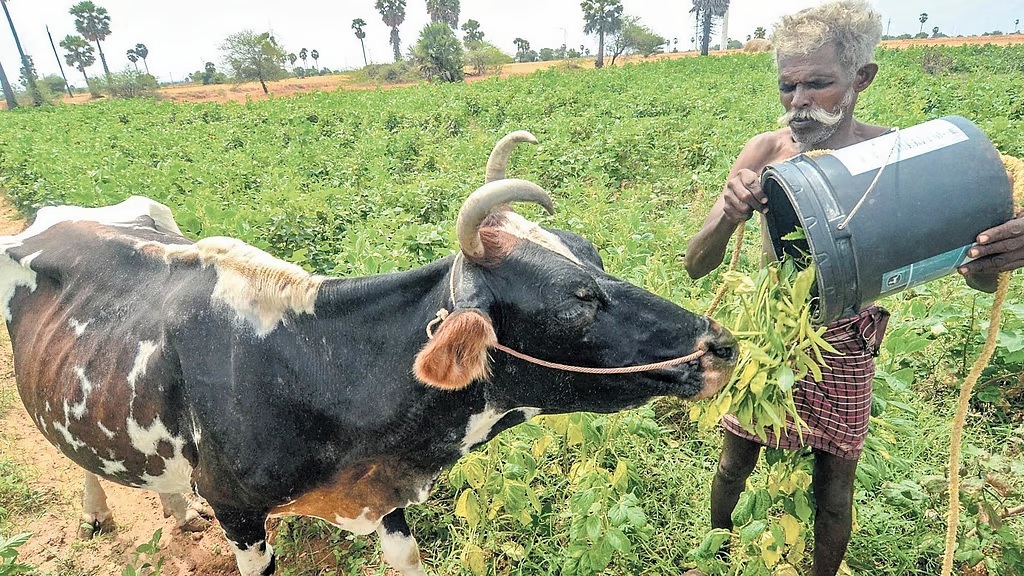



50 families in Pottamlodi manage 240 cattle collectively, sharing fresh milk and utilizing manure for chemical-free organic farming.
In a notable departure from the commercialized, profit-driven dairy supply chains dominating modern agriculture, the rural hamlet of Pottamlodi in Telangana’s Adilabad district has established an entirely closed-loop, community-driven dairy and organic farming model. Located under the Alikori Gram Panchayat roughly 20 kilometres from the district headquarters, the settlement of 50 families operates under a strict principle of non-commercialization: milk is neither bought from commercial suppliers nor sold into external retail markets.
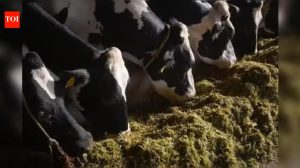
The community collectively maintains around 240 indigenous cows and cattle, with most individual households managing between five and ten animals. Rather than viewing livestock as economic commodities or liquid balance-sheet assets, residents treat their cattle as integral family members. Daily milk output is pooled and distributed internally among all village households according to nutritional necessity, completely eliminating reliance on packaged retail milk and insulating families from regional concerns over dairy adulteration, synthetic additives, and chemical residues.
To maintain operational efficiency across the smallholder herd, the village utilizes a collective management system. The community employs three dedicated cattle grazers who gather livestock from individual households each morning and guide them to communal grazing grounds and pasture fields throughout the day. This shared labor framework minimizes daily farm chores for individual families while ensuring optimal rotational foraging and consistent exercise for the cattle.
The closed-loop dairy model also serves as the foundational pillar for the village’s agricultural cropping cycle. Pottamlodi follows a strictly organic farming regimen, utilizing the large volumes of cow dung and urine produced by the 240-head herd to manufacture organic compost and natural liquid bio-fertilizers. This practice has allowed the village to eliminate external expenditures on synthetic chemical fertilizers and industrial pesticides, significantly reducing overall cultivation costs and preserving local soil biology.
The success of Pottamlodi demonstrates the practical viability of localized, commons-based agricultural models within peri-rural India. While modern industrial dairy systems emphasize volumetric yields, commercial chilling centers, and formal marketing contracts, Pottamlodi highlights how traditional pastoral cooperation and circular resource management can deliver household food sovereignty, lower agricultural input costs, and protect animal welfare.
Source: The New Indian Express
You can now read the most important #news on #eDairyNews #Whatsapp channels!!!
eDairy News ÍNDIA: https://whatsapp.com/channel/0029VaPidCcGpLHImBQk6x1F