

Issued under Telangana Gazette Notification No. 807, the statewide prohibition bars the manufacture, storage, transport, and sale of synthetic vegetable-oil paneer substitutes through September 2027 to safeguard public health and genuine dairy producers.
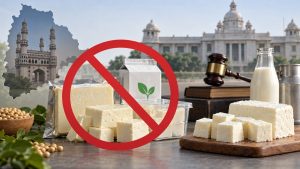
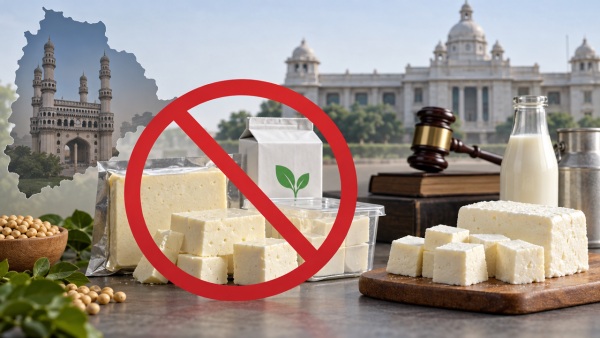
The Commissioner of Food Safety in Telangana has enforced a statewide one-year ban on the manufacture, processing, packing, storage, distribution, transportation, and sale of non-dairy, artificial, or analogue paneer. Issued under Section 30(2)(a) of the Food Safety and Standards Act, 2006, and formally notified via Telangana Gazette Notification No. 807 on September 10, 2026—with ongoing regulatory updates highlighted through November 21, 2026—the prohibition remains in effect through September 9, 2027, unless extended or modified by competent authorities. While traditional paneer produced exclusively from pure dairy milkfat and milk solids remains fully permitted and protected, the state crackdown targets synthetic, factory-made substitutes formulated with vegetable oils, starches, and chemical emulsifiers that are routinely passed off as genuine dairy paneer across retail markets and commercial eateries.
Ingredient composition and food standards law establish the regulatory basis for Telangana’s intervention. Under regulations administered by the Food Safety and Standards Authority of India (FSSAI), authentic paneer must be derived strictly from cow or buffalo milk using food-grade acid coagulants, retaining natural dairy proteins and butterfat. By contrast, analogue paneer replaces expensive milkfat with low-cost refined vegetable oils—most commonly palm oil—blended with skimmed milk powder, industrial starches, and emulsifiers such as glycerol monostearate. Although FSSAI food standards recognize “Dairy products and analogues” as a distinct regulatory category requiring explicit non-dairy labeling, state authorities found that hotels, restaurants, catering kitchens, and sweet shops rarely disclosed when dishes contained imitation paneer, deceiving consumers and exposing them to inferior nutritional profiles.
Field enforcement operations across Hyderabad and surrounding districts uncovered widespread adulteration prior to the formal gazette prohibition. Coordinated inspections conducted by the Telangana Standards Authority for Food and Essential Drugs (TG SAFE) alongside the Hyderabad Food Adulteration Surveillance Team (H-FAST) raided 14 commercial manufacturing and distribution facilities, seizing roughly one metric ton of loose palm oil, 476 kilograms of glycerol monostearate, 1,760 packs of industrial cooking cream, and 150 kilograms of skimmed milk powder. Across broader enforcement drives, H-FAST officials registered more than 180 regulatory cases and confiscated over 1.5 metric tons of synthetic paneer destined for foodservice supply chains.
Broader national regulatory momentum and food-delivery platform policies underscore how rapidly India’s dairy sector is moving against unlabelled dairy analogues. Telangana’s one-year prohibition follows a parallel statewide ban enacted by neighboring Karnataka, as well as a formal April 2026 advisory from FSSAI warning that marketing cheese or vegetable-fat analogues as “paneer” constitutes a grave violation of national food safety law. Private-sector platforms have reinforced regulatory enforcement, with major online food aggregator Zomato implementing a strict zero-tolerance policy against undisclosed analogue dairy dishes on restaurant menus, warning non-compliant eateries of platform delisting.
Economic implications for Indian dairy farmers and cooperative milk unions are directly positive as authorities curb unfair price competition from synthetic substitutes. Because genuine paneer requires roughly five litres of full-fat milk per kilogram of finished curd, rampant sales of cheap palm-oil analogues erode commercial demand for authentic farmgate butterfat and milk solids. Welcoming the notification, regional dairy farmers and cooperative traders noted that removing imitation products from restaurants and retail counters restores fair market realizations for legitimate milk producers.
Looking ahead through September 2027, sustained inspections of restaurants, cloud kitchens, and wholesale markets by TG SAFE officers will determine how thoroughly analogue paneer is eliminated from Telangana’s food supply chain. By pairing strict gazette enforcement with heightened consumer vigilance, state regulators aim to protect public nutrition while safeguarding the integrity of India’s dairy industry.
Source: GKToday
You can now read the most important #news on #eDairyNews #Whatsapp channels!!!
🇮🇳 eDairy News ÍNDIA: https://whatsapp.com/channel/0029VaPidCcGpLHImBQk6x1F