



Apex court grants interim relief to the state government, noting “internal inconsistencies” in the High Court’s ruling against statutory provisions.
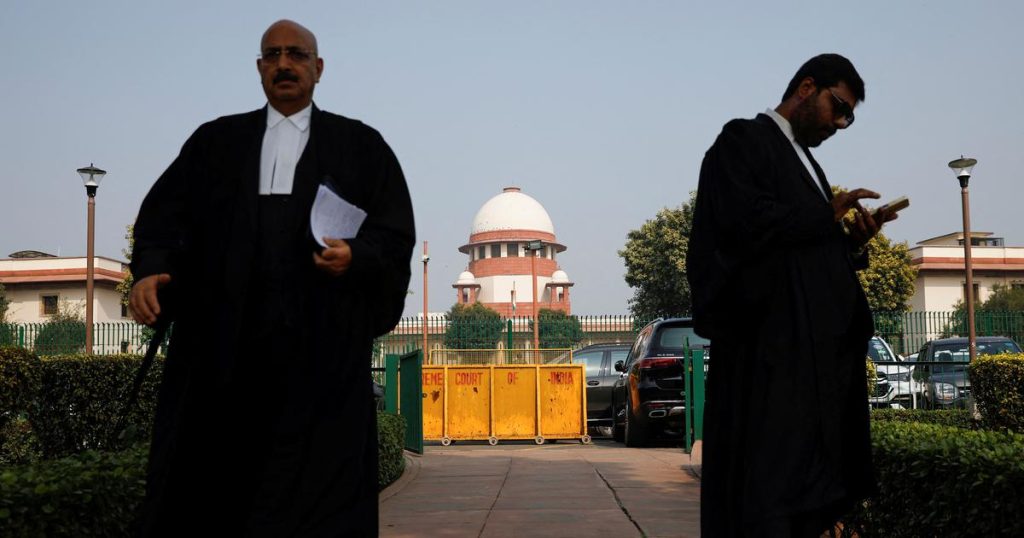
The Supreme Court of India has stayed a controversial May 27, 2026, directive from the Madras High Court that ordered the Tamil Nadu government to enforce an absolute, statewide prohibition on the slaughter of cows and calves. A division bench comprising Justice Vikram Nath and Justice Sandeep Mehta issued the interim stay while hearing a Special Leave Petition filed by the Tamil Nadu state government. The state successfully argued that the High Court’s sweeping judicial intervention was contrary to existing statutory legislation and created severe operational and social disruption on the eve of the Bakrid festival and beyond.
The legal friction stems from the Tamil Nadu Animal Preservation Act of 1958, a state statute that explicitly permits the slaughter of a specific category of cattle under regulated conditions. Under the 1958 Act, cows and buffaloes aged over 10 years that are certified by a competent authority as unfit for work, draught, or breeding are legally eligible for slaughter in designated municipal facilities. The state government contended that the High Court’s blanket ban essentially overrode established statutory law, representing an overreach of judicial authority into legislative and administrative domains.
In its appeal, the Tamil Nadu government pointed out a glaring logical contradiction within the High Court’s original judgment. On one hand, the High Court correctly observed and ruled that animal slaughter must only take place in designated, legally approved slaughterhouses—ruling out temporary roadside sheds or unnotified public spots. However, in the very same decision, the High Court issued a sweeping, statewide directive banning cow and calf slaughter altogether, regardless of location or statutory exemptions. The Supreme Court bench agreed that this dual directive was internally inconsistent and prima facie required correction.
The High Court’s original ruling had been issued in response to a petition seeking strict enforcement of animal preservation laws on the eve of Bakrid. In that judgment, the division bench had cited Article 48 of the Constitution (Directive Principles of State Policy) and a historic 1976 Government Order to argue that restricting cow slaughter was essential to preserving the rural agrarian economy and boosting milk yields. However, the state government countered that because the petitioner had not even prayed for a total statewide ban, the High Court had unilaterally granted a monumental relief that was neither pleaded nor structurally viable under current local body rules.
By staying the High Court’s order, the Supreme Court has preserved the legal status quo in Tamil Nadu, allowing certified slaughter under the 1958 Act to continue in licensed municipal slaughterhouses. Legal experts and state administrators welcomed the apex court’s intervention, noting that judicial mandates should not abruptly conflict with active, decades-old state legislations governing animal preservation and municipal health. The Supreme Court has issued formal notices to the original respondents and will examine the constitutional and statutory boundaries of the animal preservation framework in subsequent hearings.
Source: Scroll.in / LiveLaw
You can now read the most important #news on #eDairyNews #Whatsapp channels!!!
eDairy News ÍNDIA: https://whatsapp.com/channel/0029VaPidCcGpLHImBQk6x1F