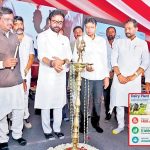

Construction begins on the new Sabar Dairy plant in Medak to accelerate cooperative milk processing across southern India.
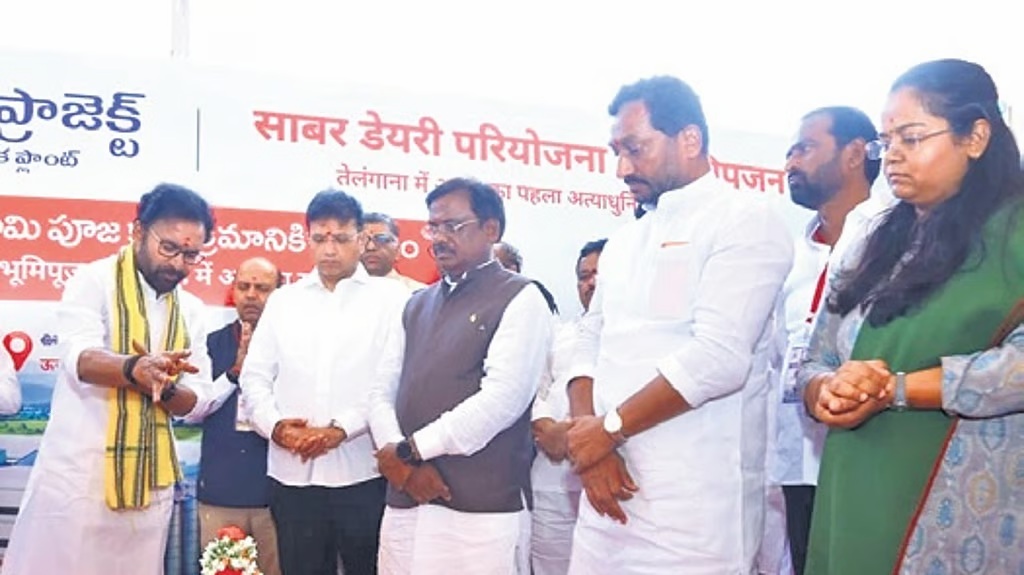
Official foundation ceremonies have commenced for the Rs 400-crore Sabar Dairy plant at Urja Industrial Park in Toopran, situated within the Medak district of Telangana. Operating under the umbrella of the Amul cooperative framework, the mega integrated manufacturing complex is engineered with an initial milk processing capacity of 500,000 liters per day. Turnkey construction and civil engineering works are scheduled to advance swiftly, with commercial commissioning projected to occur within an 18-month execution window. Once fully operational, the industrial hub is slated to integrate approximately 10,000 local dairy producers into structured procurement networks while creating 350 direct manufacturing jobs across the district. High-ranking ministerial leadership inaugurated the project, emphasizing that establishing modern processing capacity in central Telangana serves as an essential economic driver for allied agricultural development.
Facility architecture at the Toopran plant incorporates advanced automated intake bays, high-throughput pasteurization assemblies, and energy-efficient processing lines capable of handling variable seasonal milk flows. Production operations will convert incoming raw milk supplies into packaged liquid milk pouches alongside an expansive portfolio of cultured and fresh dairy commodities, including curd, paneer, and fermented beverages such as lassi and spiced buttermilk. Industrial processing modules will also accommodate large-scale churning lines for traditional clarified butter, hard-pack ice cream manufacturing, and integrated bakery items designed to meet diverse dietary demands. Developing this mega plant requires significant investments in localized cold-chain warehousing, computerized quality testing laboratories, and closed-loop wastewater treatment installations to comply with strict environmental standards. Strategic positioning inside Urja Industrial Park delivers direct arterial access to major transport corridors feeding the Hyderabad metropolitan area, minimizing transit times and preserving raw milk bacteriological integrity.
The new manufacturing investment builds on the cooperative’s decade-long operational presence in Telangana, where field teams have collected more than 100,000 liters of raw milk daily from village collection centers since entering the regional market in 2015. This regional expansion reflects the historical trajectory of the cooperative enterprise, which grew from handling just 5,100 liters per day across 19 village societies at its 1964 inception into a national dairy heavyweight processing nearly 5 million liters daily from 50,000 member producers. Having generated an annual turnover of Rs 10,500 crore during the 2025-2026 financial year, the cooperative is deploying its substantial organizational experience to modernize southern dairy distribution channels. Consumer trends across urban centers in southern India exhibit accelerating shifts toward packaged, branded, and quality-certified dairy goods, displacing traditional loose milk markets prone to adulteration and quality variances. Capturing these rapidly expanding urban market shares requires integrated processors to balance primary liquid milk packaging with higher-margin value-added product lines that buffer dairy operations against volatile input costs.
Backing the Rs 400-crore capital expenditure is an institutional framework aligned with regional industrial promotion schemes, specifically the Invest Telangana initiative and long-range economic master plans targeted toward 2047. By deploying assets within an organized industrial cluster, the enterprise secures uninterrupted high-voltage utility supplies, dedicated effluent routing, and accelerated administrative approvals that mitigate infrastructure construction risks. Financing for the processing complex draws upon the cooperative’s strong operational cash generation and retained capital reserves, limiting reliance on costly commercial debt financing during high-interest cycles. Government officials affirmed continued administrative cooperation to assist with last-mile logistics networks, bulk chilling points, and rural road connectivity linking remote villages to the central manufacturing plant. These strategic capital outlays provide an effective hedge against supply chain spoilage, ensuring that milk procurement remains resilient against climatic fluctuations and rising logistics costs.
Beyond direct manufacturing capacity, the cooperative framework is designed to structurally elevate farmgate milk pricing and rural household stability across agrarian districts. Operating under the transparent cooperative pricing mechanism, up to 80 percent of each consumer rupee generated from retail dairy transactions flows directly back into the hands of participating milk producers. Institutional leadership highlighted the transformative potential of the venture for rural women and smallholder farmers, who manage daily herd operations but frequently face price suppression from unorganized private middlemen. Policymakers utilized the foundation ceremony to issue a call for revitalizing village cooperative societies across Telangana, pointing toward established dairy models in Gujarat and Maharashtra as blueprints for White Revolution 2.0. Connecting 10,000 dairy farming households to dependable daily off-take agreements is anticipated to de-risk rural livelihoods, encourage livestock herd expansion, and establish a durable economic foundation for the regional dairy sector.
Source: The New Indian Express
You can now read the most important #news on #eDairyNews #Whatsapp channels!!!
🇮🇳 eDairy News ÍNDIA: https://whatsapp.com/channel/0029VaPidCcGpLHImBQk6x1F