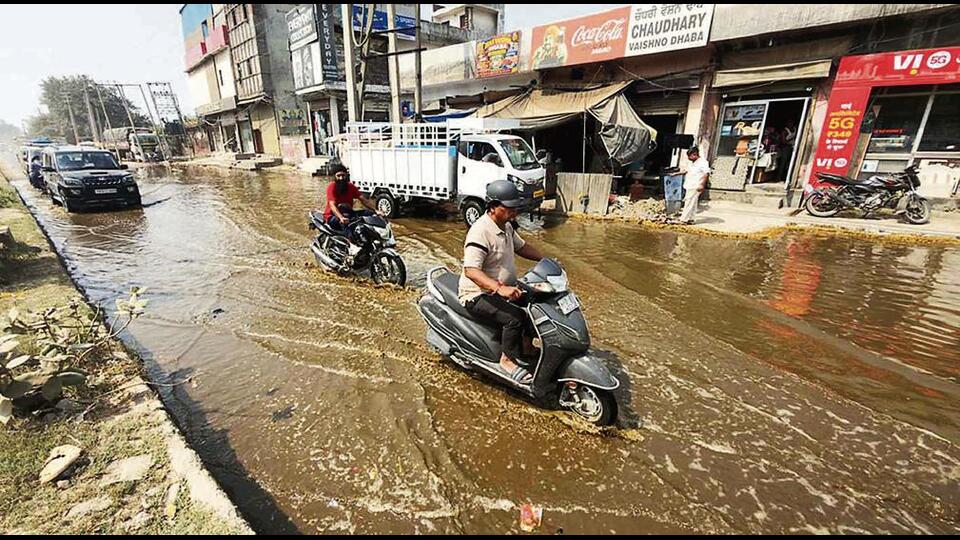



A severe breakdown in dairy waste management floods the Tajpur Dairy Complex in Ludhiana, disrupting milk logistics and risking herd health.
An escalating operational crisis has paralyzed the Tajpur Dairy Complex in Ludhiana, where internal access corridors have remained submerged under nearly a foot of stagnant slurry and animal discharge for days. The municipal dairy colony accommodates approximately 160 commercial dairy units supporting a collective herd population exceeding 18,000 cattle and buffaloes. Severe inundation across secondary transport lanes has halted farm-level vehicle movements, leaving daily dairy labor struggling through foul effluent to deliver inputs and extract perishable output. The acute spillover has ignited an intense dispute between commercial livestock producers and civic engineering authorities regarding the structural efficacy of localized disposal networks. Without functional drainage and regular mechanical evacuation, the cluster faces immediate commercial bottlenecks that threaten raw milk collection routes and animal welfare standards across northern India.
Daily manure and wastewater loads in high-density peri-urban production clusters require robust pumping infrastructure that current municipal facilities are failing to sustain. The twin dairy complexes of Ludhiana collectively generate an estimated 850 metric tonnes of bovine dung each day, creating enormous hydraulic and organic processing demands on surrounding civil systems. Mechanical pumps and municipal effluent conduits have experienced repeated blockages, choked by heavy fibrous slurry, solids sedimentation, and unseparated organic matter. When backed-up effluent pools around housing pens, standing livestock face severe epidemiological risks, including rising incidence rates of environmental mastitis and debilitating claw lesions. Producers must routinely wash stalls to maintain lactation hygiene, yet the absence of active effluent outlets turns clean-water flushing into a compounding hazard that expands the volume of standing sludge.
Underlying this municipal friction is a regulatory collision between waterway pollution remediation and the absence of scalable agricultural waste infrastructure. Environmental authorities and river protection campaigns have cracked down on untreated manure dumping into the sensitive Buddha Nullah drainage channel, leading oversight bodies to halt discharge points without activating reliable alternative outflows. This enforcement action triggered a direct system backflow, leaving commercial dairy operators stranded as manure lines backed up into the facility roads. Civic administrators contend that farm operators consistently fail to screen solid cattle dung before washing sheds, overwhelming standard civil sewerage networks with heavy fibrous sludge. In contrast, dairy operators emphasize that existing civil disposal channels are fundamentally under-engineered to service an intensive dairy cluster of 18,000 animals, leaving farm gates isolated and milk transport tankers unable to execute timely pickups.
The recurring operational failure also highlights mounting economic losses and fiscal inefficiencies embedded in municipal service delivery contracts. Civic authorities had previously sanctioned dedicated dung collection and processing agreements valued at roughly Rs 22 crore, yet field execution has repeatedly broken down, leaving primary collection unfulfilled. Dairy operators have been forced to absorb supplementary private overheads, hiring private suction equipment and temporary manual labor at inflated rates to clear farm frontages. Furthermore, public-private initiatives designed to convert raw cattle dung into compressed bio-gas (CBG) remain stalled or undersized, forfeiting potential revenue from bio-methane sales and high-grade organic fertilizer. Operating margins across urban dairy holdings are already compressed by elevated coarse roughage prices and feed concentrate costs, making unserviced municipal levies an unsustainable drag on farmgate enterprise budgets.
Sustaining the economic viability of the Tajpur dairy cluster requires immediate structural reforms in effluent conveyance and decentralized processing assets. Local dairy producer associations are demanding an immediate overhaul of mechanical pumping stations, paired with the installation of industrial solid-liquid separators directly at cluster drainage intersections. Transitioning from open drain discharge to integrated anaerobic digestion hubs would transform an environmental liability into renewable energy, providing reliable grid power and commercial bio-fertilizer. Establishing dedicated dairy sewerage channels that operate independently of urban stormwater grids is essential to prevent chronic localized flooding during peak production cycles. Without coordinated capital allocation and consistent civic maintenance, the recurring contamination crisis will erode the financial returns of 160 dairy enterprises and compromise raw milk logistics across the regional dairy foodshed.
Source: Hindustan Times
You can now read the most important #news on #eDairyNews #Whatsapp channels!!!
🇮🇳 eDairy News ÍNDIA: https://whatsapp.com/channel/0029VaPidCcGpLHImBQk6x1F