
Division Bench quashes the Dairy Development Department’s order dissolving the Thiruvananthapuram Regional Union, ruling the administrative takeover illegal as federation affirms full seal integrity and laboratory compliance of temple supplies.
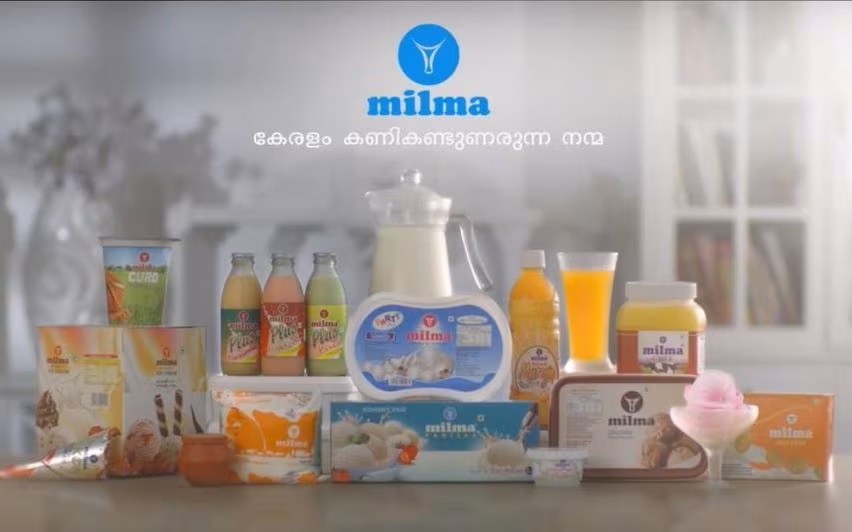
The Kerala High Court Division Bench has invalidated the Kerala state government’s order dissolving the elected Board of Directors of the Thiruvananthapuram Regional Co-operative Milk Producers’ Union (TRCMPU)—a key administrative wing of the Kerala Co-operative Milk Marketing Federation, commercially known as Milma. As reported by Deccan Chronicle via ANI, the court ruled the government’s July 25 dissolution illegal and directed the immediate reinstatement of the elected board.
The ruling, delivered by a Division Bench comprising Justice Dr. A.K. Jayasankaran Nambiar and Justice A.K. Preetha, allowed an appeal filed by the Union President and board office-bearers (represented by Senior Advocate Renjith Thampan and Advocate P.C. Sasidharan), overturning an earlier single-bench verdict that had upheld the state’s intervention. The dispute originated when the Director of the Dairy Development Department dissolved the TRCMPU managing committee and installed an interim administrative committee, citing alleged procedural and distribution irregularities regarding ghee supplied for sacred rituals (prasadam and abhishekam) at the Sabarimala temple.
Following the state’s administrative takeover, Milma leadership mounted a detailed defense of its supply chain protocols and laboratory certifications. Milma Chairman K.S. Mani confirmed that the cooperative federation supplied only certified, premium-grade milk fat to the Travancore Devaswom Board, meeting all statutory standards under the Food Safety and Standards Authority of India (FSSAI).
Mani explained that the ghee supplied to the hilltop pilgrimage shrine was packaged in fully hermetically sealed 15-kilogram commercial tins, rendering transit tampering or adulteration impossible within the cooperative’s logistics network. Furthermore, the federation confirmed that the temple administration raised no formal non-compliance issues regarding product purity and cleared full commercial payment for all delivered consignments. Mani emphasized that if genuine Milma tins were substituted or blended with substandard lipid analogues down the secondary distribution line, post-delivery custody should be investigated under civil and criminal statutes rather than penalizing the cooperative’s elected leadership.
From an institutional dairy governance and cooperative law perspective, the Kerala High Court’s intervention sets an important legal check against administrative overreach into regional milk unions. Much like the ongoing political frictions in western and northern Indian dairy unions, cooperative boards in southern India operate under strict democratic frameworks protected by state cooperative legislation and constitutional safeguards. The quashing of the dissolution order reinforces the autonomy of producer-elected boards, preventing regulatory authorities from replacing elected farmer representatives with state-appointed administrators without establishing demonstrable, legally validated culpability.
Source: Deccan Chronicle
You can now read the most important #news on #eDairyNews #Whatsapp channels!!!
🇮🇳 eDairy News ÍNDIA: https://whatsapp.com/channel/0029VaPidCcGpLHImBQk6x1F