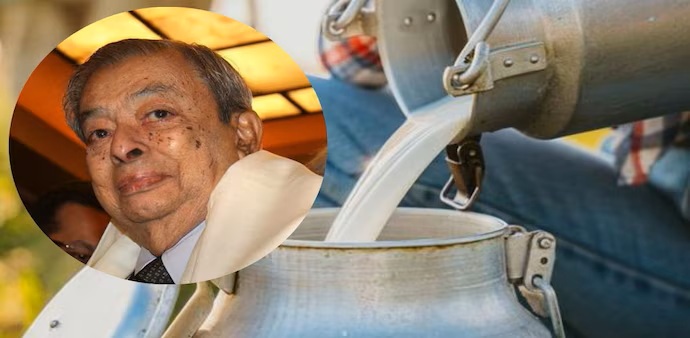




Marked on National Milk Day honoring Dr. Verghese Kurien’s birth anniversary, the Anand cooperative model and Operation Flood laid the institutional foundation that turned India from a milk-deficit market into the world’s largest milk producer.
Dr. Verghese Kurien’s journey from a small dairy cooperative in Anand, Gujarat, to the helm of India’s nationwide dairy transformation established the cooperative framework that turned the country from a milk-deficit importer into the world’s top milk producer. Born on November 26, 1921—the date commemorated annually as National Milk Day—Kurien proved that smallholder dairy farmers could gain bargaining power, steady income, and market control by owning the institutions that collect, process, and market their milk rather than relying on middlemen.
Beginning in Anand alongside local cooperative leaders such as Tribhuvandas Patel and the Amul movement, Kurien helped scale a decentralized producer-owned model that later expanded nationwide through institutional milestones:
-
Producer Ownership and the Anand Model: Farmer-owned village societies and district unions gave small milk suppliers direct stakes in processing and marketing, improving farmgate returns and building trusted consumer brands while cutting out intermediaries.
-
Creation of the NDDB in 1965: Established with Kurien as its first chairman, the National Dairy Development Board was tasked with scaling the Anand cooperative template across diverse regional dairy sheds and states.
Launch of Operation Flood in 1970: Designed to link rural milk producers with growing urban consumer markets through organized procurement, processing, and distribution grids, Operation Flood became the driving force behind India’s White Revolution.
Kurien’s enduring contribution extended beyond raw milk volumes to institution building and rural economic empowerment. By pairing cooperative governance with processing infrastructure, veterinary and breeding support, and consistent urban supply chains, the model demonstrated how collective producer action can raise rural living standards while meeting rising domestic nutrition needs.
The long-term scale of that foundation is visible in India’s modern dairy economy, where annual milk production reached 247.87 million tonnes in 2024–25 compared with 146.31 million tonnes in 2014–15, according to official government figures. Sustained output growth reflects how early cooperative design continues to anchor procurement and processing networks across the country.
More than half a century after Operation Flood began, Kurien’s core principle—that farmers thrive when they collectively govern the value chain linking production to consumers—remains central to India’s dairy sector as it adapts to modern market, quality, and sustainability demands.
Source: Business Today
You can now read the most important #news on #eDairyNews #Whatsapp channels!!!
🇮🇳 eDairy News ÍNDIA: https://whatsapp.com/channel/0029VaPidCcGpLHImBQk6x1F