


New multi-decade study links extreme heatwaves and surging humidity to severe bovine stress and multi-billion rupee losses across the trans-Gangetic plains.
A landmark multi-decade study published in Scientific Reports has explicitly linked a dramatic decline in Indian bovine milk production to the accelerating effects of climate change. Researchers from the ICAR-National Dairy Research Institute and collaborating bodies analyzed comprehensive livestock metrics across 1,148 villages in Haryana—a premier dairy tract—spanning from 2004 to 2019. The evaluation tracked the physiological and yield responses of 35.56 million buffaloes, 4.66 million cross-bred cattle, and 2.86 million indigenous cattle, establishing that intense global warming trends are actively undermining the world’s largest milk-producing nation.
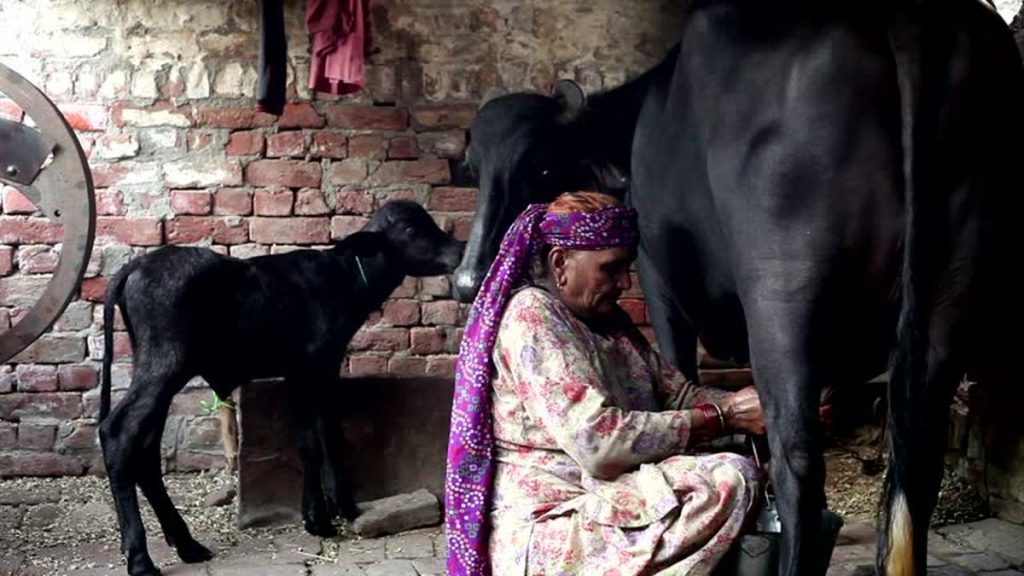
The scientific data reveals that a toxic combination of high ambient temperatures exceeding 38°C and peak relative humidity levels above 70% during July and August severely disrupts livestock homeostasis. Water buffaloes are proving particularly vulnerable to these shifts because their dark skin pigmentation and bare hides absorb high volumes of solar radiation, an anatomical disadvantage compounded by possessing fewer sweat glands than cattle. Consequently, a single unit increase in potential evapotranspiration during the dry months of May and June slashes daily milk yields by 1.4 liters per buffalo. While high-yielding cross-bred cattle similarly suffer sharp productivity drops during prolonged heatwaves, native indigenous breeds like the Sahiwal and Hariana remain highly resilient due to evolved adaptations such as loose skin, lower metabolic heat production, and superior evaporative cooling.
When the regional Temperature-Humidity Index (THI) crosses critical thresholds, it triggers a severe homeostatic and hormonal emergency within the animals. Affected livestock exhibit heavy panting, excessive sweating, and reduced physical activity, forcing them to drastically cut their dry matter intake. This acute heat stress stimulates elevated cortisol and stress hormone production, which directly impairs natural milk ejection pathways and can cause livestock mortality in extreme cases. Compounding this biological crisis, rising surface temperatures are simultaneously damaging the broader dairy ecosystem by altering the seasonal availability, overall volume, and nutritional quality of essential green fodder and cattle feed crops.
The economic fallout from these ongoing climate stressors is already dealing a heavy blow to regional agricultural liquidity. The study estimates that heat-induced dairy drops currently account for an annual baseline loss of 3.2 million tonnes of milk in India, translating to a staggering ₹2,661 crore in immediate monetary deficits. Looking ahead, this yield contraction is projected to spiral to 15 million tonnes by the 2050s, with a cited report in The Lancet warning that climate-induced temperature spikes could slash total Indian milk production by 25 percent by 2085. These macro-level production gaps present an existential threat to the food security and livelihoods of 80 million smallholder dairy farmers who currently generate 85 percent of the nation’s milk.
To mitigate these compounding climate threats, the study’s authors urge a strategic pivot toward resilience-oriented livestock management and thermo-tolerant breeding frameworks that leverage indigenous Bos indicus genetics. On the ground, progressive smallholders in Haryana are actively implementing immediate microclimate alterations—including the installation of specialized misting fans, foggers, sprinklers, and buffalo wallowing ponds alongside agroforestry shade systems—to shield their herds from extreme summer conditions. However, experts like Abhinav Gaurav from the Environmental Defense Fund India emphasize that the ultimate industry challenge lies in scaling these local technical solutions, establishing regional THI early warning systems, and deploying a coordinated national climate-smart dairy strategy for under-resourced rural producers.
Source: The Hindu
You can now read the most important #news on #eDairyNews #Whatsapp channels!!!
eDairy News ÍNDIA: https://whatsapp.com/channel/0029VaPidCcGpLHImBQk6x1F