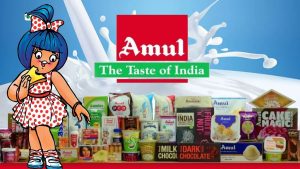


Indian dairy powerhouse Amul accelerates its international expansion by licensing its brand and product standards to foreign cooperatives rather than exporting liquid milk.
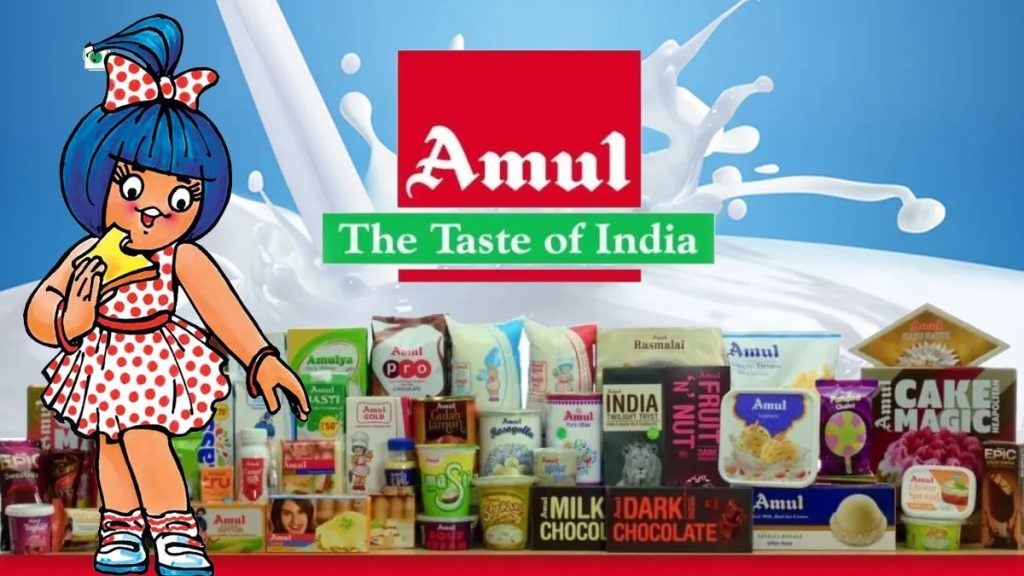
The Gujarat Cooperative Milk Marketing Federation (GCMMF), the apex body marketing the Amul brand, is rapidly scaling a decentralized international expansion model designed to bypass the physical and biological barriers of exporting perishable fresh milk from India. Under the operational strategy of keeping the brand global while keeping the milk local, the Indian cooperative giant forms strategic joint ventures and co-packing partnerships with established farmer-owned dairy cooperatives in overseas destination markets. Rather than attempting long-distance refrigerated shipments of liquid dairy across oceans, Amul contracts local processing plants, regional milk pools, and domestic cold-chain distribution networks to manufacture and bottle fresh milk under its proprietary specifications. After inaugurating the strategy in North America and Western Europe, federation leadership is actively preparing to replicate the co-manufacturing framework across emerging markets in Southeast Asia and Africa, targeting market entry into ten additional international territories.
From an industrial processing and plant management perspective, licensing manufacturing specifications to overseas partner plants requires rigorous technical coordination and quality oversight. In the United States, Amul partnered with the Michigan Milk Producers Association (MMPA), utilizing the American cooperative’s collection network and automated bottling infrastructure to launch a commercial product lineup featuring Amul Gold with 6 percent milkfat, Shakti at 4.5 percent, Taaza at 3.25 percent, and Slim & Trim at 2 percent. Similarly, in Western Europe, the federation partnered with Spanish cooperative COVAP (Cooperativa Ganadera del Valle de los Pedroches), utilizing its Andalusian processing facilities to bottle and distribute fresh Amul Gold for urban grocery channels in Madrid, Barcelona, and Lisbon. Processing milk across independent partner facilities eliminates the necessity of building greenfield factories abroad, but it demands strict standardization of pasteurization temperatures, homogenization pressures, and butterfat testing protocols to ensure that finished retail cartons match Amul’s sensory and compositional profiles across varying regulatory environments.
The strategic transition from commodity exporting to localized co-manufacturing reflects the commercial limitations of marketing fresh fluid milk across international borders. While high-shelf-life dairy commodities such as clarified butter (ghee), canned processed cheese, and milk powders have long formed the foundation of Amul’s export sales, fluid milk remains tightly bound by perishable shelf life, refrigerated shipping costs, and national sanitary import restrictions. Partnering with domestic incumbents allows the brand to capture immediate retail shelf space within immigrant diaspora hubs and mainstream supermarket aisles without absorbing ocean cold-chain freight risks. However, the commercial strategy introduces distinct competitive hurdles in developed markets, where refrigerated white milk aisles are heavily consolidated by private-label store brands and dominant legacy processors. Amul is entering these markets not as an incumbent volume player, but as a specialized brand differentiator, relying on high-butterfat value propositions and strong ethnic brand loyalty to carve out defensible retail positions against entrenched dairy multinationals.
From an enterprise finance and balance sheet perspective, the asset-light co-packing framework enables aggressive global expansion while conserving institutional capital reserves. Building greenfield processing facilities or executing direct cross-border corporate acquisitions would require extensive capital expenditures, exposing enterprise balance sheets to significant foreign currency risk and elevated debt-servicing overhead. By utilizing the existing capital assets and operational capacities of partner cooperatives, GCMMF leverages its formidable commercial scale—evidenced by reported group turnover exceeding Rs 1 lakh crore and federation sales of Rs 73,450 crore—to generate royalty and licensing cash flows with minimal fixed-cost drag. Furthermore, independent valuations from Brand Finance recorded a 24 percent surge in Amul’s brand equity, attributed in large part to its high-profile North American commercial entry. Preserving liquidity while expanding brand reach protects corporate working capital and ensures that enterprise earnings can continue funding domestic processing modernizations across India.
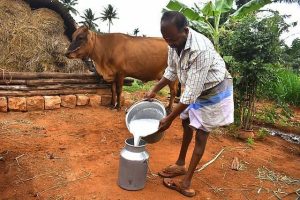
At the primary production level, the international licensing model highlights a structural divergence between domestic milk procurement and foreign consumer sales. In India, Amul’s foundational identity is anchored in the cooperative White Revolution, aggregating raw milk from more than 3.6 million smallholder farmers across 18,600 village societies in Gujarat. Operating overseas via foreign partner pools means that cartons sold in Michigan or Madrid generate processing revenue for American and Spanish dairy farmers rather than clearing physical milk solids from Indian farm gates. Nonetheless, repatriated licensing fees and global brand elevation provide vital long-term financial backing to the federation, reinforcing the institutional stability of the domestic cooperative apparatus. As GCMMF pursues further expansion into Southeast Asian and African consumer corridors, maintaining strict brand governance and supply chain integrity will be decisive in establishing Amul as a truly decentralized multinational dairy brand.
Source: Firstpost
You can now read the most important #news on #eDairyNews #Whatsapp channels!!!
🇮🇳 eDairy News ÍNDIA: https://whatsapp.com/channel/0029VaPidCcGpLHImBQk6x1F