

Operating from its Malaysian shared services hub, New Zealand’s dairy giant powers trade, processing, and local value addition across Asian markets.
An update from the International Cooperative Alliance (ICA) highlights Fonterra’s established commercial presence in Southeast Asia as a primary case study of international cooperative expansion. As global cooperative delegates gather across the region, the New Zealand-based dairy co-op’s long-standing footprint in Malaysia illustrates how farmer-owned businesses can build resilient export pipelines, integrate into local economies, and drive value-added processing far beyond their domestic borders.
Fonterra’s operations in Malaysia serve as a critical strategic hub for its broader Asian market presence, which accounts for roughly 20% of the cooperative’s global annual profits. Since opening its primary Susumas processing plant in 1992, the co-op has continuously expanded its capital commitments—including multi-million dollar plant modernizations to upgrade regional manufacturing capacity. Today, Malaysia stands alongside New Zealand, Chile, and Sri Lanka as one of Fonterra’s four primary global markets.
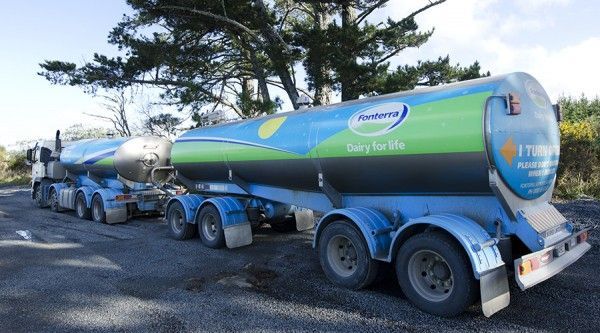
A defining feature of Fonterra’s regional supply chain model is the strategic use of Malaysia as a value-addition and logistics transit hub. While approximately 95% of Fonterra’s total New Zealand milk pool is exported globally, roughly half of those export streams pass directly through its Malaysian processing facilities. There, raw dairy ingredients are re-processed, blended, and packaged into consumer and foodservice products before being distributed throughout Southeast Asia.
Beyond physical dairy manufacturing, Malaysia also houses Fonterra’s Global Business Services Asia hub. This centralized facility provides key operational, financial, and administrative support for the cooperative’s commercial activities across the entire Asia-Pacific region. Employing hundreds of local staff and directly supplying over 20,000 retail outlets in Malaysia alone, the cooperative framework demonstrates how primary agricultural producers can build modern multinational service infrastructure.
Ultimately, Fonterra’s Southeast Asian model provides a compelling roadmap for the global cooperative movement. By pairing New Zealand farmgate milk production with strategic midstream processing investments in growing consumer markets, the cooperative captures higher retail margins for its farmer-shareholders while simultaneously supporting regional food security, local employment, and supply chain resilience.
Source: International Cooperative Alliance (ICA)
You can now read the most important #news on #eDairyNews #Whatsapp channels!!!
eDairy News ÍNDIA: https://whatsapp.com/channel/0029VaPidCcGpLHImBQk6x1F