


Prime Minister commissions Bharat Bovine Breeding Centre and Banas Dairy bio-CNG plants, underscoring cooperative livestock innovation as central to rural economic growth.
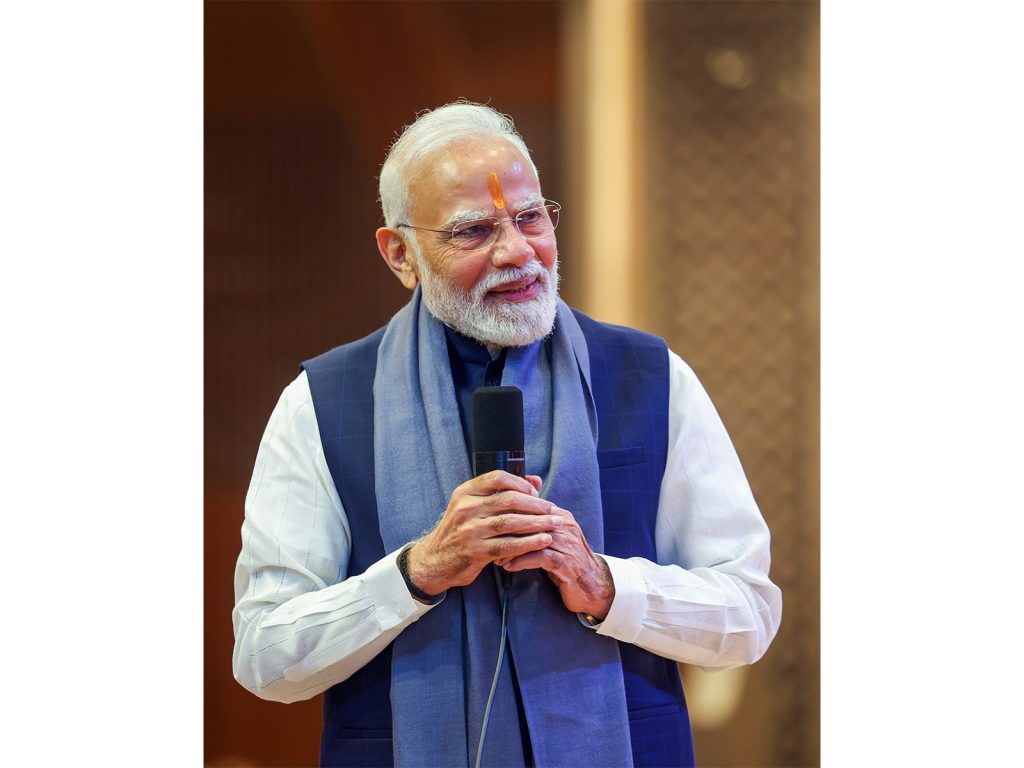
Prime Minister Narendra Modi dedicated and laid the foundation stones for multi-sectoral development projects valued at over ₹14,000 crore in Banaskantha, Gujarat, emphasizing that farmers and livestock keepers represent the foundational pillars of a developed India (Viksit Bharat). Addressing a large gathering of agricultural producers, cooperative leaders, and milk union representatives organized alongside Banas Dairy, the Prime Minister highlighted that rural prosperity, farmgate income security, and cooperative modernization remain the central priorities of the central government’s economic agenda.
At the core of the agricultural and livestock initiatives was the formal inauguration of the Bharat Bovine Breeding and Research Centre (BBBRC) at Bhildi in Banaskantha. Developed across 127 acres with technical support from the National Dairy Development Board (NDDB) and Banas Dairy under the Rashtriya Gokul Mission, the high-tech facility will deploy in vitro fertilization (IVF) and embryo transfer technologies to produce 25,000 high-pedigree bovine embryos annually. Prime Minister Modi noted that the centre—standing as the nation’s first dedicated research institution for the indigenous Kankrej cattle breed—will accelerate genetic gains, elevate milk yields per animal, and safeguard prized indigenous livestock assets for smallholder dairy producers.
The event also marked major investments in circular dairy bio-energy and processing logistics. The Prime Minister laid the foundation stones for two commercial bio-CNG plants developed by Banas Dairy in Tharad and Radhanpur, designed with daily processing capacities of 75 and 100 metric tonnes of cattle dung, respectively. These plants convert farm waste into clean compressed biomethane and nutrient-dense organic bio-fertilizers, creating supplementary revenue streams for rural milk suppliers. Additionally, Modi dedicated an automated high-capacity dairy storage facility in Palanpur alongside the expanded potato processing complex at Sanadar, reinforcing the cooperative’s diversified farm-to-retail supply chain.
Addressing broader agricultural policy and financial risk management, Modi reiterated the central government’s commitment to insulating farmers from global economic volatility. He noted that nearly ₹4.5 lakh crore has been directly credited into farmer bank accounts through the PM-KISAN direct benefit transfer mechanism, alongside sustained fiscal outlays for fertilizer subsidies, Minimum Support Price (MSP) procurement, and comprehensive crop insurance schemes. Emphasizing the cooperative sector’s multiplier effect, he highlighted how Banas Dairy and Gujarat’s dairy federations have empowered rural women—who form the backbone of grassroots milk collection—while integrating sustainable water and electricity conservation practices across semi-arid regions.
At the national agricultural governance level, the Banaskantha event underscores a strategic shift toward bio-technology, renewable energy, and cooperative industrial infrastructure as primary levers to lift rural disposable incomes. By combining advanced bovine genetics with circular bio-waste monetization and automated dairy logistics, the government aims to strengthen livestock enterprise resilience. Heading into 2027, the rollout of these cooperative initiatives in Gujarat provides an operational blueprint for scaling sustainable, high-productivity dairy farming across India.
Source: ANI News
You can now read the most important #news on #eDairyNews #Whatsapp channels!!!
🇮🇳 eDairy News ÍNDIA: https://whatsapp.com/channel/0029VaPidCcGpLHImBQk6x1F