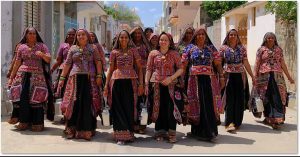


While women provide 70% of dairy farm labour across India, institutional gaps persist in formal cooperative membership, land titles, and board-level governance.
India’s dairy cooperative revolution—the institutional foundation that propelled the nation into the world’s leading milk producer—traces its historical roots to Sardar Vallabhbhai Patel’s support for the striking dairy farmers of Kaira (Kheda) in 1946. By guiding farmers to bypass monopolistic middleman cartels and organize into self-governed village milk producer societies, Patel laid the groundwork for what became known globally as the Anand or “Amul” model. Yet, as analyzed by researchers Tanya Mittal and Dr. Cchavi Vasisht in Nagaland Post, this landmark movement has long rested on a profound structural paradox: while the cooperative architecture was framed around farmer ownership, the actual day-to-day work driving India’s white revolution was built and sustained by rural women.
According to official government and agricultural statistics, women constitute nearly 70 percent of the total workforce in Indian dairy husbandry. The intensive, daily physical labor required to sustain ruminant health and milk production—feeding, forage cutting, barn sanitization, milking, calf rearing, veterinary care, and carrying bulk milk cans to local village collection centers—falls overwhelmingly on women. Dairy cooperatives offered a transformative economic mechanism because, unlike seasonal crop farming where revenue is intermittent and controlled by landholding patriarchs, milk procurement societies provide regular, weekly or bi-weekly cash disbursements based directly on transparent fat and SNF (solids-not-fat) testing.
However, a significant institutional disconnect persists between physical labor and legal ownership. Historically, cooperative bylaws and traditional membership requirements linked primary society shares to formal agricultural landholding or livestock titles. Because rural women across many Indian states rarely hold formal land deeds or registered livestock ownership, their male family members were predominantly registered as the cooperative members. This exclusion meant that while women executed the labor before dawn, men received the payout receipts, held voting power in society elections, and sat on decision-making boards. Even in Gujarat, the birthplace of the cooperative model, women hold roughly a third of primary cooperative memberships and barely a quarter of dairy union board seats, demonstrating a persistent institutional ceiling.
From an economic development and governance standpoint, addressing this structural disparity has gained national policy urgency. Over the past decade, interventions by the National Dairy Development Board (NDDB), the National Rural Livelihoods Mission (DAY-NRLM), and state federations have spurred the proliferation of all-women dairy cooperative societies (WDCS) and Women Milk Producer Companies (MPCs). With over 48,000 women-led primary dairy cooperative societies now operating across India, collective organizing has begun shifting bargaining power and direct bank-account cash flows into the hands of female producers. Nonetheless, deep regional disparities remain, with tribal and northeastern states still in the early stages of establishing equitable cooperative networks.
At the agricultural policy and rural development level, closing the gap between dairy labor and cooperative governance represents the next critical milestone for India’s dairy economy. Ensuring that women who manage herd nutrition and milk harvesting are legally recognized as primary shareholder-owners is vital for boosting on-farm productivity, accelerating technology adoption, and enhancing rural household welfare. True alignment with Sardar Patel’s cooperative vision requires transforming female dairy workers from behind-the-scenes farm laborers into fully empowered, voting owners of the multi-billion-dollar cooperative dairy value chain they have built.
Source: Nagaland Post
You can now read the most important #news on #eDairyNews #Whatsapp channels!!!
🇮🇳 eDairy News ÍNDIA: https://whatsapp.com/channel/0029VaPidCcGpLHImBQk6x1F