


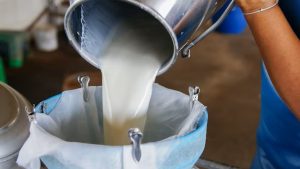
State leadership steps in to moderate value-added dairy inflation, asking the cooperative federation to cut curd prices while defending the ₹8/L milk revision as vital support for 11 lakh farming households.
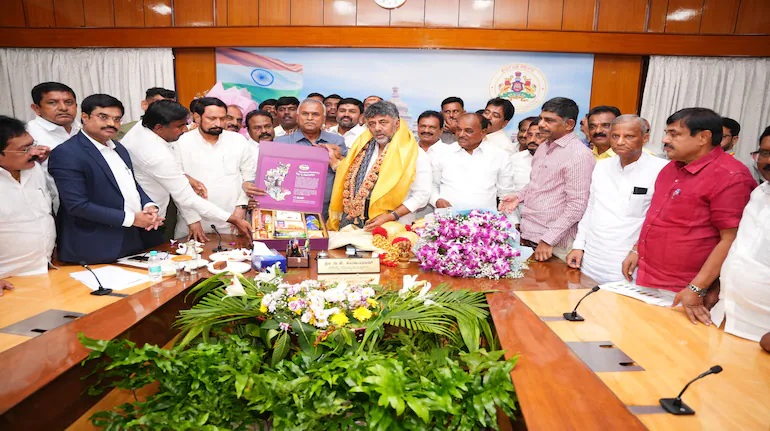
Just twenty-four hours after the Karnataka Milk Federation (KMF) implemented substantial tariff increases across its flagship Nandini dairy portfolio, the state leadership intervened to address consumer pushback regarding fermented dairy products. Deputy Chief Minister / Chief Minister D.K. Shivakumar announced on November 2 that he had formally instructed KMF office-bearers to review and roll back the steep ₹14 price increase levied on curd pouches, while maintaining firm defense of the ₹8 per litre baseline increase enacted on fluid drinking milk.
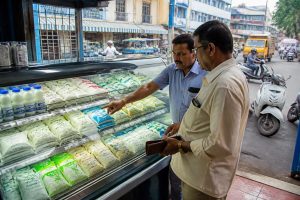
The tariff adjustments, enacted under KMF’s state-wide price revision, applied uneven pressures across dairy categories. While liquid milk prices rose by a uniform ₹8 per litre across all variants—lifting toned milk from ₹46 to ₹54 per litre—value-added cultured products saw a significantly sharper upward correction. The retail price for a 1-kilogram curd pouch surged by ₹14, climbing from ₹54 to ₹68 (a 25.9% increase), while the widely purchased 500-gram pouch increased from ₹28 to ₹34 (a ₹6 rise, or 21.4%).
Addressing reporters in Bengaluru, Shivakumar confirmed that he used a meeting with congratulating KMF leadership to issue clear directives regarding retail affordability: “I have instructed KMF office-bearers, who came to congratulate me, to reduce the price of curd.” However, while urging restraint on value-added dairy lines, Shivakumar stood firmly behind the ₹8 fluid milk price revision, pointing out that urban critics rarely scrutinize commercial price inflation in non-agricultural consumer segments: “No one speaks up when bottled water prices rise,” he remarked, emphasizing that the fluid milk revision directly safeguards the livelihood of more than 11 lakh (1.1 million) rural dairy farmer families across Karnataka facing severe cattle feed and fodder inflation.
From an agribusiness and cooperative economics perspective, the split policy approach highlights the complex tension between protecting rural farmgate realizations and managing urban retail price sensitivities. Of the ₹8 per litre fluid milk increase, the state government mandated that ₹7 flow straight into farmers’ accounts, lifting base procurement payouts to ₹40 per litre (or ₹47 when combined with the state’s direct ₹5 incentive subsidy). However, applying aggressive markups on curd—a daily staple in South Indian household diets and commercial food services—threatened to depress domestic consumption and invite retail backlash in key metropolitan centers like Bengaluru and Mysuru.
At the market competition and brand positioning level, Nandini’s curd pricing calibration carries major commercial implications across southern India. Despite recent increases, KMF maintains a considerable price advantage over private dairy processors who retail packaged curd at upwards of ₹75 to ₹85 per kilogram. By rolling back part of the ₹14 curd hike, KMF aims to protect its market share against regional private brands and preserve household brand loyalty, while ensuring the underlying procurement hike continues to funnel necessary liquidity to primary milk producer societies heading into 2027.
Karnataka Cooperative Tariff Review
Nandini Curd & Milk Price Revisions (Nov 2026)
Comparing the contested curd price increases against fluid milk adjustments under KMF.
Nandini Curd Pouch (1 kg) — Under Review
₹68 (+₹14 / +25.9%)
₹68 (+₹14 / +25.9%)
Previous Price: ₹54
Govt instructed KMF to roll back / reduce
Govt instructed KMF to roll back / reduce
Nandini Curd Pouch (500 g)
₹34 (+₹6 / +21.4%)
₹34 (+₹6 / +21.4%)
Previous Price: ₹28
Subject to upcoming tariff reduction
Subject to upcoming tariff reduction
Nandini Toned Milk (1 Litre) — Maintained
₹54 (+₹8 / +17.4%)
₹54 (+₹8 / +17.4%)
Previous Price: ₹46
₹7/L passed directly to 11 lakh farmers
₹7/L passed directly to 11 lakh farmers
Farmer Base
11 Lakh
Rural families supported
Curd Hike Status
Cut Ordered
Govt directive to KMF
Farmer Share
₹7 of ₹8
Direct farmgate transfer
Source: Moneycontrol / KMF Official Releases
eDairyNews India Cooperative Intelligence
eDairyNews India Cooperative Intelligence
Source: Moneycontrol
You can now read the most important #news on #eDairyNews #Whatsapp channels!!!
🇮🇳 eDairy News ÍNDIA: https://whatsapp.com/channel/0029VaPidCcGpLHImBQk6x1F