



National Cooperative Week closes with sweeping digital reforms, massive logistical expansions, and a record 248 million metric tonnes of milk.
The Indian dairy sector has marked a major institutional milestone at the grand Closing Ceremony of Cooperative Week in New Delhi, celebrating the fifth anniversary of the Ministry of Cooperation. Bringing together over 10,000 national delegates, including executive heads from the National Dairy Development Board (NDDB) and Amul, the convention highlighted India’s uncontested position as the world’s largest milk producer. Official metrics disclosed by Union Minister Rajiv Ranjan Singh confirmed that the country generated an unprecedented 248 million metric tonnes of milk during the 2024–25 fiscal year. This sustained growth underpins the roll-out of White Revolution 2.0, a state-backed framework designed to aggressively scale up organized collection networks to guarantee product traceability and maximize farmgate returns.
Anchoring these developments is the government’s “Sahakar Se Samriddhi” (Prosperity through Cooperation) vision, an administrative roadmap currently touching over 30 crore cooperative members across 8 lakh societies nationwide. Union Minister for Cooperation Amit Shah outlined the five primary pillars of these ongoing modernizations, which prioritize technology-enabled governance, institutional strengthening, and comprehensive database mapping down to the localized Tehsil level. To catalyze rural liquidity and diversify regional economic output, the Ministry has successfully established more than 50,000 digitized Primary Agricultural Credit Societies (e-PACS) and implemented flexible Model Bye-laws enabling local units to seamlessly engage in up to 300 diverse commercial operations.
To support this massive processing surge, the national convention served as the launchpad for a suite of digital monitoring applications and physical infrastructure assets. Chief among the technological rollouts were the NDDB Dashboard Portal for Milk Supply Assessment, the NCDC 3.0 Portal, and the formal inauguration of the Cooperative Milk Producers Organisation Multi-State-Limited (CMPOL). Concurrently, the government handed over 135 newly constructed cooperative food godowns boasting a massive cumulative storage capacity of 75 lakh metric tonnes across critical agricultural states like Gujarat and Rajasthan, while formalizing a target to establish 7.5 lakh multipurpose cooperative societies to accelerate the country’s rural circular economy.
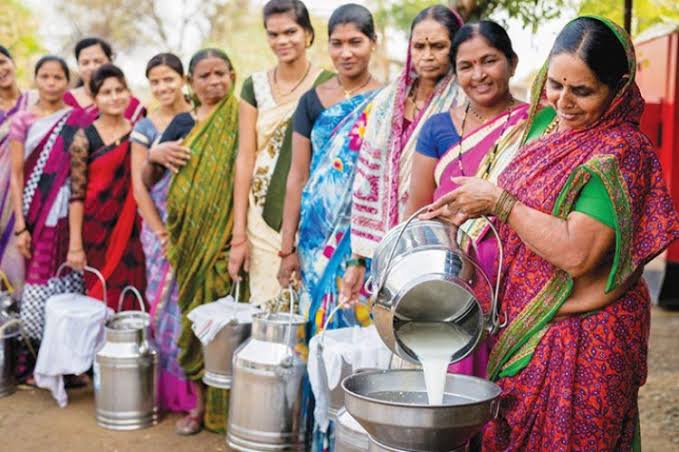
The national gathering showcased the highly successful commercial blueprint of Banas Dairy as an industry benchmark for corporate cooperative performance. The organization has achieved a staggering annual turnover exceeding ₹24,000 crore, disbursing over ₹1,300 crore directly into the bank accounts of its milk producers every single month. Managing an extensive technical support network staffed by 280 veterinarians and anchoring the advanced Banas Bovine Research and Breeding Centre, the cooperative leverages the output of 1.46 lakh dedicated women members to export value-added dairy portfolios to more than 25 sovereign markets while driving localized social development through integrated medical colleges and teaching hospitals.
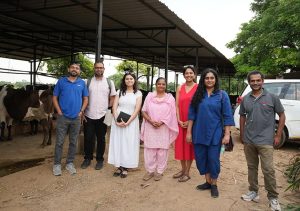
The strategic participation of the Sikkim Cooperative Milk Producers’ Union Ltd. (SCMPUL), led by Managing Director Dr. T. B. Ghatani and Manager Shri K. B. Gurung, ensures that India’s northeastern territories remain tightly aligned with these overarching macro-economic shifts. Engaging directly with these top-tier policy reforms, infrastructure investments, and animal productivity platforms allows regional unions to absorb modern data-driven methodologies firsthand. The operational insights gathered regarding digitized supply management and component optimization are slated to directly guide the restructuring of local milksheds, safely embedding smallholder networks into the broader growth engine of India’s modernized dairy value chain.