



Regulatory bans on synthetic analogue paneer accelerate market formalization, creating headroom for organized dairy processors.
India’s commercial paneer sector is experiencing accelerated formalization as heightened regulatory scrutiny and enforcement crackdowns target non-dairy and synthetic analogues. Valued at approximately ₹73,140 crore (roughly $8.7 billion), the national paneer market remains overwhelmingly dominated by the informal segment, with local sweet shops (halwais) and unorganized cottage producers controlling an estimated 93% to 95% of total volume. However, intensifying state-level testing campaigns and food safety actions are shifting consumer and foodservice demand toward organized dairy brands that maintain cold chains, traceable milk procurement, and standardized quality testing.
The regulatory catalyst stems directly from aggressive compliance interventions initiated across key states, including Maharashtra, Gujarat, Madhya Pradesh, and Chhattisgarh. Between April 2025 and March 2026, Maharashtra’s Food and Drug Administration tested 308 paneer and dairy-analogue samples, identifying 109 consignments—or 35.4%—as non-compliant with prescribed standards due to the substitution of milk fat with cheaper vegetable oils, starches, and synthetic emulsifiers. In response, state regulators enacted a one-year prohibition on the manufacture, storage, distribution, and sale of analogue paneer, prompting the central Food Safety and Standards Authority of India (FSSAI) to weigh nationwide enforcement measures.
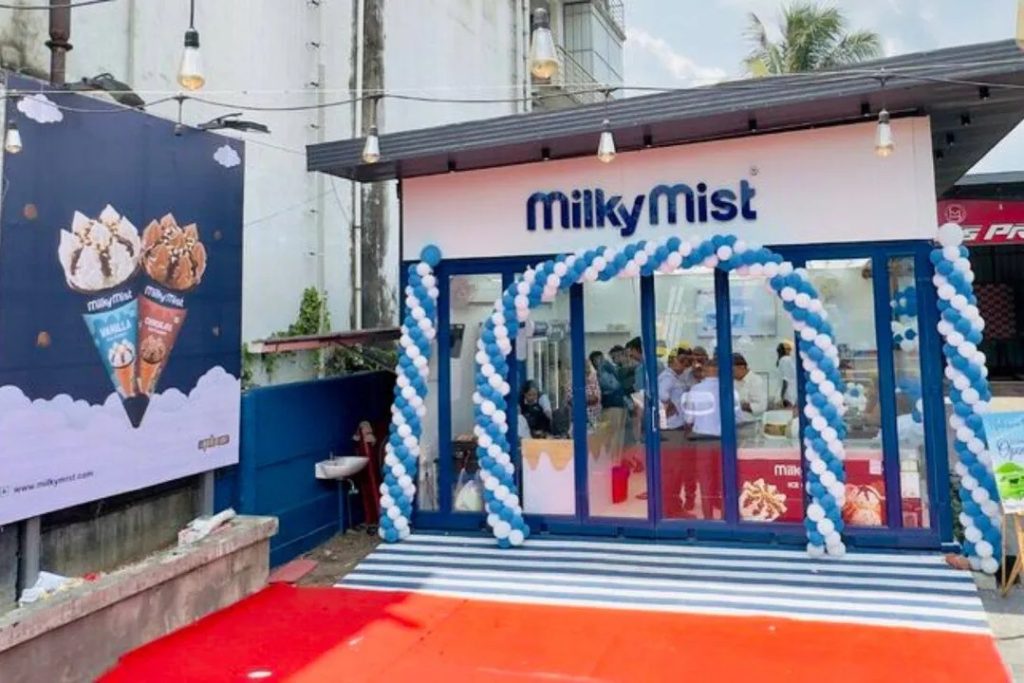
For organized value-added dairy processors, this regulatory clampdown presents significant runway to capture market share from the informal sector. Milky Mist Dairy Food, which commands roughly 19% to 20% of India’s organized packaged paneer market, reported a 34% year-on-year surge in paneer revenue during the first quarter of FY27. Commercial momentum across value-added categories supported a 43.6% increase in quarterly operating revenue to ₹973.45 crore, while net profit expanded to ₹64.68 crore, demonstrating operating leverage as capacity utilization climbs at modern processing plants.
Capitalizing on structural market migration requires substantial manufacturing headroom and integrated byproduct management. At its central processing complex in Perundurai, Tamil Nadu, the processor operates a 150-tonne-per-day paneer plant running at roughly 60% capacity utilization, providing immediate operational bandwidth to absorb volume migration without requiring immediate capital expenditure. Furthermore, scaling coagulated dairy production yields substantial liquid whey streams, enabling commercial processors to isolate and monetize high-value whey proteins rather than absorbing effluent treatment penalties.
The shift toward organized dairy highlights the long-term commercial upside of food safety enforcement in developing dairy markets. As quick-service restaurant chains, institutional caterers, and urban households avoid unverified loose curd products in favor of sealed, tamper-evident retail formats, organized processors can expand operating margins and defend pricing power against farmgate milk cost inflation. Sustaining this commercial expansion will require branded processors to deepen cold-chain logistics into tier-two and tier-three urban centers while educating consumers on the nutritional differences between pure dairy paneer and vegetable-fat analogues.
Source: Trade Brains
You can now read the most important #news on #eDairyNews #Whatsapp channels!!!
🇮🇳 eDairy News ÍNDIA: https://whatsapp.com/channel/0029VaPidCcGpLHImBQk6x1F