


National plans integrate cattle dung processing to generate compressed biogas, organic fertilizers, and secondary farm revenue.
India is positioning its dairy ecosystem to capture new energy revenue by developing a fully integrated milk-and-dung value chain across rural cooperative networks. National leadership highlights that processing livestock waste into biogas, compressed bio-CNG, and organic bio-slurry creates direct secondary income streams for primary producers while systematically lowering agricultural carbon footprints. The commercial strategy aims to leverage existing cooperative collection infrastructures to aggregate cattle manure alongside daily fluid milk delivery routes.
As the world’s leading milk producer with an annual output reaching 248 million metric tons, the country’s dairy production continues to grow at a steady 5% to 6% annual pace. More than 25 million smallholder and marginal farmers participate directly in organized cooperative networks, which provide guaranteed market access and promote female workforce inclusion across rural regions. Expanding these established logistics routes to accommodate waste-to-energy inputs transforms raw manure from an unmanaged byproduct into a standardized trade commodity.
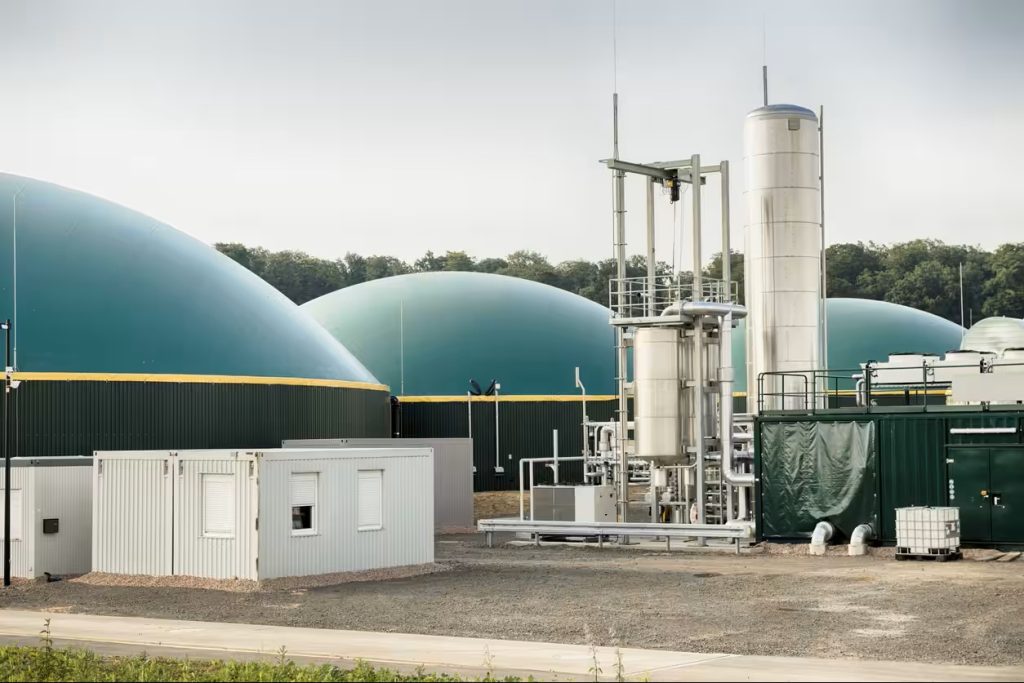
Methane abatement strategies rely heavily on a two-pronged approach that pairs genetic productivity gains with closed-loop manure digestion. Advanced breeding initiatives—including the National Gokul Mission, sex-sorted semen, embryo transfer technology, and in-vitro fertilization—are rapidly raising per-cow fluid yields to reduce enteric emission intensity. Simultaneously, diverting raw manure into anaerobic digesters prevents direct atmospheric greenhouse gas release while generating renewable thermal energy and transport-grade bio-CNG.
Downstream outputs from biogas production yield nutrient-rich bio-slurry, which is refined into standardized organic fertilizers to replace synthetic chemical inputs. Replacing fossil-derived fertilizers with organic manure compounds restores soil organic carbon, improves moisture retention, and reduces input expenditure for crop farmers. Furthermore, structured manure management programs enable cooperative networks to generate verified carbon credits, providing supplementary monetary distributions directly back to rural households.
Scaling decentralized household bio-digesters alongside utility-scale bio-CNG processing hubs requires substantial capital allocation across regional state federations. Reaching national development and decarbonization targets by 2047 depends on integrating renewable energy infrastructure within agricultural primary supply chains. Converting livestock waste into commercial energy and organic nutrients establishes a resilient circular bioeconomy model for emerging global dairy markets.
Source: BioEnergy Times
You can now read the most important #news on #eDairyNews #Whatsapp channels!!!
eDairy News ÍNDIA: https://whatsapp.com/channel/0029VaPidCcGpLHImBQk6x1F