

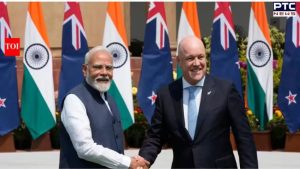
Bilateral free trade pact enters into force, granting tariff relief on horticultural exports while maintaining strict protection for India’s dairy market.
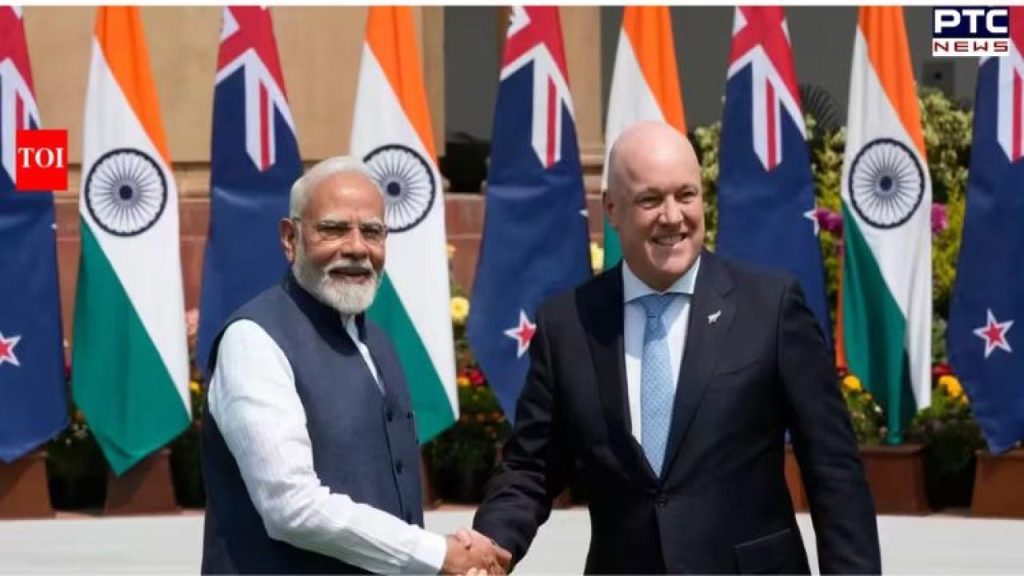
The bilateral Free Trade Agreement between India and New Zealand officially entered into force on October 20, 2026, inaugurating a new commercial era aimed at lifting two-way trade in goods and services to NZ$7 billion by 2030. Under the comprehensive pact, all Indian merchandise export lines secure immediate duty-free market access across New Zealand, delivering a substantial competitive boost to Indian engineering goods, textiles, pharmaceuticals, and specialized agricultural lines. In return, New Delhi has implemented targeted tariff reductions and phased quota access for selected New Zealand primary exports, including sheep meat, raw wool, forestry products, premium wines, kiwifruit, and certified mānuka honey. Alongside commercial tariff adjustments, the treaty establishes dedicated temporary employment visa corridors for up to 5,000 skilled Indian professionals and binds New Zealand to facilitate $20 billion in institutional investment into the Indian economy over the next fifteen years.
Despite sweeping market openings across numerous agricultural and industrial tariff lines, the Indian government maintained an unyielding stance on shielding its domestic dairy sector, completely excluding liquid milk, milk powders, butter, cheese, and dairy derivatives from any tariff concessions. Indian trade negotiators reaffirmed that domestic milk production remains an essential social safety net rather than a purely commercial agro-industry, supporting over 80 million smallholder rural households and marginal farmers. Exposing this vast smallholder ecosystem to low-cost, pasture-based dairy commodities from New Zealand’s large-scale corporate processors would trigger severe farmgate milk price suppression and jeopardize rural livelihoods. Consequently, dairy, edible oils, and refined sugar remain classified under India’s strict negative list, preserving high import tariffs to safeguard grassroots cooperative unions and private dairy processors nationwide.
For the New Zealand dairy sector—anchored by global processing giant Fonterra and independent export aggregators—the total exclusion of dairy represents a familiar, structural trade barrier in one of the world’s most populous and fastest-growing dairy consumption markets. New Zealand accounts for roughly 30 percent of all internationally traded dairy volume, relying heavily on free trade agreements across the Asia-Pacific to diversify its export destinations beyond traditional buyers in Greater China. While New Zealand dairy industry leadership has long lobbied for phased tariff-rate quotas on high-value functional milk proteins and specialized pediatric ingredients that do not directly compete with Indian buffalo milk production, New Delhi rejected any bilateral concessions that could set a precedent for ongoing trade negotiations with the European Union and the United Kingdom.
From an enterprise finance and bilateral trade balance perspective, the agreement establishes clear commercial trade-offs designed to expand economic integration without destabilizing domestic agrarian balances. While dairy remains excluded, New Zealand horticultural and beverage exporters secure preferential tariff quotas, including 6,250 tonnes of duty-free kiwifruit in year one and a 35,000-tonne quota for fresh apples at a halved 25 percent tariff rate beginning in year two. Concurrently, New Zealand’s commitment to channel $20 billion into Indian infrastructure, food processing logistics, and ag-tech joint ventures offers Indian dairy and food processing conglomerates an opportunity to upgrade domestic cold-chain distribution and processing technology through bilateral joint ventures without sacrificing border tariff protections.
Looking ahead toward 2027, the implementation of the India-New Zealand trade accord highlights the delicate geopolitical balancing act between trade liberalization and food sovereignty in international agricultural policy. As both nations activate joint implementation committees, bilateral cooperation is poised to concentrate heavily on dairy herd genetics, artificial insemination expertise, veterinary disease surveillance, and processing energy efficiency rather than direct milk commodity flows. By maintaining strict tariff walls around its domestic milk pool while establishing commercial ties in services, technology, and non-sensitive agriculture, India ensures that its rural cooperative economy remains insulated from global commodity shocks while continuing to modernize its primary dairy supply chain.
Source: PTC News
You can now read the most important #news on #eDairyNews #Whatsapp channels!!!
🇮🇳 eDairy News ÍNDIA: https://whatsapp.com/channel/0029VaPidCcGpLHImBQk6x1F