



Transitioning from fragmented farmgate logistics to IoT-enabled cold chains and digital traceability is vital to capturing high-value export markets.
India’s dairy sector stands as one of the country’s most remarkable economic achievements, transforming from historical milk deficits into the world’s largest milk producer with national output reaching close to 248 million tonnes in FY2024–25. However, despite contributing nearly a quarter of global milk supply, India accounts for less than 1 percent of international dairy trade. To bridge this structural disparity and transition from volume leadership to global market value, the domestic industry must overhaul its supply chain architecture through targeted modernization, digital integration, and strict quality assurance.
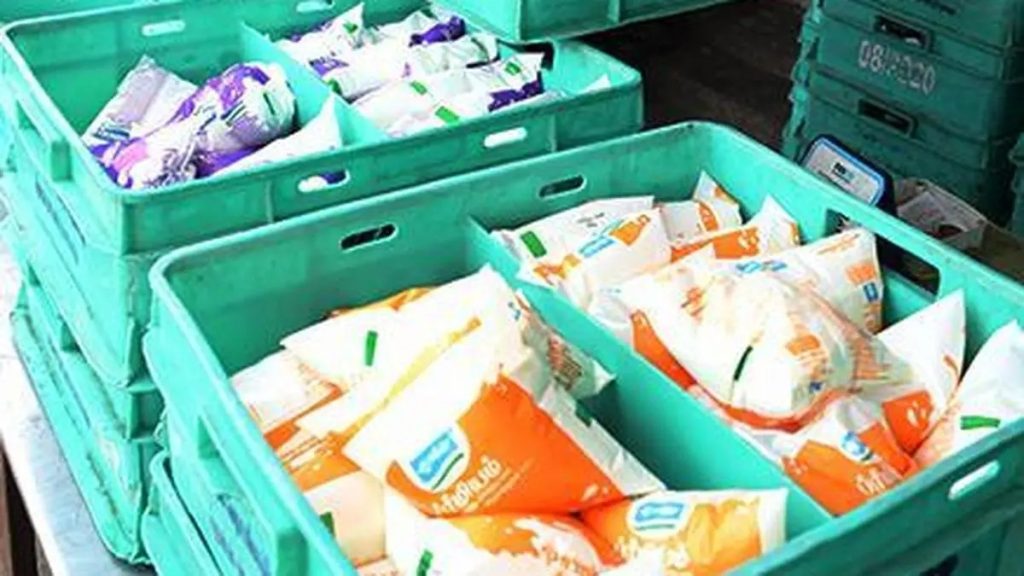
A primary hurdle capping India’s export competitiveness is the highly fragmented nature of smallholder milk procurement, which introduces significant cold-chain vulnerabilities and post-harvest quality variations. The lack of continuous, farmgate-to-port temperature control not only increases transit spoilage but also challenges compliance with stringent sanitary and phytosanitary (SPS) standards enforced by major import markets in the European Union, North America, and East Asia. Addressing these barriers requires aggressive deployment of smart chilling infrastructure—such as solar-powered bulk milk coolers (BMCs) and automated village collection centers—to lock in raw milk quality at the point of origin.
Beyond physical refrigeration, embedding digital intelligence across the logistics chain is critical for global export readiness. Integrating Internet of Things (IoT) sensors in transport tankers, RFID-enabled tracking, and automated milk testing units enables processors to monitor temperature anomalies, fat/SNF ratios, and microbial limits in real time. This end-to-end operational visibility establishes robust mass-balance accounting, minimizes logistics bottlenecks, and ensures that raw milk destined for high-value export manufacturing meets strict international purity thresholds.
Digitization also unlocks farm-to-shelf traceability, an increasingly non-negotiable requirement for penetrating premium global consumer segments. Cloud-connected farm management systems and digital batch records allow dairy brands to verify animal health, feed safety, antibiotic-free compliance, and carbon footprints directly on product packaging. Building verifiable traceability into export streams enables Indian processors to move beyond low-margin bulk commodities like skim milk powder (SMP) into high-margin branded exports, including specialty cheeses, organic ghee, whey protein concentrates, and functional dairy ingredients.
As global trade dynamics shift and demand for sustainably sourced, traceable proteins accelerates across Asia, the Middle East, and Africa, upgrading supply chain efficiency represents the definitive growth frontier for Indian dairying. By modernizing rural procurement logistics, scaling IoT cold-chain networks, and aligning domestic processing standards with international benchmarks, India can translate its unmatched raw milk production scale into a formidable global dairy export brand.
Source: The Hindu BusinessLine
You can now read the most important #news on #eDairyNews #Whatsapp channels!!!
eDairy News ÍNDIA: https://whatsapp.com/channel/0029VaPidCcGpLHImBQk6x1F