


Infrastructure deficits and soaring manure volumes stall processing networks at one of India’s largest localized urban milksheds.
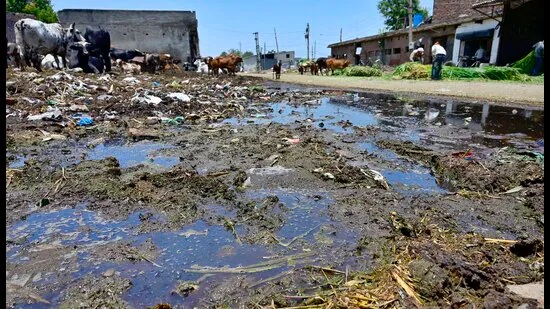
The operational integrity of the Haibowal Dairy Complex in Ludhiana—one of Northern India’s most significant localized dairy production hubs—faces a critical threat as severe wastewater overflow continues to flood public roads. More than three weeks after the local municipal corporation formally assured producers that the chronic drainage issues would be resolved within a strict 15-day window, the operational environment remains unchanged. The expiration of the civic deadline has triggered intense friction between city administrators and agricultural stakeholders, with both parties trading blame over the stagnant, contaminated conditions stalling local transport lines.
The structural gridlock impacts a highly intensive agricultural footprint, with the complex housing 883 registered dairy units and a combined herd of nearly 42,000 cattle. This high concentration of livestock generates substantial volumes of both liquid effluent and solid agricultural waste on a daily basis. The Haibowal Dairy Association contends that the recurring infrastructure failure stems directly from a severe capacity deficit at the centralized effluent treatment plant (ETP). Representatives report that the processing hardware is entirely unequipped to handle the aggregate fluid volumes produced, causing the sewer matrix to choke and push raw wastewater back onto the streets.
Conversely, municipal body officials argue that the systemic blockages are being actively driven by the incorrect disposal of solid manure into the liquid drainage network by the producers themselves. Statistical logs maintain that the dairy cluster generates an estimated 400 metric tonnes of cow dung every single day. While the municipal corporation operates an active on-site biogas plant, its processing capacity is strictly capped at 200 metric tonnes per day, leaving half of the daily solid waste without an integrated industrial processing outlet and complicating regional circular economy targets.
To mitigate the immediate biohazard, local authorities established a door-to-door solid waste collection program as an interim logistics strategy. However, administrative management reports that producer participation has been poor, with collection teams successfully lifting only around 40 metric tonnes of manure daily. Consequently, a significant volume of solid organic matter continues to enter the primary wastewater pipelines, compounding the burden on an already struggling ETP that is simultaneously navigating excessive on-farm water use and high chemical loading.
For international dairy economists, cooperative directors, and supply chain analysts, the ongoing crisis in Ludhiana provides a stark reminder of the environmental and infrastructural limits facing intensive urban milksheds. Dairy industry advocates argue that short-term cleaning campaigns and temporary administrative fixes cannot substitute for long-term capital investments in high-capacity waste treatment technology. As the municipal corporation advances plans to construct a secondary biogas plant to bridge the 200-tonne processing deficit, local operators must enforce stricter farmgate hygiene to protect their broader social license to operate.
Source: Hindustan Times
You can now read the most important #news on #eDairyNews #Whatsapp channels!!!
eDairy News ÍNDIA: https://whatsapp.com/channel/0029VaPidCcGpLHImBQk6x1F