
National Dairy Development Board subsidiary Mother Dairy partners with actor Abir Chatterjee to extend festive brand equity from Mishti Doi into daily milk and curd.
Mother Dairy Fruit & Vegetable Pvt. Ltd., a wholly owned subsidiary of the National Dairy Development Board (NDDB), has unveiled a comprehensive regional festive marketing campaign across West Bengal featuring celebrated Bengali actor Abir Chatterjee ahead of Durga Puja. While the brand has historically anchored its eastern regional identity to its popular packaged Mishti Doi (sweetened curd), the new campaign strategically broadens this consumer connection to encompass its everyday dairy staples, specifically fresh pasteurized milk and standard curd (dahi). Managing Director Jayatheertha Chary highlighted that the initiative aims to transition the high consumer trust and emotional familiarity built around festive desserts into recurring daily household consumption occasions. Deployed across regional television, print, and digital channels, the campaign targets urban households across the greater Kolkata metropolitan area and secondary district centers, capitalizing on the peak autumn consumption surge associated with Bengal’s largest socio-cultural festival.
From a dairy processing and cold-chain manufacturing standpoint, scaling fresh fermented products and packaged fluid milk in eastern India demands strict microbiological quality control and rapid logistical turnover. Unlike ambient shelf-stable dairy powders, both curd and fluid milk rely on live lactic cultures or delicate pasteurization cycles that require continuous refrigeration below 4 degrees Celsius to prevent premature acidification and shelf-life degradation. Operating regional processing and co-packing arrangements across West Bengal involves precise standardization of milk solids-not-fat and milkfat ratios, automated inoculation and incubation for set curds, and high-speed pouch-filling technology. Packaging fresh fermented dairy in hygienic retail tubs and pouches provides an industrial alternative to traditional, unpasteurized sweetmeat shop (halwai) offerings, delivering consistent texture and verified bacteriological safety across wet markets and modern trade grocers during high-heat, high-humidity festive periods.
The marketing push directly addresses competitive dynamics within West Bengal’s fluid and fermented dairy sectors, where state-level consumption has traditionally leaned toward unorganized local producers and regional brands. Although Kolkata represents one of India’s most lucrative markets for traditional dairy sweets, commercial processors including Amul, Red Cow Dairy, Metro Dairy, and Keventer compete aggressively for daily liquid milk delivery share. Regional dairy brand loyalty is notoriously difficult to alter in staple categories like milk, where household buying habits remain entrenched. By leveraging Mishti Doi—a product where Mother Dairy already holds an established brand advantage—as an emotional bridge, the enterprise creates a halo effect for its plain curd and pasteurized milk pouches. Capturing greater retail presence during Durga Puja, when residential culinary preparations and sweet-making reach annual peaks, allows the processor to secure valuable shelf space and penetrate residential consumption routines that endure long after festive pandals close.
From an enterprise finance and corporate portfolio perspective, cross-selling high-volume fluid milk on the back of higher-margin fermented dairy strengthens overall operational profitability. While value-added cultured products like Mishti Doi deliver superior gross margins per kilogram, their aggregate consumption is inherently cyclical and festive-dependent. In contrast, packaged liquid milk delivers steady daily revenue and dependable working capital turn, providing predictable operational cash flows that absorb fixed supply-chain overheads and processing plant maintenance costs. For Mother Dairy, which reported enterprise revenues surpassing Rs 15,000 crore in recent cycles, unlocking greater volume scale in eastern markets diversifies sales geographically beyond its historical stronghold in the National Capital Region (Delhi-NCR). Balancing margin-rich dairy delicacies with resilient daily volume lines optimizes manufacturing asset utilization and strengthens distributor retention across urban retail routes.
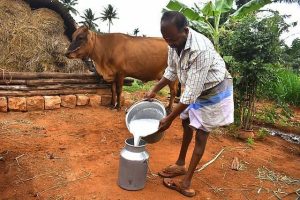
At the farmgate level, expanding commercial sales across West Bengal provides critical demand stability for dairy farmers supplying the cooperative framework under NDDB oversight. Cooperative milk procurement networks rely on expanding urban liquid milk sales to absorb daily raw milk collections without incurring the high thermal conversion costs and storage depreciation associated with spray drying surplus milk into powder. Sustained demand for fresh milk and curd enables processing unions to maintain attractive, uninterrupted procurement payments to smallholder cattle rearers in neighboring rural milk sheds. Furthermore, building resilient distribution channels in high-consumption eastern urban centers shields farmer-owned institutions from commodity price volatility in international dairy markets. As Mother Dairy accelerates its regional expansion strategy through localized cultural storytelling, aligning commercial marketing with cooperative procurement infrastructure remains pivotal to sustaining rural producer livelihoods across India’s dairy heartlands.
Source: MediaBrief
You can now read the most important #news on #eDairyNews #Whatsapp channels!!!
🇮🇳 eDairy News ÍNDIA: https://whatsapp.com/channel/0029VaPidCcGpLHImBQk6x1F