


Micro-welfare payments of ₹2,000 per month seed a 60-liter daily dairy operation and rural self-reliance.
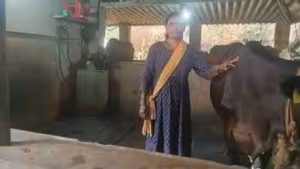
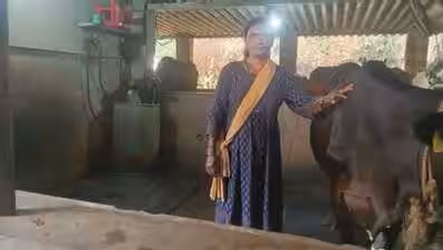
In a notable example of grassroots agricultural entrepreneurship, a rural homemaker in Karnataka has transformed direct benefit cash transfers into a commercial micro-dairy enterprise. As reported by The Times of India, Sundari, a resident of Badinaru in Kodimbady village, Puttur taluk (Dakshina Kannada district), had spent nearly eight years without an independent income source, with her family relying on her husband’s daily wage of roughly ₹400. Her economic trajectory shifted following the rollout of the Government of Karnataka’s Gruhalakshmi scheme, which provides female heads of eligible households with a monthly financial transfer of ₹2,000.
Rather than absorbing the welfare transfers into immediate consumable household expenditures, Sundari pooled ₹4,000 from her initial two monthly disbursements to purchase her first calf. Through disciplined herd management and the continuous reinvestment of milk sales back into livestock assets, she systematically scaled the enterprise. Today, her herd has expanded to five cattle, producing between 55 and 60 liters of milk daily, which she sells through the formal local cooperative milk collection society.
To solve last-mile distribution bottlenecks across the hilly terrain of coastal Karnataka, Sundari reinvested dairy profits to modernize her farm logistics. When transporting heavy milk cans on foot became physically untenable, she contributed ₹10,000 from her accumulated dairy savings, combined with family contributions and a loan, to purchase a second-hand scooter for ₹40,000. Alongside her livestock operations, she has diversified her agricultural base by planting 300 arecanut saplings on joint family land, building a multi-stream farm economy.
Her micro-enterprise model caught the attention of regional and state leadership, culminating in formal recognition at Vidhana Soudha in Bengaluru on September 10, 2026, during the state-level Gruhalakshmi Sadhaki felicitation program. Sundari credited local leadership, including Puttur MLA Ashok Kumar Rai and former Kodimbadi gram panchayat vice-president Jayaprakash Badinaru, for helping facilitate access to essential on-farm infrastructure, such as modern rubber cow mats and a motorized grass-cutting machine to reduce manual labor.
The case study illustrates the multiplier effect of social welfare liquidity when channeled into organized dairy value chains. In emerging dairy markets like India, where cooperatives provide guaranteed daily procurement, reliable transparent testing, and periodic pay cycles, smallholder dairy farming offers low-barrier capital formation for rural women. By converting an unconditional monthly state grant into livestock assets and cooperative milk supply, Sundari’s journey demonstrates how decentralized dairy production continues to drive rural economic mobility.
Source: The Times of India
You can now read the most important #news on #eDairyNews #Whatsapp channels!!!
🇮🇳 eDairy News ÍNDIA: https://whatsapp.com/channel/0029VaPidCcGpLHImBQk6x1F