



State authorities partner with the National Dairy Development Board to commission a forty thousand litre processing plant and expand rural farmer procurement.
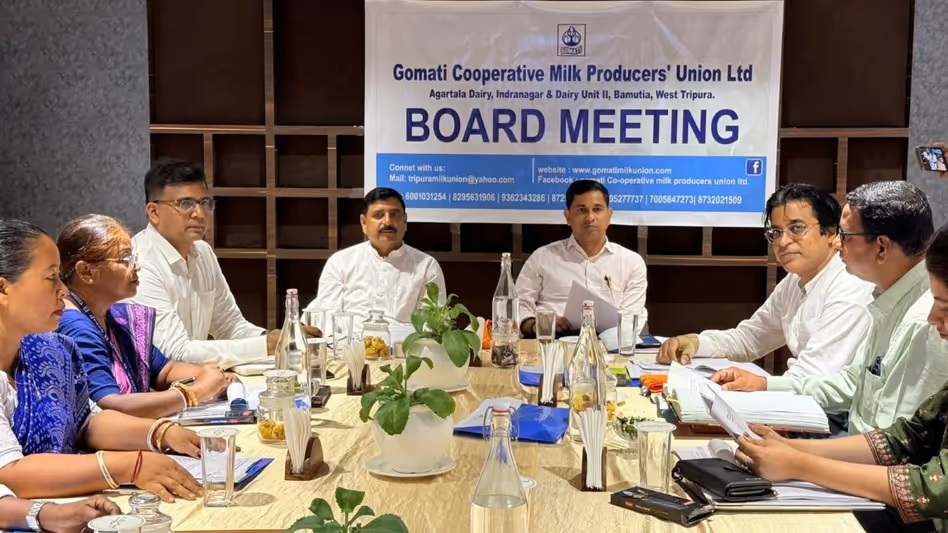
State authorities in Tripura have initiated a comprehensive restructuring of the regional dairy value chain to address chronic supply deficits and meet rising consumer demand for liquid milk and manufactured dairy products. The strategy was formalized during an executive board meeting of the Gomati Cooperative Milk Union, where ministerial leadership and agricultural officials mapped out interventions to enhance village-level procurement, scale cold-chain infrastructure, and expand retail distribution. Official assessments indicate that current state-level milk production remains inadequate to fulfill local nutritional requirements, requiring substantial reliance on inter-state inflows to bridge the consumption deficit. To counteract these structural imbalances, the Animal Resources Development Department has mobilized an integrated operational roadmap prioritizing dairy farming productivity and cooperative consolidation across rural districts. Policy leaders emphasized that securing self-sufficiency in commercial milk production is fundamental to shielding regional consumers from volatile import pricing while stimulating agricultural rural incomes.
A central pillar of the modernization initiative relies on a tripartite Memorandum of Understanding signed between the state Animal Resources Development Department, the Gomati Cooperative Milk Union, and the National Dairy Development Board. Under this formal agreement, the national dairy authority is providing technical expertise, breed improvement support, and institutional oversight to align regional production standards with national benchmarks. The partnership establishes a systematic transfer of processing technology and cold-chain operational methodologies to eliminate collection bottlenecks and prevent milk spoilage in remote rural tracts. Cooperative executives highlighted that institutional collaboration with national specialists will introduce standardized testing, automated milk collection units, and digital procurement tracking across primary cooperative centers. Expanding technical assistance directly to smallholder cattle rearers is expected to raise average lactation yields and optimize livestock nutritional regimens.
Operational expansion plans outlined by cooperative leadership set an aggressive target to scale the registered farmer-supplier base from 6,642 to 10,000 active dairy producers across the state. Achieving this network expansion will be underpinned by the establishment of 52 new primary milk-producing cooperative societies situated strategically in high-potential agricultural zones. In addition to mobilizing new grassroots producer groups, the union is integrating the operations of the recently acquired Tridha Dairy facility located in Kamalpur to widen regional procurement coverage. Direct cooperative aggregation guarantees daily off-take for rural milk producers, providing predictable cash flow and mitigating reliance on informal, predatory middleman channels. To sustain farmer engagement, the cooperative framework is channeling both state and central government dairy subsidies toward animal health programs, subsidized feed distribution, and affordable credit facilities.
Downstream processing capabilities are undergoing substantial expansion through the commissioning of a new 40,000-litre daily capacity dairy manufacturing plant situated at Bamutia. This secondary production facility operates alongside the established Gomati Dairy processing infrastructure, which has evolved from a modest 5,000-litre daily intake at its founding in 1982 to a modern 40,000-litre processing hub. The dual-facility setup will significantly increase commercial intake capacity, enabling the processing union to handle peak seasonal flush periods without rejecting raw milk volumes. Processing diversification remains central to the union’s commercial portfolio, which currently manufactures four packaged liquid milk variants, two styles of paneer, pure ghee, commercial ice cream, packaged water, and nearly 75 specialized traditional confectionery lines. Upgrading thermal processing and automated packaging lines at the new site will extend shelf-life parameters and allow broader market penetration across northeastern urban centers.
The structural overhaul of Tripura’s dairy industry reflects a broader regional push across northeastern India to develop resilient cooperative models capable of replacing unorganized milk trade. Aligning grassroots cattle farming with organized commercial processing provides smallholders with equitable milk pricing tied directly to milk fat and solids-not-fat testing. Long-term commercial viability will depend upon the union’s ability to optimize distribution logistics and capture higher margins from value-added dairy derivatives to absorb rising feed and energy input costs. As technical interventions by the National Dairy Development Board take hold, state planners project a substantial narrowing of the local supply deficit and improved consumer availability of hygienic, competitively priced dairy goods. Strengthening rural dairy cooperative architecture thereby serves as a dual catalyst for rural poverty alleviation and sustainable food security across the state.
Source: Tripura Chronicle
You can now read the most important #news on #eDairyNews #Whatsapp channels!!!
🇮🇳 eDairy News ÍNDIA: https://whatsapp.com/channel/0029VaPidCcGpLHImBQk6x1F