


Bilateral trade reaches two billion dollars as Dutch infant formula commands over a third of Chinese import volume amid rigorous full-chain testing.
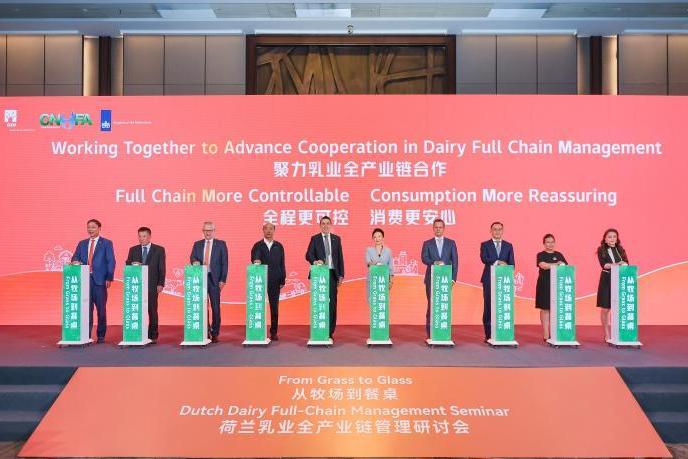
Bilateral trade between China and the Netherlands across the dairy category reached $2.03 billion in 2025, cementing the European nation’s position as China’s second-largest supplier of imported dairy commodities. Commercial flows between the two markets remain particularly dominant within high-value specialized nutrition, where Dutch manufacturers supply 36% of China’s total imported infant formula volume. For the Netherlands, the Chinese market represents the single most valuable export destination for finished dairy goods outside the internal European Union trading bloc. Industry delegates and government officials gathered at a specialized dairy management forum in Beijing confirmed plans to deepen institutional exchanges across production, safety protocols, and supply chain governance. This trade alignment comes as evolving Chinese consumer demand for premium nutritional standards creates new commercial openings for pasture-to-shelf traceability.
Underpinning the competitive standing of Dutch dairy shipments is the integrated “From Grass to Glass” management model, which establishes uniform quality controls across every operational phase. The framework coordinates compliance through dairy farm management, raw milk collection logistics, specialized transport, processing operations, and final laboratory release testing. According to market access representatives from the Dutch Dairy Association, the system relies on a tripartite governance structure comprising regulatory government oversight, collective industry coordination, and accredited third-party auditing. The association currently represents 13 major dairy enterprises that collectively handle approximately 98% of all raw milk processed within the Netherlands. Implementing standardized oversight across decentralized farm networks ensures that raw inputs maintain low microbial counts and strict chemical purity before entering commercial drying and formulation towers.
Structural integration within the Dutch dairy farming sector provides the foundational consistency required to sustain these stringent quality metrics at industrial scale. Multinationals such as FrieslandCampina operate under cooperative ownership models encompassing more than 15,000 member farmers, who collectively account for roughly 70% of all dairy agricultural holdings in the Netherlands. Specialized nutrition divisions operating in the Asian market report that individual product lines undergo more than 3,000 analytical tests across the complete production journey. Rigorous upstream screening is central to this protocol, with over 2,000 distinct laboratory analyses conducted prior to the commencement of factory-level manufacturing. This intensive pre-processing evaluation guarantees that incoming raw milk consignments meet strict international tolerances for contaminants, antibiotic residues, and nutritional stability.
The structural length and complexity of dairy manufacturing pipelines make centralized coordination and early-stage risk mitigation vital for operational viability. Academic leaders from the Nutrition and Health department at China Agricultural University highlighted that modern dairy processing involves dozens of critical control points where thermal variations, bacterial proliferation, or supply chain bottlenecks can compromise product integrity. Comprehensive chain management frameworks developed in European markets offer a functional blueprint for the modernization and qualitative upgrading of China’s expanding domestic dairy production systems. Strengthening traceability protocols enables rapid batch identification and minimizes cross-contamination risks during large-scale pasteurization, evaporation, and packaging. Collaborative technical exchanges between Chinese food safety authorities and European processors are expected to accelerate the implementation of digital monitoring across both import channels and domestic processing plants.
Looking forward, commercial stakeholders from both jurisdictions have launched a joint initiative to institutionalize technical knowledge-sharing and promote higher nutritional benchmarks across Asian distribution networks. The strategic focus on premium functional dairy reflects an ongoing market shift where volume expansion is increasingly superseded by value-added infant formulations, clinical nutrition, and adult nutritional powders. Maintaining clear trade lanes and harmonized testing criteria between European exporters and Chinese regulatory agencies will be decisive for securing long-term supply stability. As demographic changes and consumer scrutiny shape purchasing behavior, suppliers capable of demonstrating auditable end-to-end quality systems will hold a distinct commercial advantage in navigating regulatory compliance and capturing shelf share in the world’s most competitive dairy import market.
Source: China Daily
You can now read the most important #news on #eDairyNews #Whatsapp channels!!!
🇮🇳 eDairy News ÍNDIA: https://whatsapp.com/channel/0029VaPidCcGpLHImBQk6x1F