


Opposition alliance led by Satej Patil secures a decisive 13-seat majority in the Gokul Dairy election, promising procurement price hikes.
The Rajarshi Shahu Shetkari Samavichari Aghadi, spearheaded by Congress leader Satej Patil, captured control of the Kolhapur District Cooperative Milk Producers’ Union by securing 13 of the 25 governing board seats. The closely contested board election delivered a major commercial and political defeat to the ruling Mahayuti-backed Chhatrapati Shahu Shetkari Vikas Aghadi, which finished with 12 seats following a tight vote-counting process. Polling for the commercial dairy federation saw 5,416 accredited village society representatives participate out of an eligible 5,418 electors across Kolhapur district, translating to a record-breaking 99.96 percent voter turnout. Fifty candidates competed across general and reserved categories to steer an agricultural enterprise generating over ₹3,500 crore in annual commercial turnover. Securing executive leadership over Western Maharashtra’s largest dairy union establishes a new five-year administrative mandate that will dictate regional procurement pricing, distribution strategies, and cooperative capital investments.
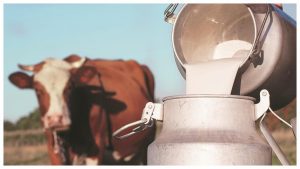
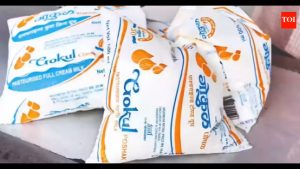
From an industrial operations and processing infrastructure perspective, the cooperative handles an extensive dairy supply chain that aggregates more than 1.4 million liters of raw bovine milk daily. The federation coordinates an expansive collection network connecting thousands of primary village cooperative societies, automated testing centers, and chilling plants spread across the Western Ghats milkshed. Raw milk volume is routed directly into advanced central processing plants in Kolhapur alongside specialized packaging satellite units equipped with automated pouch-filling machinery and continuous pasteurization lines. The manufacturing complex processes substantial daily volumes of high-fat indigenous buffalo milk and crossbred cow milk into standardized liquid pouches, table butter, ghee, and regional fermented dairy sweets. Preserving cold-chain integrity across rural assembly points and refrigerated transit corridors remains central to defending product quality, shelf life, and microbial standards in high-volume urban markets.
In terms of commercial marketing reach and retail distribution, the cooperative maintains a dominant market share across western India’s most competitive metropolitan consumer centers. The union channels the vast majority of its packaged liquid milk volume into the high-density consumption hubs of Greater Mumbai, Navi Mumbai, and Pune, where its high-fat buffalo milk brand commands enduring retail loyalty against private processors and rival cooperative conglomerates. In addition to defending its core fluid milk pouch franchise, the federation has expanded into value-added categories such as paneer, curd, skimmed milk powder, and indigenous dairy desserts to absorb seasonal milk flush surpluses. This diversified processing capability shields member suppliers from commodity price swings while allowing the enterprise to capture higher gross processing margins during off-peak consumer demand cycles. Executive oversight over the incoming governing board will directly determine advertising expenditure, distributor trade margins, and product portfolio expansion into emerging Tier-2 urban consumption corridors.
From a corporate balance sheet and cooperative treasury perspective, managing a ₹3,500 crore operational turnover requires disciplined working capital stewardship and targeted capital allocation. Generating predictable liquidity from daily fluid milk sales provides the federation with steady operational cash flow to finance industrial modernizations, including solar-assisted cold rooms, automated effluent treatment systems, and cattle feed milling expansions. The incoming board of directors assumes fiduciary authority over bank credit lines, commercial working capital facilities, and wholesale supplier contracts negotiated with institutional financing partners. Rising operating expenses—driven by diesel freight tariffs, packaging film inflation, and commercial electricity costs—demand prudent cost containment to prevent margin erosion across secondary processing units. Maintaining adequate financial reserves will be crucial to amortizing existing capital debt while funding upcoming digital testing upgrades across primary collection societies.
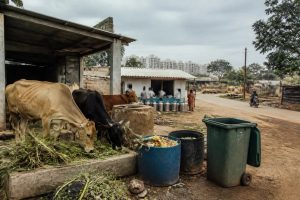
At the farmgate procurement level, the election outcome carries immediate financial consequences for thousands of primary dairy farming households across southern Maharashtra. The winning alliance anchored its campaign platform on explicit commitments to raise farmgate procurement prices by ₹5 per liter for buffalo milk and ₹2 per liter for cow milk, addressing severe producer margin compression caused by elevated fodder and cattle feed prices. Delivering on these promised price enhancements will require the incoming board to optimize industrial efficiency and capture higher value-added retail realizations without eroding cooperative operating margins. Furthermore, member societies are seeking expanded access to subsidized balanced cattle feed, mobile veterinary dispensaries, and transparent digital fat testing to eliminate weighing discrepancies at village milk booths. Heading into 2027, the new leadership panel must balance fulfilling supplier price expectations with disciplined commercial management to ensure the long-term financial viability and market competitiveness of the cooperative.
Source: ThePrint
You can now read the most important #news on #eDairyNews #Whatsapp channels!!!
🇮🇳 eDairy News ÍNDIA: https://whatsapp.com/channel/0029VaPidCcGpLHImBQk6x1F