

A sluggish start to India’s southwest monsoon triggers severe crop sowing delays, dwindling water reservoirs, and an impending 4% surge in commercial dairy procurement costs.
The international agricultural community is closely monitoring South Asia as India’s vital southwest monsoon marks a sluggish start, sparking immediate fears of structural food price inflation. Official figures from June 2026 show that initial rainfall fell 17 percent below the long-term average (LTA), stalling the crucial sowing cycle for essential summer (kharif) crops such as rice, sugarcane, cotton, and soybeans. With nearly half of the country’s arable land depending exclusively on monsoon rains for irrigation, this severe rain deficit has already resulted in 23 percent fewer summer crops being sown compared to the previous year, complicating regional harvest timelines.
Aggravating these supply-side disruptions, a prolonged regional heatwave has severely depleted water resources, putting intense stress on national food security. Overall water levels across India’s core agricultural reservoirs have dropped to 19 percent below last year’s metrics and 9 percent below the long-term average. This critical resource squeeze directly threatens output during both the current kharif cycle and the upcoming winter (rabi) crop preparation, as parched soils leave farmers with less time and moisture to optimize crop rotation and protect future yields.
These mounting climate disruptions land amidst an already fragile economic landscape where retail food prices are surging. Food inflation remains a top concern for macroeconomic policy because it represents roughly 40 percent of the nation’s total consumer price index (CPI) basket, having spiked by 8.7 percent year-on-year in May. Driven by extreme weather and supply blocks, annual retail prices have jumped significantly across key categories: vegetables surged by 45.1 percent, pulses rose by 13.5 percent, cereals grew by 9.4 percent, and retail milk prices climbed by 3 percent.
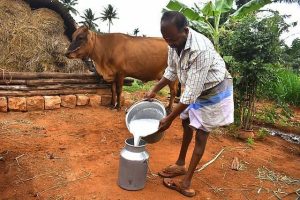
For the global dairy sector, the dry spell introduces immediate financial friction to farmgate milk economics. Dairy industry executives warn that if below-normal rainfall persists across primary milk-producing states through the pivotal months of July and August, green fodder availability will drop sharply, depressing cattle milk yields. Parag Milk Foods Chairman Devendra Shah warned that commercial milk prices could face an additional 3 to 4 percent hike in late summer, a shift that follows recent base price increases implemented by major cooperative processors Amul and Mother Dairy to offset soaring production overheads.
Agribusiness economists, including experts from the Bank of Baroda and Emkay Global Financial Services, point out that while a potential monsoon revival in late summer could cool down volatile vegetable prices by August, structural commodities like pulses and milk will face prolonged supply constraints. Furthermore, the government’s recent 5.4 percent increase in the minimum support price (MSP) for paddy ensures that grain and cattle feed inputs will remain highly elevated. Consequently, financial analysts anticipate that the central bank will delay interest rate cuts well into the future as it struggles to rein in stubborn headline inflation and stabilize the country’s rural consumer economy.
Source: Moneycontrol
You can now read the most important #news on #eDairyNews #Whatsapp channels!!!
eDairy News ÍNDIA: https://whatsapp.com/channel/0029VaPidCcGpLHImBQk6x1F