



Rajasthan’s ancient Habur stone vessels utilize natural minerals and thermal property hacks to ferment and preserve milk and curd in desert heat.
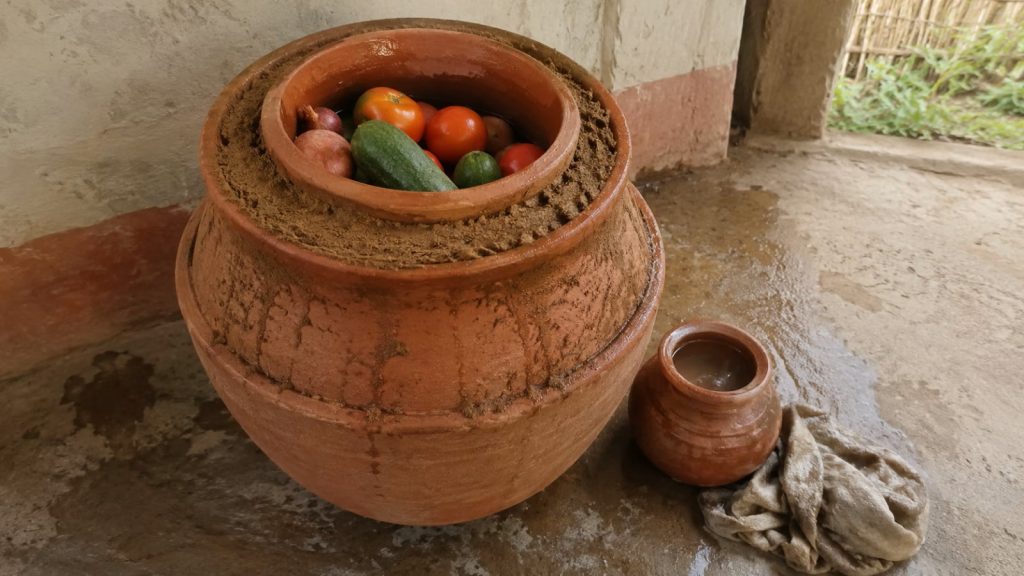
The regional dairy sector in Rajasthan, India, has long relied on an ancient, zero-electricity preservation method known locally as the “Desi Fridge” to protect raw milk and curd from extreme desert temperatures. This traditional preservation technique relies entirely on specialized vessels crafted from Habur stone (Habur Patthar), a unique mineral-rich sedimentary rock found native to the Jaisalmer district. For generations, rural households and localized herd managers have utilized these stone containers to maintain stable shelf-life metrics for fresh dairy staples without access to modern mechanical refrigeration units.
The technical mechanism behind this ancient preservation hack stems from the unique geological composition and thermodynamic properties of the Habur stone. The stone acts as a natural insulator, regulating internal fermentation temperatures and keeping the contents consistently cooler than the blistering external ambient air. Furthermore, the porous structure of the stone vessels allows for micro-evaporation, which cools the container walls and prevents the rapid bacterial spoilage that typically ruins raw milk supplies within hours under arid climatic conditions.
When utilized for processing, the Habur stone vessel fundamentally reconfigures the natural fermentation process of curd (dahi) by interacting directly with the milk’s chemical structure. Unlike conventional glass or stainless steel containers that require an active starter culture to initiate fermentation, the complex mineral configuration of the stone slowly releases natural trace elements into the lukewarm liquid. This unique biochemical environment allows the milk to ferment slowly and uniformly over a 6 to 12-hour period, resulting in a naturally sweet, thick, and highly stable probiotic product.
For international dairy analysts and sustainable food systems researchers, this traditional Indian technology offers valuable insights into low-cost, zero-waste supply chain insulation. The ability to maintain product consistency and control lactic acid development without consuming fossil fuels or electrical grid power addresses a primary operational challenge for smallholders in developing milksheds. By avoiding over-acidification and subsequent whey separation naturally, the stone vessels keep processed curd palatable and texturally intact for several days under intense heat stress.
As global consumer trends move toward ancestral food preparation and eco-conscious kitchen tools, the Habur stone is experiencing a significant commercial revival beyond its traditional rural boundaries. Modern wellness influencers and urban markets are increasingly adopting these specialized stone pots as sustainable, plastic-free alternatives for processing artisanal fermented dairy. This commercialization highlights how local, historical knowledge can be effectively monetized to provide practical, low-carbon solutions for modern value-added dairy distribution channels.
Source: News18
You can now read the most important #news on #eDairyNews #Whatsapp channels!!!
🇮🇳 eDairy News ÍNDIA: https://whatsapp.com/channel/0029VaPidCcGpLHImBQk6x1F