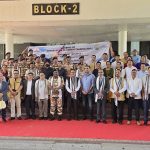



Prime Minister Narendra Modi to inaugurate the Bharat Bovine Breeding and Research Centre in Bhildi, advancing climate-resilient genetics and customized dairy breeding.
India is set to inaugurate the Bharat Bovine Breeding and Research Centre (BBBRC) at Bhildi in Banaskantha district, Gujarat, establishing a dedicated research and advanced reproductive hub to optimize bovine genetics for smallholder producers. Scheduled for formal inauguration by Prime Minister Narendra Modi on October 30, the Rs 325-crore facility spans 127 acres and is developed under the leadership of Banas Dairy (Banaskantha District Cooperative Milk Producers’ Union). The center marks a strategic shift away from a generic, one-size-fits-all breeding model, focusing on customized genetic selection that balances milk yield with environmental adaptability, feed efficiency, and thermal tolerance.
In traditional dairy breeding initiatives, the selection of genetic stock has focused almost exclusively on gross fluid volume, often relying on high-yielding exotic crosses that struggle under harsh climatic conditions. Shankar Chaudhary, Chairman of Banas Dairy, emphasized that the new facility aims to double the productivity of indigenous cattle and buffalo breeds, enabling producers to harvest more milk from fewer, more resilient animals. Rather than prioritizing milk volume alone, the center’s breeding programs evaluate traits including feed-to-milk conversion ratios, tick and parasite resistance, conception rates, somatic cell scores, and milk solids density (fat and solids-not-fat).
This balanced breeding strategy directly addresses the operational economics of India’s smallholder dairy system, where rising feed and fodder costs represent an estimated 70 to 75 percent of total farmgate milk production expenses. A cow selected purely for extreme milk yield often proves economically unviable for smallholders if it requires expensive concentrated rations, extensive cooling infrastructure, and frequent veterinary treatments. By developing genetics matched to agro-climatic zones, the center allows producers in arid and semi-arid tracts to maintain animals that sustain lactation curves during heat waves with lower metabolic stress and reduced feed inputs.
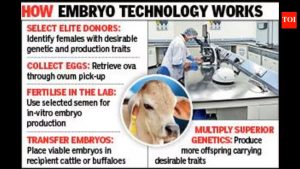
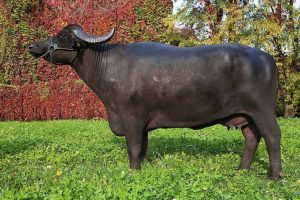
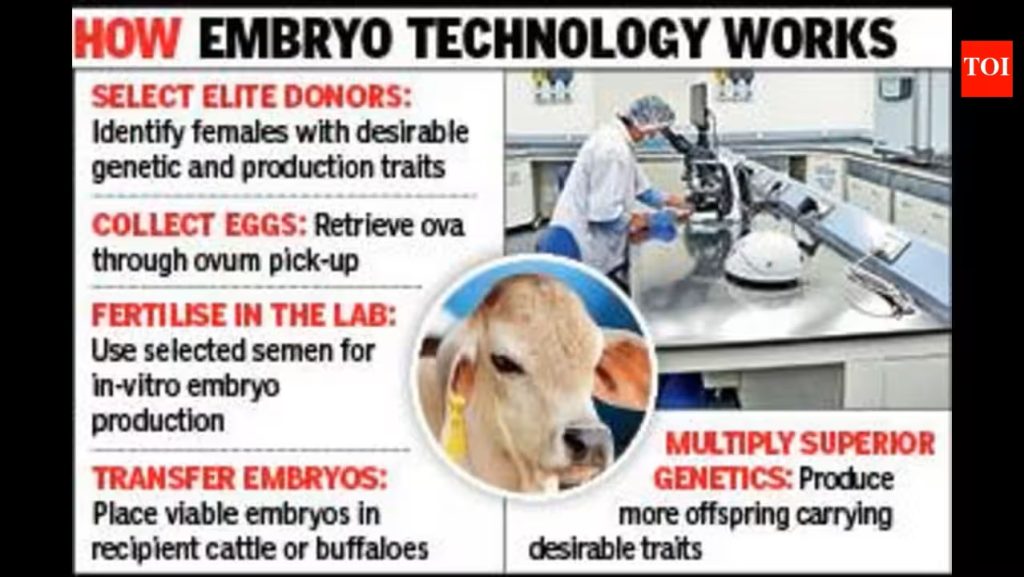
From a bovine genetics and biotechnology perspective, the Bhildi center maintains a germplasm repository comprising more than 15 indigenous cattle and buffalo breeds alongside select crossbred lines. Cattle breeds housed at the facility include Kankrej, Gir, Sahiwal, Red Sindhi, Tharparkar, Rathi, Punganur, and Ongole, while buffalo lines feature Mehsani, Banni, Murrah, and Jaffarabadi. The center utilizes advanced reproductive technologies—including in vitro fertilization (IVF), embryo transfer (ET), and sex-sorted semen processing—to rapidly propagate elite female lines and distribute disease-free, high-genetic-merit bulls across cooperative artificial insemination networks.
At the farmgate production and cooperative supply level, precision genetic selection strengthens long-term dairy resilience amid recurring climate extremes. By providing smallholder farmers with access to genetically evaluated semen tailored to their specific feeding systems and climatic profiles, the cooperative network helps insulate farm incomes against weather volatility. As Indian dairy production expands heading into 2027, the operational model established at the BBBRC underscores how modern biotechnology and indigenous genetic conservation can align to lower milk production costs, protect animal welfare, and secure rural livelihoods.
Source: The Times of India
You can now read the most important #news on #eDairyNews #Whatsapp channels!!!
🇮🇳 eDairy News ÍNDIA: https://whatsapp.com/channel/0029VaPidCcGpLHImBQk6x1F