


Strategic agreement connects remote Himalayan dairy cooperatives with institutional armed forces procurement to secure guaranteed farmgate demand.
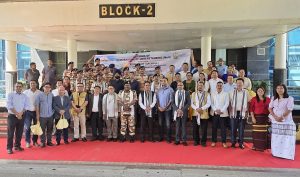
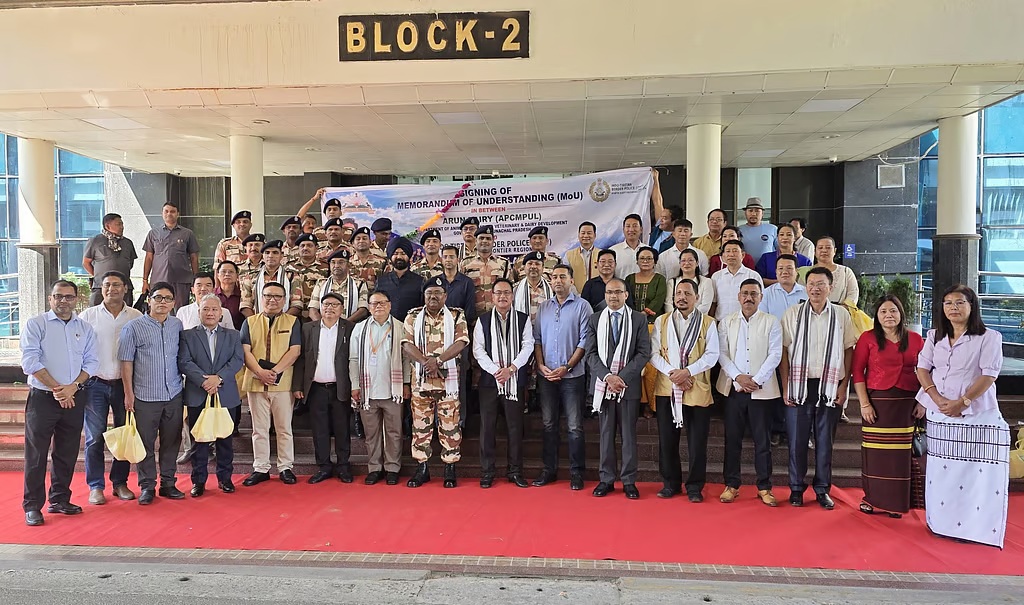
The Department of Animal Husbandry, Veterinary & Dairy Development (AHV&DD) of Arunachal Pradesh has signed a Memorandum of Understanding (MoU) with the Indo-Tibetan Border Police (ITBP) to establish a structured institutional procurement pipeline for locally produced dairy products. Formalized at the Civil Secretariat in Itanagar during an official ceremony and milk dispatch flag-off, the partnership is designed to integrate regional dairy cooperative societies directly into the central armed police force’s supply chain. Presided over by Minister for AHV&DD Gabriel D. Wangsu, alongside senior state administrative secretaries and ITBP North East Frontier Deputy Inspector General Abu Sufian, the initiative provides an assured, stable institutional market for local dairy producers in one of India’s most topographically complex frontier states.
The collaboration addresses one of the most persistent bottlenecks facing Himalayan dairy development: geographic fragmentation and the lack of reliable commercial off-take. In Arunachal Pradesh, rugged mountainous terrain and dispersed rural settlements historically made commercial milk collection economically challenging for unorganized smallholders. By establishing a direct off-take agreement with ITBP formations stationed along high-altitude border outposts, the state government bridges the gap between rural milk production and steady institutional demand. Minister Wangsu noted that connecting pastoral producers with armed forces procurement operationalizes the principle of “Jai Jawan, Jai Kisan,” simultaneously supporting national border security personnel with fresh, nutritious dairy staples while stimulating village-level agribusiness economies.
From a dairy technology and supply chain logistics standpoint, servicing institutional military contracts requires rigorous compliance with food safety and cold-chain standards. Animal Husbandry Secretary Y.V.V.J. Rajasekhar outlined that the department is upgrading the entire dairy value chain, investing in village-level collection centers, bulk milk chilling infrastructure, and modern pasteurization and packaging units. Meeting the strict quality benchmarks demanded by paramilitary forces requires systematic raw milk screening for bacterial load, adulteration, and fat-and-solids-not-fat (SNF) metrics. Automated packaging facilities in Itanagar will ensure that packaged pasteurized milk and value-added dairy goods maintain strict microbiological safety throughout transport across difficult mountain corridors.
From an enterprise finance and cooperative development perspective, institutional procurement guarantees price stability and eliminates the volatility associated with open-market trading. Smallholder livestock farmers in remote border districts often face prohibitive transport costs to reach urban retail hubs, frequently leading to localized milk dumping during peak lactation periods. Guaranteed purchase contracts with the ITBP establish predictable cash flows for village dairy cooperatives, enabling them to disburse prompt electronic milk payouts, provide subsidized cattle feed, and invest in communal veterinary care. This financial predictability strengthens cooperative balance sheets and encourages rural youth to view commercial dairy husbandry as a viable, profitable enterprise.
At the farmgate production level, the agreement directly supports rural livelihood security and curbs out-migration from sensitive border regions. Providing remote pastoralists and smallholders with an organized, formal market structure incentivizes breed improvement, better forage management, and increased herd productivity. As the state government expands processing capacities and milk collection routes across upper administrative districts heading into 2027, the institutional partnership between Arunachal Pradesh and the ITBP offers an effective blueprint for how public-sector collaboration can transform frontier agriculture, support domestic food sovereignty, and foster economic self-reliance across the Eastern Himalayas.
Source: The New Indian Express
You can now read the most important #news on #eDairyNews #Whatsapp channels!!!
🇮🇳 eDairy News ÍNDIA: https://whatsapp.com/channel/0029VaPidCcGpLHImBQk6x1F