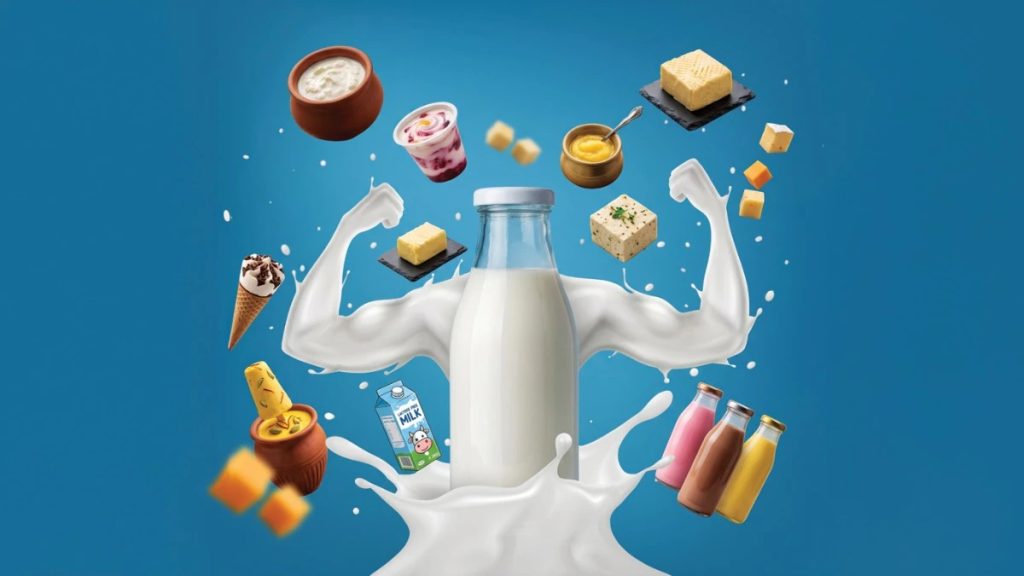


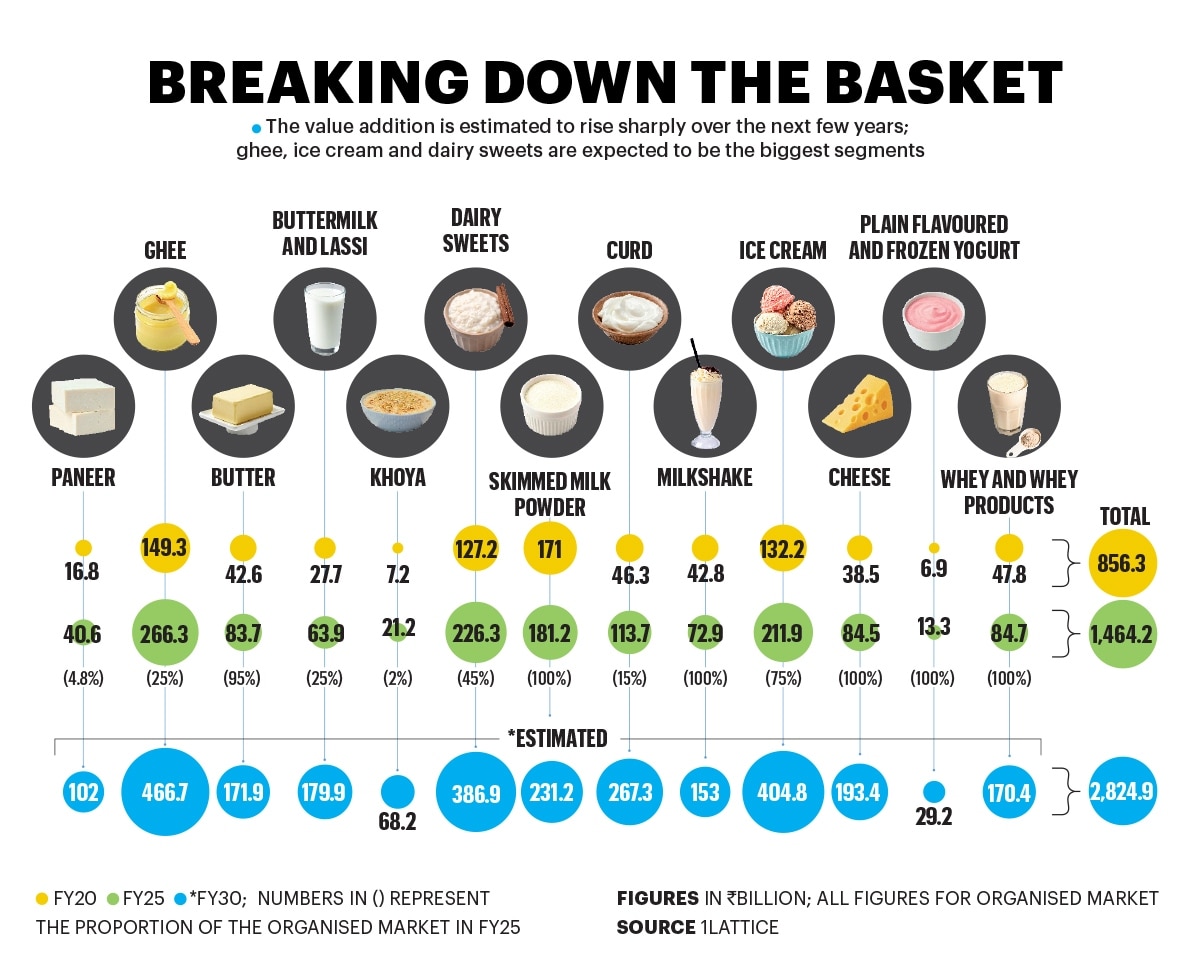
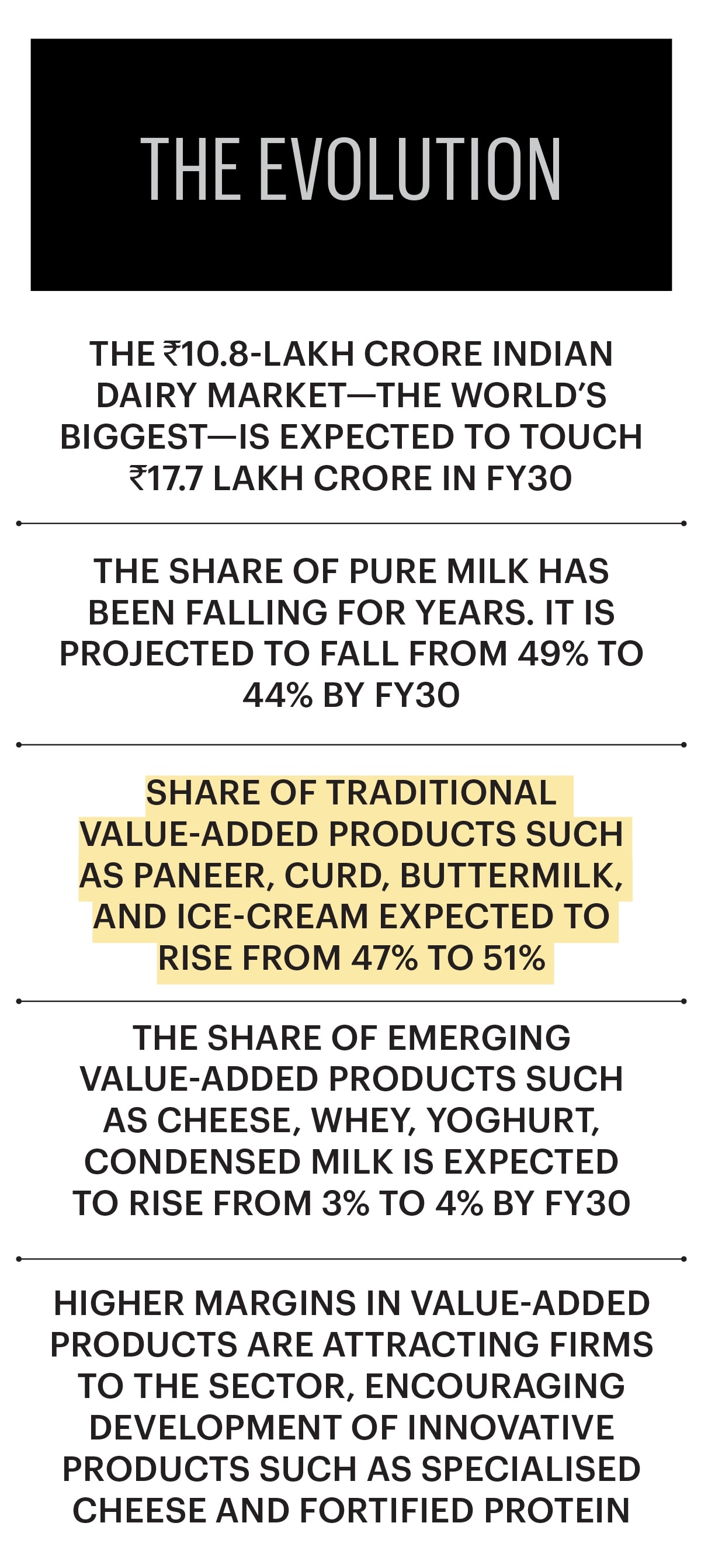
For dairy companies, the economic imperative behind this product expansion lies in unlocking higher EBITDA margins and escaping the tight pricing constraints of raw milk. While standard liquid pouch milk operates on single-digit or high-single-digit margins (8–9%) closely bound by cooperative pricing floors and inflation, value-added categories offer significantly higher returns. Processed items like probiotic curd, buttermilk, and lassi routinely yield 15–20% margins, while complex cold-chain offerings like specialized cheeses and ice creams command margins between 30% and 50%. Consequently, brands like Mother Dairy have seen their value-added revenue share jump from 15–17% five years ago to 28% of their ₹20,300 crore FY26 top line.
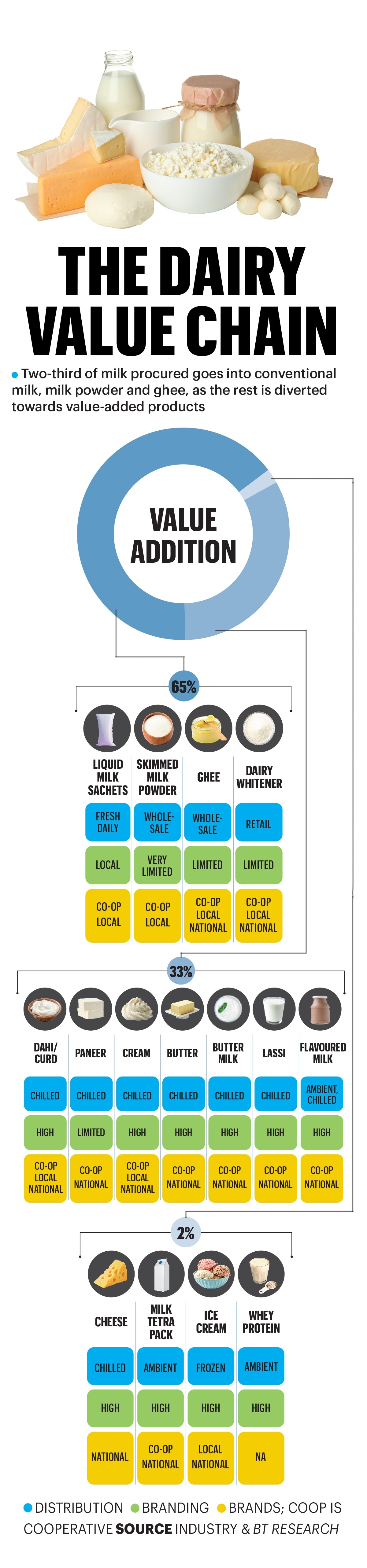
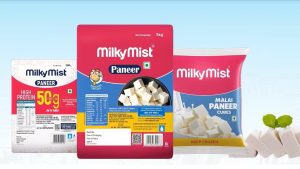
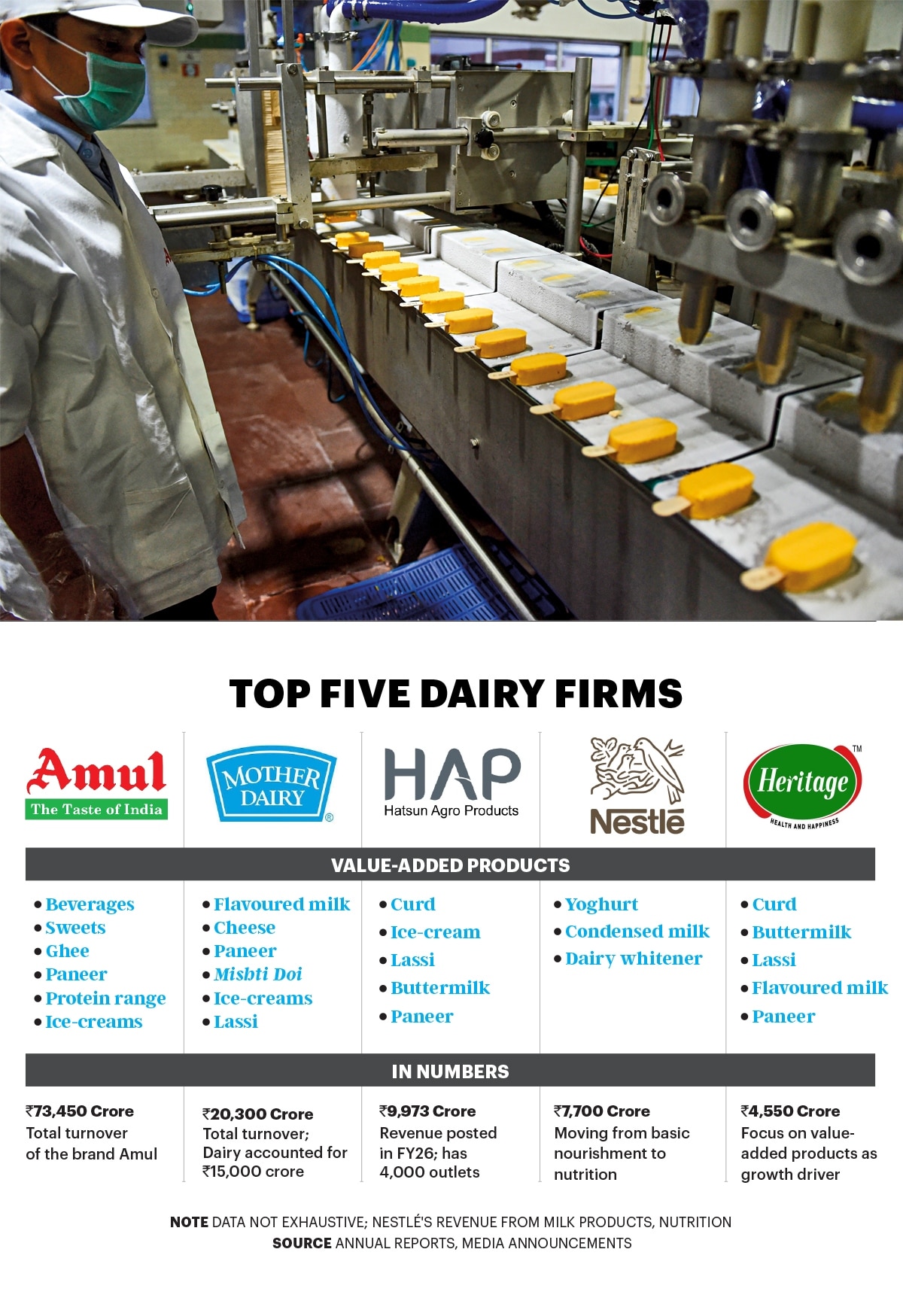
Industry leaders are deploying distinct, localized growth strategies to capture these high-margin categories. GCMMF (Amul), which surpassed ₹1 lakh crore in revenue in FY26, is leveraging its scale to democratize functional categories like lactose-free milk, Greek yogurt, and high-protein beverages. Conversely, Hatsun Agro Product—India’s largest private dairy player with ₹9,973 crore in FY26 revenue—uses a contrarian direct-to-consumer strategy through 4,000 exclusive retail outlets, bypassing wholesale and hotel channels to protect margins. Meanwhile, specialized players like Milky Mist focus entirely on value-added products like paneer, UHT milk, and Greek yogurts, completely avoiding the commoditized fluid milk market.
Protein has rapidly emerged as the primary growth battleground across the Indian dairy landscape. Driven by shifting consumer health priorities, the domestic protein supplement market is projected to reach nearly $1.6 billion by 2034. In response, processors like Mother Dairy, Heritage Foods, and Godrej Jersey are introducing functional, protein-dense lines—ranging from whey-based dairy drinks to probiotic buttermilk and enriched farm milk. To support this wave of specialized product launches, major players are investing heavily in processing infrastructure, as seen in Mother Dairy’s recent land acquisition in Punjab dedicated specifically to whey-based product manufacturing.
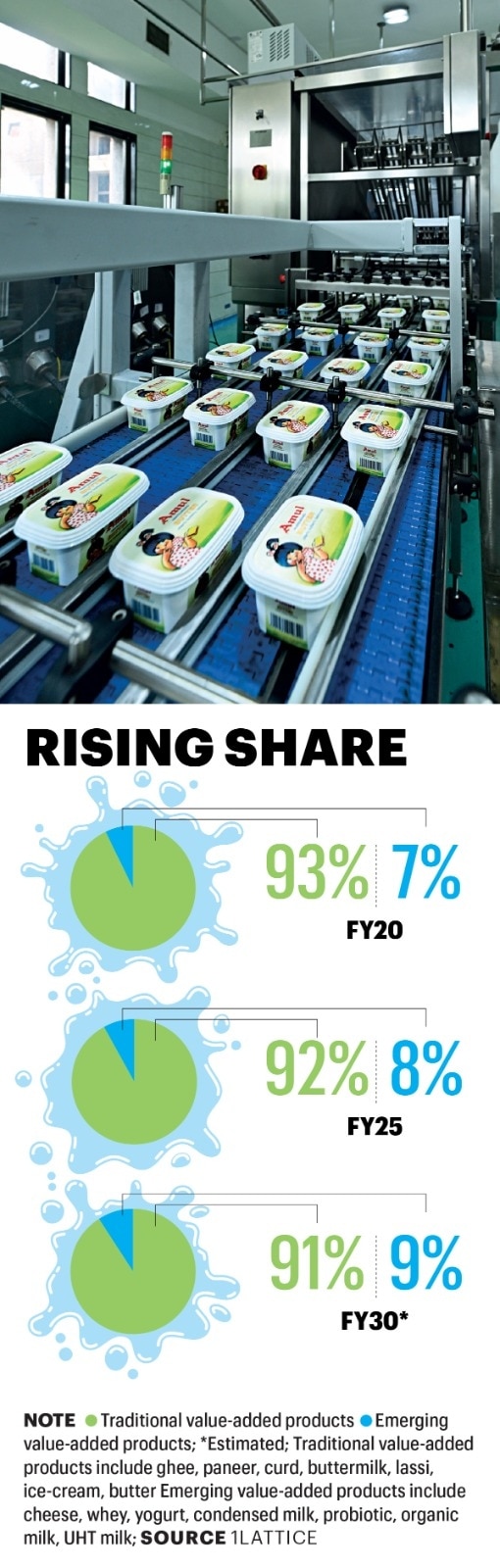
Ultimately, the sector’s shift toward value addition is transforming dairy enterprises from traditional agricultural aggregators into science-led, nutrition-focused food companies. As regional nuances, urban quick-commerce platforms, and modern trade channels mature, the ability to deliver consistent quality and innovative flavor profiles will determine long-term market dominance. For corporate balance sheets, building an agile portfolio of trusted, high-margin consumer staples provides a resilient financial buffer against global feed volatility and seasonal raw milk supply shocks.
Source: Business Today Magazine
You can now read the most important #news on #eDairyNews #Whatsapp channels!!!
eDairy News ÍNDIA: https://whatsapp.com/channel/0029VaPidCcGpLHImBQk6x1F