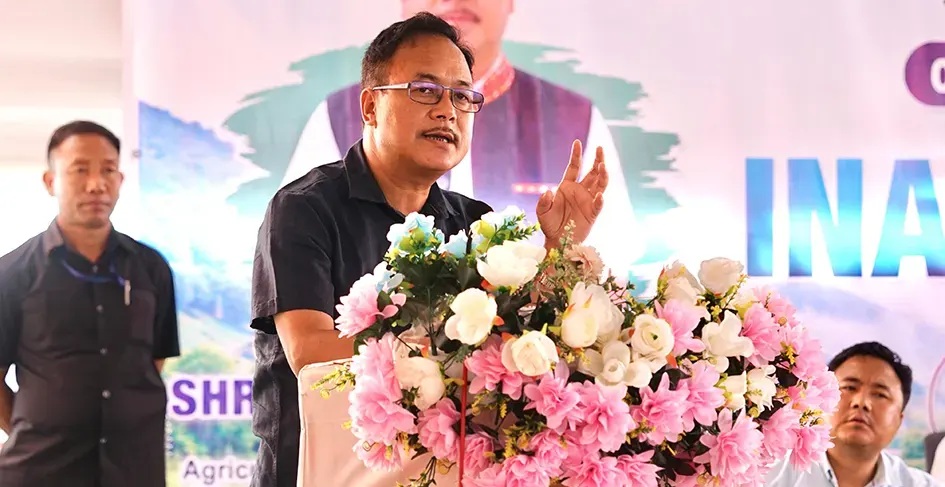


Minister Gabriel D. Wangsu commissions the state’s commercial feed manufacturing facility, targeting urea-free formulations and regional milk yield growth.
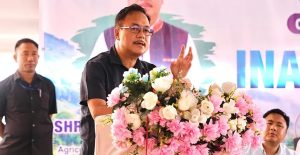
In a key development for the livestock and dairy sectors of Northeast India, Arunachal Pradesh Minister for Animal Husbandry, Veterinary & Dairy Development and Fisheries Gabriel D. Wangsu formally inaugurated the Green Gold Animal Feed Plant (M/s Rongoge Animal Feed Plant) in Doimukh, Papum Pare district. Describing the facility as an essential milestone for the state, Wangsu commended project promoter Likha Maj for taking on a high-impact agro-industrial venture designed to address one of the region’s primary agricultural vulnerabilities: chronic deficits in commercial animal feed availability.
Speaking at the inauguration alongside Industries Minister Nyato Dukam, Wangsu emphasized that agricultural and livestock productivity rests upon three foundational pillars: breed, seed, and feed. While government schemes have actively promoted artificial insemination and high-yielding genetics, the lack of scientifically balanced, locally available feed formulations has historically capped animal productivity. Deficits in crude protein and energy intake directly impair lactation curves, leading to suppressed daily milk yields, elevated somatic cell counts, and extended calving intervals among smallholder dairy operations across Arunachal Pradesh and neighboring northeastern states.
From a dairy nutrition and feed safety perspective, Wangsu directed the plant’s management to adhere to rigorous quality control standards, specifically urging the continued production of urea-free compound feed. While non-protein nitrogen (NPN) sources like urea are sometimes introduced into low-cost ruminant diets to artificially elevate crude protein equivalents, inappropriate dosing carries severe toxicity risks and metabolic stress for cattle. By formulating balanced rations without synthetic urea additives, the Doimukh processing plant aims to provide local dairy farmers with consistent, biologically safe concentrates that support optimal rumen fermentation, boost milk fat and solids-not-fat (SNF) percentages, and safeguard cow longevity.
From a supply chain logistics and regional economics standpoint, localized feed milling significantly alleviates freight burdens. Dairy and livestock farmers in the northeastern hill states have historically relied on long-distance compound feed shipments hauled from West Bengal, Bihar, and southern India. Protracted transit routes inflate delivered feed prices, increase moisture-induced mold risks during the monsoon season, and create delivery disruptions along mountain corridors. Establishing automated milling, blending, and pelleting capacity within Papum Pare lowers regional distribution costs, strengthens feed conversion ratios (FCR), and encourages rural youth and smallholders to transition from subsistence backyard rearing toward commercial dairy farming.
At the state policy and enterprise development level, the project received cross-departmental backing, with Industries Minister Nyato Dukam characterizing the initiative as vital social and agricultural infrastructure rather than a standard commercial plant. The inauguration brought together senior district administrators, veterinary directors, and local dairy producers, underscoring collective support for agro-processing ventures. Moving into 2027, the operational ramp-up of the Green Gold facility establishes a critical processing base to reduce feed import reliance and advance dairy self-sufficiency across Arunachal Pradesh.
Source: The Arunachal Times / Echo of Arunachal
You can now read the most important #news on #eDairyNews #Whatsapp channels!!!
🇮🇳 eDairy News ÍNDIA: https://whatsapp.com/channel/0029VaPidCcGpLHImBQk6x1F