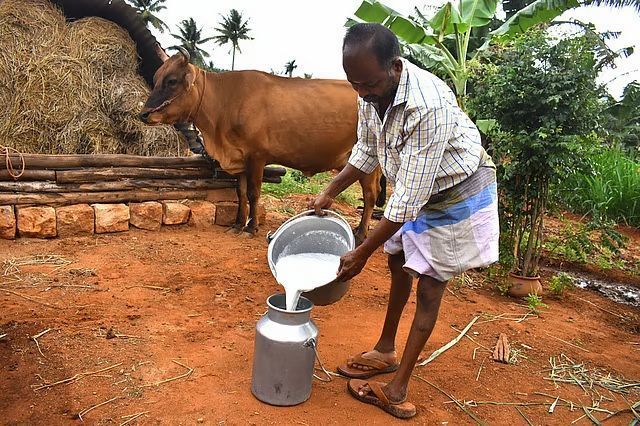

Primary cooperative societies dock up to four rupees per liter off revised state procurement prices, sparking producer backlash across Tamil Nadu.
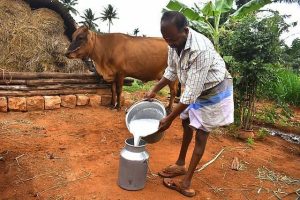
Dairy farmers across Tamil Nadu are raising formal challenges against primary cooperative milk societies for withholding deductions of up to Rs 4 per liter from their milk payment disbursements. The grassroots dispute follows the state administration’s recent policy decision to elevate benchmark procurement prices to Rs 44 per liter for cow milk and Rs 53 per liter for buffalo milk—a measure intended to deliver urgent economic relief to more than 316,000 smallholder livestock keepers. However, rather than receiving the full revised rate in their bank accounts, producers report that village-level cooperative societies are docking between Rs 2.75 and Rs 4 per liter. Producer associations from regional production centers including Tiruchirappalli and surrounding milk sheds argue that these deductions significantly erode the value of the state’s procurement increase, urging administrative authorities to enforce full payout disbursements.
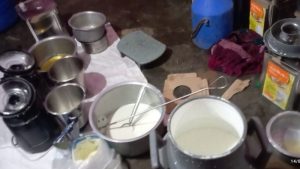
From an operational and collection-level perspective, the withholding controversy underscores structural challenges in how primary dairy cooperative societies (MPCS) finance their daily intake infrastructure. Village collection centers serve as the frontline operational foundation for the Tamil Nadu Co-operative Milk Producers’ Federation (Aavin), managing twice-daily raw milk aggregation, quality sampling, lactometer testing, and milk chilling. However, primary societies operate as decentralized entities responsible for their own administrative expenses, including staff honorariums, building rents, electricity for bulk milk coolers, and laboratory testing consumables. Cooperative representatives maintain that deductions—routinely split between meeting immediate operating overheads and accumulating annual bonus reserves—are necessary to sustain daily operations. Without dedicated operational subsidies or handling allowances from apex district unions, primary societies argue they have no alternative mechanism to cover basic intake costs.
The standoff highlights ongoing governance challenges within southern India’s cooperative dairy framework, where statutory policy announcements can diverge from village-level execution. Under the official Government Order revising Aavin’s procurement schedule, the benchmark cow milk price of Rs 44 per liter comprises a base procurement rate of Rs 36 combined with an Rs 8 per liter state incentive, contingent upon meeting 4.3 percent butterfat and 8.2 percent solids-not-fat (SNF) parameters. Although the state government pledged to subsidize Aavin to shield urban consumers from retail price inflation, the flow of funds to primary collection societies has encountered localized friction. Withholding substantial margins at the collection desk leaves farmers receiving effective realizations as low as Rs 40 to Rs 41.25 per liter. This pricing gap risks eroding producer trust and could incentivize farmers to divert milk supplies toward private processors and informal vendors offering direct, unadjusted cash payments.
From an agricultural economics and farm balance sheet perspective, docking up to Rs 4 per liter directly constrains smallholder liquidity amid elevated input costs. Cattle maintenance across Tamil Nadu has grown increasingly expensive, with commercial feed concentrates, cotton seed cake, wheat bran, and dry roughage experiencing sustained price inflation. For smallholders managing small herds of two to four cows, feed and fodder account for 65 to 70 percent of recurring operational outlays. A deduction of Rs 4 per liter on a modest daily output of 30 liters removes over Rs 3,600 from monthly farm income—cash flow vital for servicing livestock loans, purchasing feed supplements, and covering veterinary care. When administrative deductions absorb a substantial portion of the government price hike, producer margins remain tight, increasing financial vulnerability across rural households.
Looking ahead, resolving the friction between primary dairy cooperatives and livestock producers will require greater regulatory transparency and structured funding for rural collection centers. Relying on ad-hoc deductions from farmgate milk checks to finance village collection operations creates recurring friction that threatens procurement stability for Aavin. Agricultural economists and producer advocates suggest that state authorities establish a transparent, standardized schedule for any permissible society handling fees, backed by direct administrative grants to cover collection center overheads. Furthermore, expanding automated milk testing equipment and digitized payment systems that clearly itemize gross earnings, quality metrics, and net transfers will help maintain accountability. Ensuring that statutory procurement prices reach farmers intact remains essential to supporting producer livelihoods and maintaining milk supply continuity across Tamil Nadu’s organized dairy sector.
Source: DairyNews Today
You can now read the most important #news on #eDairyNews #Whatsapp channels!!!
🇮🇳 eDairy News ÍNDIA: https://whatsapp.com/channel/0029VaPidCcGpLHImBQk6x1F