


₹1,000 crore joint venture scales up commercial dairy manure and agri-residue valorization into Bio-CNG across northern and western India.
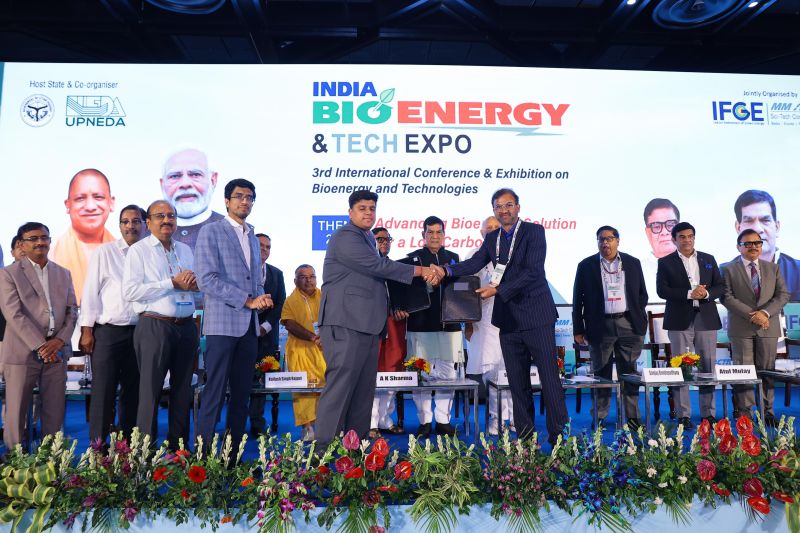
Clean technology engineering firm KIS Group-Sustainability² has entered into a memorandum of understanding with VRS Foods, the corporate entity behind Paras Dairy, to develop approximately 10 compressed biogas (CBG) and bioproduct facilities across India. Backed by a projected capital deployment of ₹10 billion (₹1,000 crore), the industrial partnership focuses on converting dairy livestock manure, agricultural biomass, and napier grass into pipeline-ready renewable energy. The initiative establishes a commercial circular economy framework, targeting initial plant commissioning in the fourth quarter of 2027.
The projects will be executed under a formal joint venture structure leveraging complementary technical and operational capabilities. KIS Group assumes comprehensive technology delivery, turnkey engineering, procurement, construction (EPC), and long-term facility management. In turn, Paras Dairy will oversee site selection, land acquisition, regulatory clearances, and village-level feedstock aggregation through its extensive dairy procurement networks across Uttar Pradesh, Madhya Pradesh, and neighboring milk-producing states.
Each planned processing facility is engineered to process between 65,000 and 85,000 metric tonnes of organic waste and agricultural residues annually. Designed to generate up to 10 metric tonnes of commercial-grade Bio-CNG daily per unit, the installations will simultaneously yield valuable secondary product streams, including high-nutrient organic bio-fertilizers and commercial biogenic carbon dioxide. This multi-product recovery model diversifies revenue generation beyond fuel off-take while reducing greenhouse gas emissions from open manure decomposition.
The project rollout carries significant economic implications for rural communities across participating procurement sheds, with the joint venture projected to generate roughly 500 direct and indirect jobs. Integrating smallholder dairy farmers into biomass collection logistics creates dependable supplemental income outside seasonal milk price fluctuations. Furthermore, returning fermented organic fertilizers back to local fields improves soil structure, enhances moisture retention, and reduces producer dependence on expensive synthetic inputs.
The large-scale integration of commercial biogas infrastructure underscores a decisive strategic evolution within India’s organized dairy processing sector. By actively valorizing livestock effluent into transport-grade biomethane, dairy processors align with national clean energy blending targets while reinforcing enterprise sustainability credentials. Transforming biological waste from an operational liability into a high-value energy asset establishes a scalable operational model that strengthens both corporate balance sheets and primary farmgate economics.
Source: Renewable Watch
You can now read the most important #news on #eDairyNews #Whatsapp channels!!!
🇮🇳 eDairy News ÍNDIA: https://whatsapp.com/channel/0029VaPidCcGpLHImBQk6x1F