
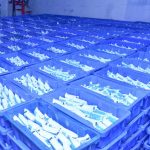


On World Milk Day 2026, a look back at the White Revolution that liberated small farmers and crowned India the global dairy leader.
The celebration of World Milk Day 2026 serves as a powerful reminder of how a grassroots cooperative movement completely revolutionized the global dairy landscape. The story centers on Amul (Anand Milk Union Limited), an iconic institution born out of resistance in 1946 against the exploitative practices of local monopolistic traders in Anand, Gujarat. Guided by the visionary leadership of Tribhuvandas Patel and farmers’ advocate Sardar Vallabhbhai Patel, local producers banded together to regain economic control over their own milk supply.
The trajectory of the cooperative shifted dramatically with the arrival of Dr. Verghese Kurien, universally recognized as the Father of the White Revolution. Armed with advanced engineering and managerial expertise, Dr. Kurien industrialized Amul’s operations, introducing groundbreaking processing technologies to the region. His most defining technological milestone was achieving the world-first commercial production of skim milk powder and condensed milk from buffalo milk, a breakthrough that European experts previously claimed was scientifically impossible.
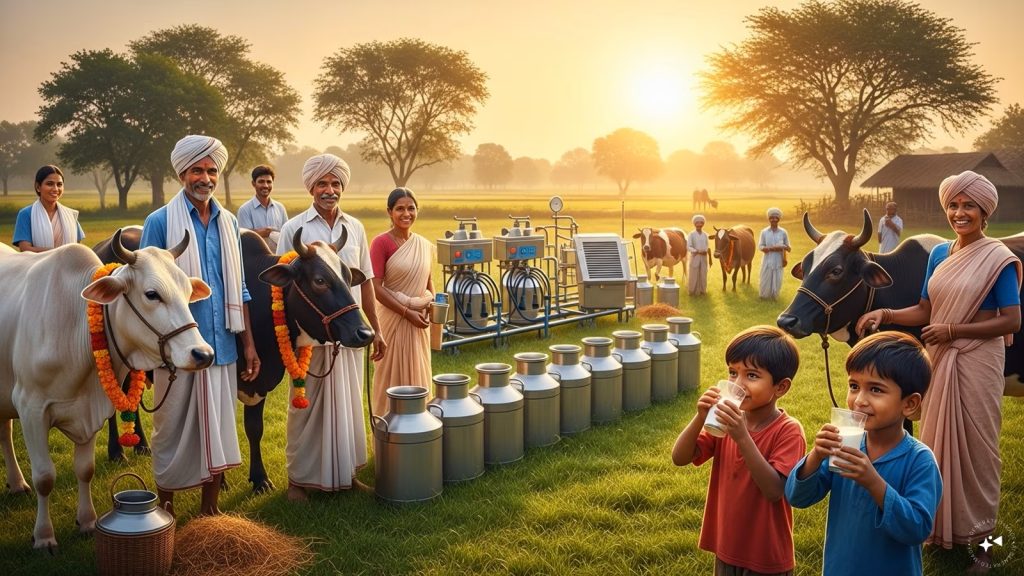
This localized success in Gujarat caught the attention of Prime Minister Lal Bahadur Shastri, who mandated the replication of the “Anand model” on a national scale. This directive led to the creation of the National Dairy Development Board (NDDB) and the launch of Operation Flood in 1970. Designed as the world’s largest dairy development program, this multi-phased initiative linked rural milk producers directly with urban consumers through a sophisticated, three-tiered cooperative structure, effectively eliminating predatory middlemen.
The macroeconomic results of this cooperative model have been nothing short of staggering, permanently altering international dairy trade dynamics. Through Operation Flood, India transformed from a severely milk-deficient country reliant on foreign food aid into a completely self-sufficient producer. By 1998, India officially surpassed the United States to become the world’s largest milk-producing nation, a crown it continues to hold securely into the late 2020s.
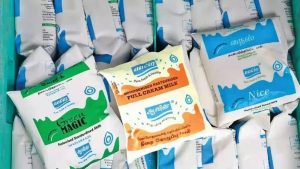
Today, Amul stands as a multi-billion dollar conglomerate that processes millions of liters of milk daily from a network of smallholder farmers. The cooperative model ensures that a significant portion of the consumer rupee flows directly back into rural households, driving immense social and economic empowerment. As international market analysts evaluate supply chain resilience on World Milk Day, Amul remains the definitive global blueprint for successful, smallholder-led agribusiness.
Source: Historical milestones and archival photo narratives are detailed via News18.
You can now read the most important #news on #eDairyNews #Whatsapp channels!!!
🇮🇳 eDairy News ÍNDIA: https://whatsapp.com/channel/0029VaPidCcGpLHImBQk6x1F