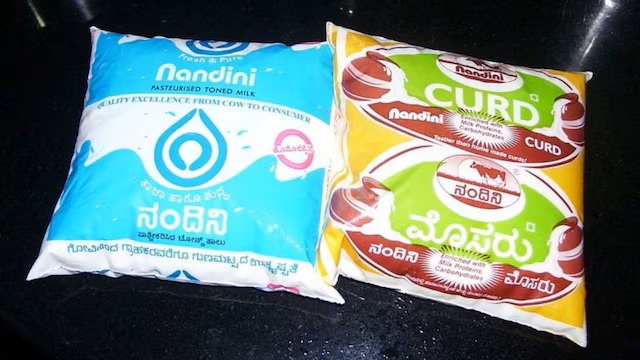




Kudige dairy reports daily dispatches to Hassan Milk Union contracted from 52,000 litres to between 45,000 and 47,000 litres following the November 1 tariff adjustments, leaving unsold surplus and dampening foodservice consumption.
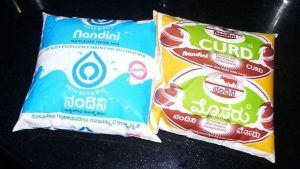
The retail price revisions implemented by the Karnataka Milk Federation (KMF) on November 1 are causing direct consumer demand contractions across regional districts. As reported by The Times of India, liquid milk sales under the flagship Nandini brand have fallen by approximately 5,000 litres per day in Karnataka’s Kodagu district following the statewide tariff hike.
According to Nandish, manager of the Kudige milk dairy—operating under the Hassan Co-operative Milk Producers’ Societies Union Limited (HAMUL)—the facility collects and processes approximately 52,000 litres of raw milk daily from dairy producers across Kodagu. Prior to the November 1 revision, the entire volume was transferred and absorbed by the Hassan Milk Union. However, post-hike distribution has dropped to between 45,000 and 47,000 litres per day, resulting in a daily unsold surplus of 4,000 to 5,000 litres at the plant level.
The immediate drop in fluid sales stems from steep consumer price increases, which ranged from ₹6 to ₹12 per litre depending on the specific milk category and packaging format (with standard liquid milk rising by ₹8/L statewide). The sharp upward adjustment has altered household purchasing behavior:
-
Frequency Reduction: Consumers who previously purchased milk on a daily basis have shifted to buying once every two to three days, while lower-income households have curtailed discretionary purchases entirely.
Hospitality and Foodservice Spillover: Local hotels, restaurants, and roadside tea stalls across Kodagu raised the price of a standard cup of tea or coffee from ₹15 to ₹20, with higher-end venues implementing steeper hikes. The resulting drop in out-of-home beverage orders has further suppressed institutional milk demand.
Operational Stabilization Window: Dairy management noted that while initial sales dips are typical immediately after price revisions, a 10% volume contraction is significant. Plant authorities anticipate that consumer demand patterns will require at least three to four weeks to reach a stable baseline.
From an agribusiness economics and cooperative supply-chain perspective, the sales decline in Kodagu highlights the classic price elasticity of demand for fluid milk in semi-urban and rural markets. While KMF and the Karnataka state government increased procurement and retail prices to incentivize farmer retention and stem milk diversion—returning an estimated 10 lakh litres back to the cooperative pool—the corresponding jump in retail prices is putting pressure on regional distribution channels. If fluid demand does not rebound, district milk unions like HAMUL will have to divert excess daily volumes into drying plants for skimmed milk powder (SMP) and butter, increasing working capital requirements and carrying costs across the federation.
Retail Milk Elasticity & Offtake
Nandini Milk Demand Impact: Kodagu District
Daily sales contraction, processing balances, and retail ripple effects post-Nov 1 hike.
Daily Intake
52,000 L
Kudige dairy intake
Daily Sales Drop
~5,000 L
~9.6% volume contraction
Current Offtake
45K–47K L
Dispatched to Hassan Union
Kudige Dairy Daily Dispatches to Hassan Union
Pre vs. Post November 1 Hike
Pre vs. Post November 1 Hike
Pre-Hike Absorption:
52,000 Litres/Day (100%)
52,000 Litres/Day (100%)
Post-Hike Realization:
47,000 Litres/Day (~90.4%)
47,000 Litres/Day (~90.4%)
Consumer & Commercial Behavior Shifts
Direct Retail Price Shock
Retail price increases ranging from ₹6 to ₹12 per litre led households to cut consumption frequency or switch to buying milk every two to three days.
Hospitality Inflation: Tea/Coffee Up to ₹20
Local eateries and tea stalls raised per-cup rates from ₹15 to ₹20, dampening out-of-home beverage orders and suppressing wholesale commercial milk demand.
Downstream Processing Surplus
Between 4,000 and 5,000 litres are left unsold daily at Kudige, forcing cooperatives to consider diversion into SMP or butter processing if demand does not rebound.
Entity: Kudige Dairy / Hassan Milk Union (HAMUL)
30-Day Market Watch
30-Day Market Watch
Source: The Times of India / Kudige Dairy Dispatches
eDairyNews India Commodity Intelligence
eDairyNews India Commodity Intelligence
Source: The Times of India
You can now read the most important #news on #eDairyNews #Whatsapp channels!!!
🇮🇳 eDairy News ÍNDIA: https://whatsapp.com/channel/0029VaPidCcGpLHImBQk6x1F