



Renewable micro-cooling systems curb diesel expenses and arrest microbial spoilage as national milk output nears 248 million tonnes.
Expanding milk collection architecture across rural agrarian basins is increasingly relying on decentralized solar-powered refrigeration to preserve raw milk quality at the primary collection point. With national production expanding from roughly 210 million metric tons in 2020-21 toward nearly 248 million metric tons in 2024-25, maintaining strict temperature controls immediately following milking has become an urgent operational imperative. Fresh milk exits the cow at approximately 33°C and requires rapid cooling down to 3°C or 4°C within hours to suppress bacterial proliferation, a biological constraint that renders electrical grid reliability a fundamental structural pillar of dairy processing economics.
Chronic voltage instability and recurrent power cuts across rural feeder lines historically forced village dairy cooperative societies to lean heavily on expensive diesel generators. Running secondary diesel backup to support bulk milk coolers creates severe margin erosion, with regional cooperatives frequently expending hundreds of thousands of rupees annually on liquid fuel alone. Furthermore, unexpected outages during scorching summer flush cycles introduce serious post-harvest spoilage risks, leaving thousands of liters of morning intake vulnerable to souring before transit to centralized conversion plants.
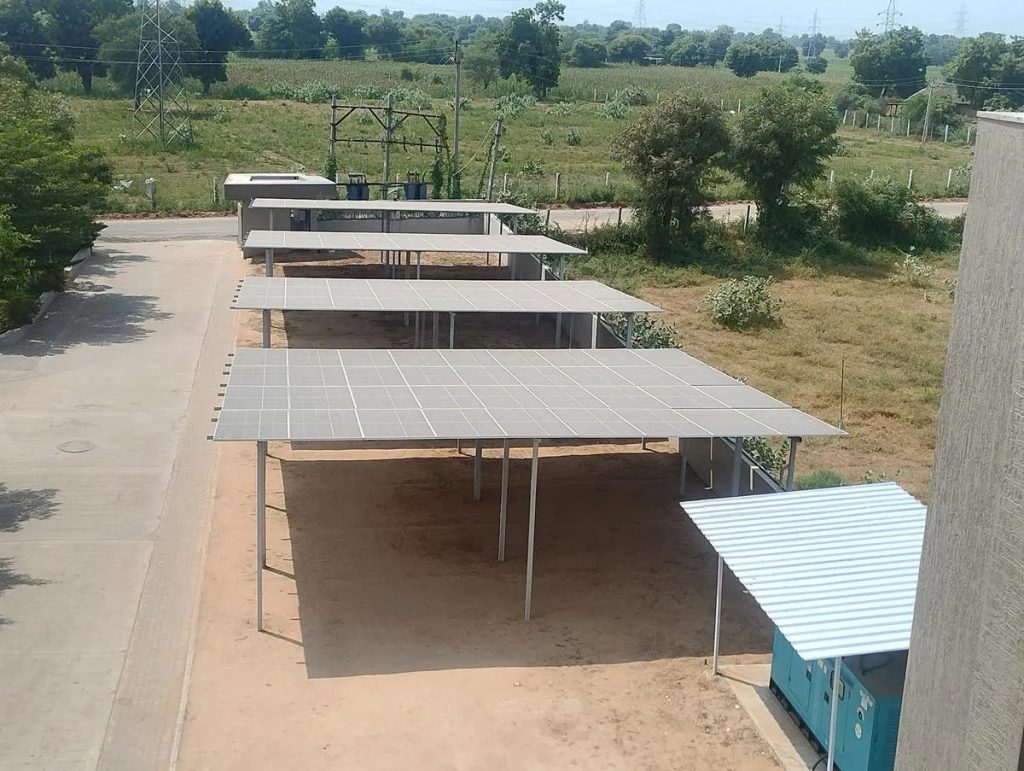
Deploying standalone and hybrid solar milk chilling systems is transforming primary collection economics by displacing expensive fossil fuels with zero-emission generation. Field implementations across diverse production catchments demonstrate that transitioning a typical 2,000-liter bulk milk cooler to solar power eliminates monthly consumption of several hundred liters of diesel, yielding annual operational savings of more than two lakh rupees per site. Concurrently, utilizing thermal storage technology and solar-heated water at 70°C to 80°C streamlines daily cleaning regimes, removing residual butterfat and milk proteins from storage tanks without drawing from the grid.
Smallholder dairy producers, who account for the overwhelming majority of national production through one- to five-cow herds, capture substantial indirect gains from stabilized chilling hubs. Prompt regional chilling prevents souring deductions, protects fat and solids-not-fat testing grades, and provides smallholders with equitable market access regardless of distance from industrial drying hubs. In high-density dairy belts, installing modular solar chillers has allowed farmer-producer collectives to lower recurring power overheads to nominal figures, redirecting retained liquidity into timely milk payouts and animal nutrition support.
Achieving nationwide scale for renewable dairy chilling requires dismantling upfront capital barriers through targeted subsidies and structured concessionary financing. While public policy frameworks prioritize cold-chain modernization under second-generation dairy expansion initiatives, commercial adoption rates remain bottlenecked by high initial photovoltaic and thermal storage hardware costs. Aligning subsidized clean-energy programs with organized cooperative federations and private dairy aggregators will prove vital to replacing carbon-heavy diesel generation with resilient solar infrastructure, safeguarding farmgate margins across developing milk sheds.
Source: Frontline
You can now read the most important #news on #eDairyNews #Whatsapp channels!!!
🇮🇳 eDairy News ÍNDIA: https://whatsapp.com/channel/0029VaPidCcGpLHImBQk6x1F