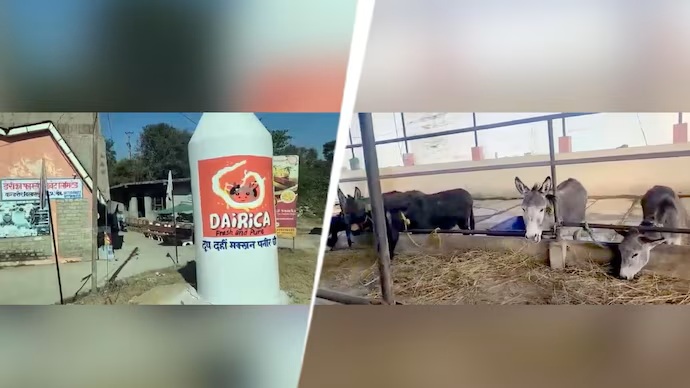


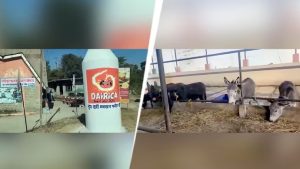
Inaugurated in Kandrour by state Cabinet Minister Rajesh Dharmani, the new Dairica Farms facility plans to retail specialty donkey milk at Rs 7,000 per litre to supply high-value skincare, cosmetic, and pharmaceutical industries.
Himachal Pradesh has launched its first organized donkey dairy farm in the Kandrour area of Bilaspur district, introducing a specialized, high-margin animal husbandry model aimed at diversifying rural livestock incomes. Formally inaugurated on November 16–18, 2026, by state Technical Education and Cabinet Minister Rajesh Dharmani alongside the Dairy Conclave-2026, the enterprise is operated by Dairica Farms Private Limited—a dairy venture founded by Sanjeev Singh Thakur and co-founded by Seerat Toor. Already active in conventional bovine milk production, collection, and marketing, Dairica Farms has initially stocked the Bilaspur facility with 12 donkeys, with infrastructure designed to expand immediately to 25 animals. Targeting a premium retail price of Rs 7,000 per litre, the startup seeks to capture growing domestic and international demand from cosmetics, cosmeceutical, and specialized nutritional manufacturers.
Biochemical composition and extreme supply scarcity explain why donkey milk commands some of the highest per-litre valuations across the global specialty dairy sector. Unlike conventional cow or buffalo milk, donkey milk closely mirrors human breast milk in its lactose-to-protein balance and contains high concentrations of bioactive antimicrobial proteins—most notably lysozyme and lactoferrin—alongside whey proteins, vitamins A, B, C, D, and E, and essential omega-3 and omega-6 polyunsaturated fatty acids. Because a lactating jenny yields less than one litre of milk daily over an approximately six-month lactation window—and rarely exceeds 1 to 2 litres even under optimal nutrition in breeds such as the indigenous Halari donkey—raw liquid supply remains severely constrained. In international markets, liquid donkey milk routinely trades between Rs 5,000 and Rs 10,000 per litre, while freeze-dried donkey milk powder fetches Rs 20,000 to Rs 80,000 per kilogram.
Commercial demand from personal care and pharmaceutical formulators underpins the business case for specialized equine dairying in northern India. Global luxury skincare brands utilize donkey milk as a functional active ingredient in anti-aging creams, moisturizers, dermatological soaps, and barrier-repair lotions aimed at sensitive skin conditions such as eczema and psoriasis. Simultaneously, pharmaceutical and nutraceutical companies procure purified donkey milk fractions for hypoallergenic infant and clinical nutrition formulations designed for individuals allergic to bovine casein proteins. By establishing localized domestic production in Bilaspur, Dairica Farms aims to supply Indian cosmeceutical manufacturers that previously relied on imported specialty powders.
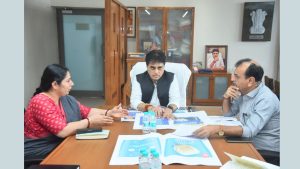
Scientific validation, quality testing, and cold-chain processing protocols were emphasized by state officials as essential prerequisites for scaling the emerging sector responsibly. Speaking at the inauguration ceremony, Minister Rajesh Dharmani praised the initiative as an innovative rural startup capable of generating self-employment for educated youth and livestock rearers under Chief Minister Sukhvinder Singh Sukhu’s agricultural diversification vision. However, Dharmani cautioned that long-term commercial viability requires structured scientific research, standardized microbiological and purity testing, dedicated processing infrastructure, and formal buyer linkages rather than speculative farm expansion.
Broader livestock conservation trends across India give additional ecological significance to organized donkey rearing. According to national livestock census figures, India’s domestic donkey population declined sharply by more than 60 percent between 2012 and 2019—falling from roughly 3.2 lakh animals to 1.2 lakh—as motorized transport replaced traditional pack animals. Creating high-value dairy and cosmeceutical applications provides an economic incentive for farmers to conserve and breed indigenous equine genetic resources rather than allowing herd numbers to dwindle further.
Looking ahead into 2027, expanding the Bilaspur herd from 12 to 25 animals and establishing certified processing and buyer off-take agreements will serve as an important test case for specialty non-bovine dairying in Himachal Pradesh. If supported by rigorous quality assurance and structured market development, donkey milk farming could evolve into a profitable niche enterprise alongside conventional dairy operations.
Source: India Today
You can now read the most important #news on #eDairyNews #Whatsapp channels!!!
🇮🇳 eDairy News ÍNDIA: https://whatsapp.com/channel/0029VaPidCcGpLHImBQk6x1F