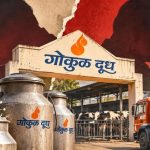
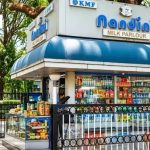


From the founding of the Kaira District Milk Union to the institutional roots of Amul, NDDB, and IRMA, Anand remains the architectural benchmark of India’s White Revolution and global smallholder dairy empowerment.
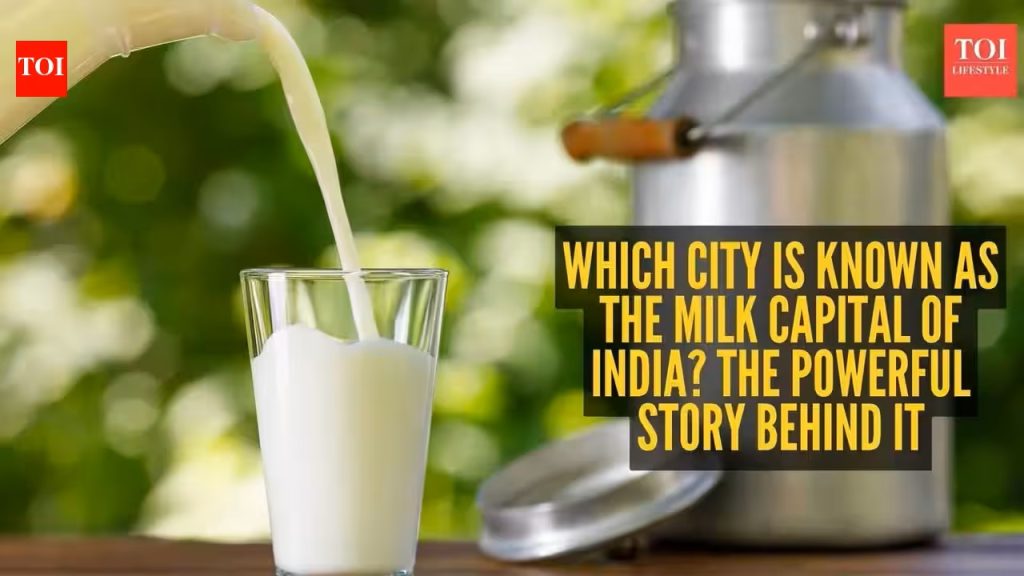
While numerous Indian cities are celebrated for manufacturing hubs, textile districts, or technology corridors, the city of Anand in central Gujarat has established a global economic identity rooted entirely in dairy agribusiness. As chronicled by The Times of India, Anand is universally recognized as the “Milk Capital of India”—a title earned not merely through production volume, but as the birthplace of the cooperative model that fundamentally restructured India’s dairy value chain and laid the operational blueprint for Operation Flood.
Anand’s transformation began in the mid-20th century in response to the monopolistic exploitation of local milk producers by private intermediaries and commercial contractors under the colonial Bombay Milk Scheme. Guided by national leader Sardar Vallabhbhai Patel and local farmer leader Tribhuvandas Patel, dairy farmers organized into village-level cooperative societies, formalizing the Kaira District Co-operative Milk Producers’ Union Limited in 1946. This collective bargaining and supply-chain framework eliminated intermediaries, ensuring fair farmgate returns and paving the way for the creation of Amul (Anand Milk Union Limited).
The operational expansion of the “Anand Pattern” is intrinsically linked to Dr. Verghese Kurien, the structural engineer and administrator recognized as the Father of India’s White Revolution. Stationed at the Government Research Creamery in Anand in 1949, Kurien partnered with dairy technologist H.M. Dalaya to achieve a groundbreaking technological milestone: successfully spray-drying and manufacturing skimmed milk powder and condensed milk from indigenous buffalo milk, a feat previously deemed impossible by Western dairy scientists. This processing breakthrough allowed cooperatives to absorb massive seasonal flush milk volumes, transforming India from a dairy-import-dependent nation into the world’s leading milk-producing country.
Beyond processing and retail branding, Anand evolved into the intellectual and regulatory nucleus of the Indian dairy industry:
-
National Dairy Development Board (NDDB): Established in 1965 and headquartered in Anand, the NDDB was chartered by Prime Minister Lal Bahadur Shastri to replicate the Anand Pattern across every state in India, launching Operation Flood (the world’s largest agricultural development program).
-
Institute of Rural Management Anand (IRMA): Founded by Kurien in 1979, IRMA institutionalized professional management for rural and agricultural cooperatives, ensuring that farmer-owned producer organizations had access to high-caliber executive and managerial talent.
-
The Anand Pattern Three-Tier Model: Operating via village-level Primary Dairy Cooperative Societies (DCS), district-level Milk Unions, and state-level Cooperative Milk Marketing Federations (such as GCMMF), the structure guarantees that maximum consumer rupee realization flows directly back into rural households.
From an agribusiness economics and global dairy governance perspective, Anand remains the primary case study in producer-led aggregation. By integrating cutting-edge industrial processing plants, cold-chain logistics, decentralized artificial insemination programs, and cattle nutrition research with cooperative ownership, Anand demonstrated that smallholder farming systems can outcompete centralized corporate agribusiness while safeguarding rural livelihoods.
Indian Dairy Heritage & Cooperative Governance
Anand: The Institutional Heart of India’s Dairy Model
Key institutional pillars, historical breakthroughs, and cooperative architecture.
Pioneering Brand
Amul
Born from Kaira Union (1946)
Apex Body
NDDB
Headquartered in Anand (1965)
Leadership Hub
IRMA
Rural management school (1979)
Structural Foundations of the Anand Dairy Model
1. The Three-Tier Cooperative Mechanism
Links village primary societies directly to district processing unions and state marketing federations, maximizing the farmer’s share of the retail consumer rupee.
2. Processing Innovation: Buffalo Milk Drying
Pioneered by H.M. Dalaya and Dr. Verghese Kurien, manufacturing SMP and condensed milk from buffalo milk broke the Western monopoly and solved seasonal flush surpluses.
3. Catalyst for Operation Flood & White Revolution
NDDB used Anand’s blueprint to replicate dairy cooperatives nationally, converting India from a milk-deficit nation into the world’s largest milk producer.
Architects: Sardar Patel, Tribhuvandas Patel & Dr. Verghese Kurien
Milk Capital of India
Milk Capital of India
Source: The Times of India / NDDB Archives
eDairyNews India Heritage Intelligence
eDairyNews India Heritage Intelligence
Source: The Times of India
You can now read the most important #news on #eDairyNews #Whatsapp channels!!!
🇮🇳 eDairy News ÍNDIA: https://whatsapp.com/channel/0029VaPidCcGpLHImBQk6x1F